 January 2024 in “Journal of Tissue Engineering”
 A new ethical skin model using stem cells offers a reliable alternative for dermatological research.
Plasma gel and PRP treatments improve skin and hair with minimal side effects.
 December 2023 in “Scientific Reports”
 Scientists created cell lines from balding patients and found that cells from the front of the scalp are more affected by hormones that cause hair loss than those from the back.
 November 2023 in “Frontiers in cell and developmental biology”
 Hair aging is caused by stress, hormones, inflammation, and DNA damage affecting hair growth and color.
 November 2023 in “Stem cells and cloning”
 A new treatment using stem cell-conditioned media significantly improved hair growth in people with temporary hair loss.
 October 2023 in “Biomedical science and engineering”
 Innovative methods are reducing animal testing and improving biomedical research.
 October 2023 in “Dermatological reviews”
 Fibroblast-derived growth factors and exosomes can significantly improve skin aging.
 October 2023 in “bioRxiv (Cold Spring Harbor Laboratory)”
 Immune cells are essential for early hair and skin development and healing.
 September 2023 in “Medical & Clinical Case Reports Journal”
 Platelet-Rich Plasma (PRP) may increase hair density and thickness in Androgenetic Alopecia, but it's not significantly better than a placebo.
 September 2023 in “International Journal of Trichology”
 Adipose-derived stem cells may help with hair loss, but more research is needed.
Various treatments exist for hair loss, but no definitive solution.
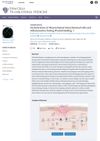 July 2023 in “Stem Cells Translational Medicine”
 Mesenchymal Stem/Stromal Cells (MSCs) help in wound healing and tissue regeneration, but can also contribute to tumor growth. They show promise in treating chronic wounds and certain burns, but their full healing mechanisms and potential challenges need further exploration.
July 2023 in “Journal of personalized medicine” Injecting a person's own fat stem cells into their skin can make it look younger and improve double eyelids for over a year.
 June 2023 in “Research Square (Research Square)”
 Hyaluronic acid and polycaprolactone improve skin regeneration, with polycaprolactone having a stronger effect on healing and tissue repair.
 June 2023 in “Frontiers in Bioengineering and Biotechnology”
 The conclusion is that accurately replicating the complexity of the extracellular matrix in the lab is crucial for creating realistic human tissue models.
 May 2023 in “Stem Cells International”
 Different parts of the body's fat tissue have unique cell types and characteristics, which could help treat chronic wounds.
 April 2023 in “Bulletin of the National Research Centre”
 The document concludes that more research is needed to understand how PRP affects the ovaries and to standardize its use in treatment.
 January 2023 in “Journal of applied animal research”
 Short photoperiods improve cashmere growth and quality in goats by changing hormone levels and gene expression.
 January 2023 in “Postępy Dermatologii i Alergologii”
 Stem cells can improve wound healing, reduce scars, promote hair growth, rejuvenate skin, and enhance fat grafts in plastic surgery, but there are still some concerns.
Different genes and pathways are active in yak skin and hair cells, affecting hair growth and immune responses.
December 2021 in “INDIGO (University of Illinois at Chicago)” Sheep hair follicle development and wool curvature are influenced by specific cell types and gene expressions.
GPC1 is important for hair growth by helping blood vessels form around hair follicles.
September 2021 in “Morphologia” Dermal fibroblasts have at least three distinct types, each with unique roles in skin structure and hair development.
 September 2021 in “Farmacja Polska”
 Scalp needle mesotherapy can effectively treat hair loss and improve hair growth.
 August 2021 in “International Journal of Dermatology and Venereology”
 Platelet-Rich Fibrin (PRF) can speed up healing in chronic wounds, improve hair density, and act as a natural filler for skin rejuvenation, but its use in hair loss treatment needs more evaluation.
Different types of sun exposure damage skin cells and immune cells, with chronic exposure leading to more severe and lasting damage.
 January 2020 in “Der Pharmacia Lettre”
 Nanoparticle-based herbal remedies could be promising for treating hair loss with fewer side effects and lower cost, but more research is needed.
May 2019 in “Journal of Acupuncture Research” Sebalgukhwa-san (SGS) can help treat hair loss without liver toxicity.

New treatments for hair loss show promise, including plasma, stem cells, and hair-stimulating complexes, but more research is needed to fully understand them.
 April 2018 in “Journal of Investigative Dermatology”
 Nonmelanoma skin cancers have higher levels of certain osteopontin variants than normal skin.