25 citations
,
February 1977 in “American Journal of Veterinary Research” Increasing daylight to 16 hours in winter can make mares ovulate and cycle earlier.
41 citations
,
April 1989 in “Experimental and Applied Acarology” 4 citations
,
February 2018 in “Annales de Dermatologie et de Vénéréologie” Onychomatricome is a benign nail tumor with specific dermoscopic features that help distinguish it from cancer.
October 2023 in “International journal of molecular sciences” Key proteins and pathways regulate wool fiber diameter in Alpine Merino sheep.
 27 citations
,
January 2012 in “Current Topics in Microbiology and Immunology”
27 citations
,
January 2012 in “Current Topics in Microbiology and Immunology” Mice that can regenerate tissue have cells that pause in the cell cycle, which is important for healing, similar to axolotls.
 August 2020 in “Egyptian Veterinary Medical Society of Parasitology Journal (EVMSPJ)”
 10.5% of sheep in Ismailia, Egypt, had Sarcoptes scabiei, causing skin issues.
694 citations
,
April 2000 in “Nature genetics” Msx2 deficiency in mice leads to bone growth and organ development problems.
4 citations
,
January 2025 in “Annals of the New York Academy of Sciences” Spiny mice can regenerate tissues instead of forming scars.
 113 citations
,
March 2018 in “Biological reviews/Biological reviews of the Cambridge Philosophical Society”
113 citations
,
March 2018 in “Biological reviews/Biological reviews of the Cambridge Philosophical Society” Animals that change color with the seasons mainly do so in response to daylight changes, but climate change is causing camouflage problems that may require evolutionary changes.
 4 citations
,
July 2021 in “bioRxiv (Cold Spring Harbor Laboratory)”
4 citations
,
July 2021 in “bioRxiv (Cold Spring Harbor Laboratory)” BLMP-1 is important for regular molting and gene expression cycles in worms.
December 2022 in “Laboratory Animal Research” Trichoblastomas in aged house musk shrews show unique features and may involve serum amyloid A in inflammation.
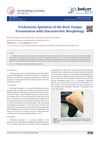 May 2020 in “JOJ Dermatology & Cosmetics”
 A rare skin condition usually on the face was found on a man's heel.
January 1981 in “Purdue e-Pubs (Purdue University)” Pig skin is similar to human skin, with no major changes as they age.
8 citations
,
July 2004 in “Journal of morphology” Marsupial hair structure and keratin distribution are similar to placental mammals.
5 citations
,
September 2006 in “Natural medicines/Journal of natural medicines” Microscopic hair features can identify different Cauda Cervi species.
 December 2024 in “Genome Biology and Evolution”
 Snakes and worm lizards lost claw proteins due to similar evolutionary changes.
January 2014 in “Redalyc (Universidad Autónoma del Estado de México)” A Persian cat had a rare skin condition that didn't improve with treatment.
18 citations
,
February 2001 in “Der Hautarzt” A woman with myotonic dystrophy had multiple skin tumors on her scalp, suggesting a genetic link.
1 citations
,
May 2016 in “Journal of Veterinary Diagnostic Investigation” Exotic lice infest 45% of California mule deer, with younger and selenium-deficient deer more vulnerable.
 April 2026 in “Communications Biology”
 The development of breeding tubercles in male zebrafish relies on a specific enzyme that processes hormones.
June 2020 in “Zenodo (CERN European Organization for Nuclear Research)” Reptiles on the Absheron Peninsula accumulate toxic elements in their tissues but survive due to tissue resilience.
 May 2025 in “Journal of Developmental Biology”
 Jawless vertebrates have teeth proteins similar to those in mammalian hair and nails.
 January 2024 in “Collagen and leather”
 The conclusion is that using bovine milk permeate to remove wool from sheepskins is eco-friendly and results in smoother, higher quality leather compared to traditional sulfide methods.
 50 citations
,
October 1918 in “The journal of experimental zoology”
50 citations
,
October 1918 in “The journal of experimental zoology” Artificially inducing hair regrowth in mice can change the normal pattern and timing of hair growth, with minimal color differences between old and new fur.
 May 2023 in “Frontiers in veterinary science”
 A young tapir with a rare skin condition improved after treatment with wound cleaning, cream, and oral medication.
3 citations
,
April 2014 in “Anatomy Research International” Buffalo mammary glands develop in stages from 34 to 229 days during prenatal growth.
 2 citations
,
March 1977 in “Journal of animal science/Journal of animal science ... and ASAS reference compendium”
2 citations
,
March 1977 in “Journal of animal science/Journal of animal science ... and ASAS reference compendium” Defective mink guard hairs have split tips and missing cuticle cells, causing a metallic sheen.
 February 2024 in “Cureus”
 Pilomatrixoma should be considered for nodular lesions in adults.
Equine hoof progenitor cells can help develop therapies for hoof diseases like laminitis.
477 citations
,
March 2004 in “Proceedings of the National Academy of Sciences” The DMI3 gene is essential for nodule development and symbiosis in certain plants.