April 2019 in “Journal of Investigative Dermatology” FGFR2 signaling controls Merkel cell formation in different skin regions.
158 citations
,
December 2002 in “Development” Msx2-deficient mice experience irregular hair growth and loss due to disrupted hair cycle phases.
 December 2024 in “Indian Journal of Veterinary Public Health”
 Argentine-cross polo ponies commonly develop sarcoid tumors with distinct types and histopathological features.
 January 2025 in “Turkiye Klinikleri Journal of Ophthalmology”
 Pilomatrixoma is a rare, harmless tumor near the eyebrow in kids, best treated with surgery.
22 citations
,
November 2008 in “The journal of investigative dermatology/Journal of investigative dermatology” Cystatin M/E helps in the final stages of hair and nail formation by controlling certain enzymes.
 September 2022 in “Piretc”
 The document's conclusion cannot be provided because the document is not accessible or understandable.
27 citations
,
July 1997 in “PubMed” The harlequin ichthyosis mouse mutation causes thick skin and early death, resembling a human skin disorder.
12 citations
,
April 1998 in “The Journal of Dermatology” Pretibial myxedema can occur with Graves' disease, showing skin changes like waxy plaques and swelling.
December 2016 in “Experimental and Molecular Pathology” Mus pahari mice have fragile skin due to abnormal collagen and elastin.
35 citations
,
April 2021 in “Current Biology” 1 citations
,
January 2022 in “Indian dermatology online journal” Fine needle aspiration with rapid on-site evaluation is useful for diagnosing pilomatrixoma.
3 citations
,
February 1992 in “Journal of veterinary medicine. Series A” The farm-raised blue fox had a delayed winter coat cycle and abnormal hormone levels, but its hair growth and hormone changes were still linked.
January 2024 in “Veterinary Science and Medicine Journal” The Pomeranian recovered well after treatment for pneumonia and demodecosis.
2 citations
,
December 2013 in “The Journal of Dermatology” 17 citations
,
January 2013 in “Journal of Cutaneous Pathology” The onychodermis helps anchor the nail bed and may aid in nail formation.
 418 citations
,
September 2012 in “Nature”
418 citations
,
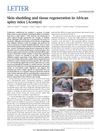
September 2012 in “Nature” African spiny mice can regenerate skin, hair, and cartilage, but not muscle, and their unique abilities could be useful for regenerative medicine.
6 citations
,
January 2015 in “Indian Dermatology Online Journal” PEODDN is a rare skin disorder with limited treatment options, best treated with laser therapy.
February 2022 in “Authorea (Authorea)” PAON shows skin patterns due to genetic mosaicism.
26 citations
,
June 2004 in “Clinical Genetics” The keratin 5 mutation in a family with epidermolysis bullosa simplex was due to mosaicism, not a new mutation.
10 citations
,
May 1994 in “Journal of Investigative Dermatology” 2 citations
,
October 2001 in “Mycoses” A cat had a rare fungal infection caused by Microsporum gypseum.
6 citations
,
February 2020 in “Journal of Cutaneous Pathology” Nevus psiloliparus lacks mature hair follicles but keeps other skin structures intact.
September 2024 in “Digital Commons - University of South Florida (University of South Florida)” Hormones can change ptarmigan feather color from white to pigmented.
October 2024 in “Skin Research and Technology” Pili annulati causes zebra-striped hair but doesn't affect hair strength or quality of life.
January 2000 in “Linchuang pifuke zazhi” The man had pretibial myxedema and hyperthyroidism, causing skin changes and thyroid issues.
2 citations
,
September 2017 in “Journal of Zoo and Wildlife Medicine” An addax had skin cancer that spread to lymph nodes and was euthanized.
 16 citations
,
July 1992 in “The journal of experimental zoology/Journal of experimental zoology”
16 citations
,
July 1992 in “The journal of experimental zoology/Journal of experimental zoology” Adrenal glands delay the start of winter fur growth in mink.
24 citations
,
June 2012 in “Journal of Feline Medicine and Surgery” Devon Rex cats with skin issues were successfully treated with antifungal medication.
September 2025 in “Jurnal Penelitian Pendidikan IPA” Two genetic variations in Moa buffalo help them adapt to heat.
 13 citations
,
January 2020 in “Scientific Reports”
13 citations
,
January 2020 in “Scientific Reports” The African spiny mouse heals skin without scarring due to different protein activity compared to the common house mouse, which heals with scarring.