28 citations
,
October 2014 in “Development” Fz3 and Fz6 can partially replace each other in tissue polarity and axon guidance.
 7 citations
,
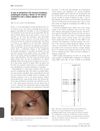
February 2010 in “British Journal of Dermatology”
7 citations
,
February 2010 in “British Journal of Dermatology” A woman with a rare autoimmune disorder had a blister on her eye and unique immune reaction, which was effectively treated with medication.
 April 2017 in “Journal of Investigative Dermatology”
 Targeted siRNA therapy may be a promising treatment for KID syndrome by reducing mutant gene expression and improving cell communication.
 April 2023 in “Cancer research”
 KRTAP2-3 could help predict cancer recurrence by identifying specific cancer cells.
5 citations
,
February 2014 in “PloS one” Eyelid cells share signaling components but differ in pathway activity.
1 citations
,
January 2013 in “Journal of the Scientific Society” A painless cheek lump was misdiagnosed but later identified as a rare benign skin lesion called pilomatrixoma.
June 2025 in “Proceedings of the National Academy of Sciences” A PIK3CA mutation in Schwann cells causes severe nerve damage and increased glycolysis, but early treatment can help.
32 citations
,
August 2016 in “Science Signaling” Alopecia areata patients show unique protein activity patterns, suggesting imbalanced signaling pathways.
3 citations
,
March 2025 in “Science Advances” A specific DNA duplication in Polish chickens affects feather shape by altering gene expression.
3 citations
,
May 1991 in “Journal of Investigative Dermatology” 16 citations
,
October 2004 in “Journal of Investigative Dermatology” Normal human melanocytes can avoid cell death through multiple pathways.
 June 2021 in “bioRxiv (Cold Spring Harbor Laboratory)”
 The gene Tfap2b is essential for creating a type of stem cell in zebrafish that can become different pigment cells.
87 citations
,
March 2017 in “Journal of Clinical Investigation” PSENEN gene mutations can cause both Dowling-Degos disease and acne inversa.
July 2024 in “Journal of Investigative Dermatology” Certain substances can help skin cells become anti-inflammatory, aiding in tissue repair.
November 2022 in “bioRxiv (Cold Spring Harbor Laboratory)” Prostaglandin E2 helps prevent hair loss from radiotherapy by protecting hair cells.
December 2021 in “Figshare” BBS7 is crucial for maintaining periodontal health by supporting Shh signaling.
 5 citations
,
May 2023 in “European Journal of Human Genetics”
5 citations
,
May 2023 in “European Journal of Human Genetics” NIPT can help detect potential maternal cancer, and GIPXplore can identify immune diseases in pregnancies.
1 citations
,
January 2025 in “Regenerative Biomaterials” Exosomes from Pinctada martensii mucus can safely reduce melanin production, offering a new treatment for skin pigment issues.
 9 citations
,
May 2019 in “Experimental Cell Research”
9 citations
,
May 2019 in “Experimental Cell Research” HPV genes and estradiol increase a cancer-related signaling pathway, which may be targeted for cervical cancer treatment.
 61 citations
,
May 2016 in “Scientific reports”
61 citations
,
May 2016 in “Scientific reports” The peptide IMT-P8 can effectively deliver proteins into the skin and cells for potential skin treatments.
12 citations
,
January 2023 in “Current Oncology” Early detection and complete surgical removal are crucial for better outcomes in treating pilomatrix carcinoma.
39 citations
,
August 1998 in “FEBS Letters” Two new enzymes, PAD-R11 and PAD-R4, were cloned and showed activity, with PAD-R11 resembling epidermal enzymes.
 April 2025 in “Journal of the Association for Research in Otolaryngology”
 NM2 and RLC phosphorylation are essential for normal inner ear hair cell function.
 December 2023 in “Journal of ethnopharmacology”
 Tribuloside can increase skin pigmentation by enhancing melanin production and distribution.
January 2026 in “JPRAS Open” PDLLA scalp injections improved hair regrowth in most patients with non-scarring alopecia.
 4 citations
,
September 2010 in “Medical Hypotheses”
4 citations
,
September 2010 in “Medical Hypotheses” 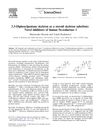 13 citations
,
August 2007 in “Bioorganic & medicinal chemistry letters”
13 citations
,
August 2007 in “Bioorganic & medicinal chemistry letters” A new compound effectively inhibits human 5α-reductase 1.
11 citations
,
January 2014 in “Dermatology” Certain SPINK5 gene mutations are common in Israeli families with Comèl-Netherton syndrome.
 June 2024 in “British Journal of Dermatology”
 A rare case of a transplant patient developing a skin condition linked to HPV-49.
 1 citations
,
April 2017 in “Journal of Investigative Dermatology”
1 citations
,
April 2017 in “Journal of Investigative Dermatology” CCL5 is important for the hair growth potential of human dermal papilla cells.