 31 citations
,
October 2010 in “Progress in lipid research”
31 citations
,
October 2010 in “Progress in lipid research” LPA3 is crucial for embryo implantation and links LPA to prostaglandin signaling.
 August 2013 in “Fertility and Sterility”
 Hair loss is common in women with PCOS and is linked to symptoms like acne and excess hair but not to worse metabolic health.
1 citations
,
January 2022 in “Journal of veterinary diagnostic investigation” A British Bulldog had a unique viral plaque caused by Canine papillomavirus 18, different from typical tumors.
 May 2020 in “JOJ Dermatology & Cosmetics”
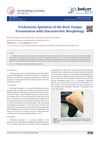
 A rare skin condition usually on the face was found on a man's heel.
9 citations
,
January 2011 in “American Journal of Dermatopathology” Pilomatrixoma involves abnormal hair keratin production and cell death, causing debris and cysts.
November 2020 in “Acta Medica Bulgarica/Acta medica Bulgarica” The document concludes that treatment improved skin lesions but not scalp hair loss in two patients with Graham-Little-Piccardi-Lassueur syndrome.
 September 2022 in “Anais Brasileiros de Dermatologia”
 Dermoscopy helped diagnose a rare skin disease which slightly improved with treatment.
July 2022 in “DOAJ (DOAJ: Directory of Open Access Journals)” Androgenetic alopecia is common, affects self-image, and has no complete cure yet.
 9 citations
,
April 2021 in “Expert opinion on pharmacotherapy”
9 citations
,
April 2021 in “Expert opinion on pharmacotherapy” Clascoterone is a new, effective, and safe acne treatment without systemic side effects.
51 citations
,
August 2012 in “Differentiation” Mouse genital development depends on male or female hormones for specific features.
4 citations
,
September 1992 in “Journal of Small Animal Practice” A French bulldog had sparse hair due to a condition similar to that seen in Chinese crested dogs.
 June 2025 in “International Journal of Applied Pharmaceutics”
 A testosterone-induced hair loss model in mice was successfully created for future research and treatment testing.
 July 2022 in “The journal of investigative dermatology/Journal of investigative dermatology”
 Scientists improved how to make skin-like structures from stem cells using special gels and a device that controls growth signals, leading to better hair and skin features.
1 citations
,
May 2008 in “Journal of Experimental Biology” Different species have unique sensory adaptations to perceive their environments.
 August 2021 in “Clinical and Experimental Dermatology”
 Children under 10 can experience hair thinning without hormone issues, and it may improve with treatment.
 May 2026 in “Research Square”
 The polyG fragment in Hoxc13 protein helps evolve mammalian skin and hair by enhancing gene interactions.
2 citations
,
June 2001 in “Medical Electron Microscopy” Trichilemmal cysts may form from hair follicle outer root sheath growth.
September 2017 in “Journal of Investigative Dermatology” LRIG1 protein affects hair growth by regulating skin receptors, leading to hair loss when overexpressed.
 February 2025 in “Prospects in Pharmaceutical Sciences”
 Clascoterone is a promising topical treatment for hair loss and acne with fewer side effects.
 December 2024 in “Indian Journal of Dermatology”
 Dermoscopy is useful for diagnosing Atrichia with Papular Lesions in children without needing a biopsy.
6 citations
,
January 2020 in “Open Journal of Psychiatry” The Greek DCQ is a reliable and valid tool for assessing dysmorphic concern.
56 citations
,
July 2004 in “Mechanisms of Development” Pax9 is crucial for proper tongue surface development and preventing skin-like changes.

Erk signaling helps zebrafish fins regrow to the right size by using memory of the original size.
 January 2020 in “Frontiers in Medical Case Reports”
 A dog developed skin issues from too many steroids, but reducing steroids and using a specific treatment fixed the problems.
 16 citations
,
February 2010 in “Journal of the European Academy of Dermatology and Venereology”
16 citations
,
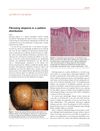
February 2010 in “Journal of the European Academy of Dermatology and Venereology” Fibrosing alopecia in a pattern distribution is a unique hair loss condition that may respond to antiandrogen therapy.
January 2011 in “Open Collections” Mouse preputial glands are highly developed sebaceous glands that mainly secrete neutral fat droplets.
Greater concern about hair loss is linked to more severe hair loss and worse quality of life.
42 citations
,
January 2014 in “BMC Genomics” Cetaceans lost hair genes to adapt to water.
 March 2024 in “Journal of clinical medicine”
 Trichoscopy shows hair diameter variability, vellus hairs, and the peripilar sign are key indicators for diagnosing Androgenetic Alopecia.
27 citations
,
December 1999 in “American Journal of Dermatopathology” Necrobiosis lipoidica may need new criteria for accurate diagnosis due to similarities with another condition.