 17 citations
,
May 2016 in “Archives of Dermatological Research”
17 citations
,
May 2016 in “Archives of Dermatological Research” Reflectance confocal microscopy can help tell apart scarring from non-scarring hair loss.
5 citations
,
July 2023 in “Microorganisms” The study found specific skin and cell changes in patients with monkeypox, helping diagnose and understand the disease.
 January 2026 in “Forum Dermatologicum”
 Hair loss can be caused by cancer, treatments, or skin conditions, and trichoscopy helps diagnose it.
 May 2021 in “Dermatopathology”
 The review emphasizes the need to recognize skin conditions that affect hair follicles and sweat glands to avoid misdiagnosis.
11 citations
,
July 1991 in “Veterinary Pathology” A dog had a rare skin condition linked to gland and pituitary issues.
 3 citations
,
January 2019 in “Indian Journal of Dermatology”
3 citations
,
January 2019 in “Indian Journal of Dermatology” Transverse scalp biopsy sections help diagnose different alopecias by showing hair follicle details and inflammation patterns.
 5 citations
,
February 2015 in “Journal of Comparative Pathology”
5 citations
,
February 2015 in “Journal of Comparative Pathology” High proliferative activity and peripheral invasion indicate malignancy in canine sebaceous gland tumors; the term 'epithelioma' should be updated for clarity.
 January 2016 in “Research Explorer (The University of Manchester)”
 Activating the Eda/Edar pathway improves wound healing by enhancing hair follicle growth.
 September 2023 in “Clinical, cosmetic and investigational dermatology”
 A patient with a rare form of lupus improved after treatment for skin ulcers and hair loss on the face and scalp.
April 2018 in “Veterinary Pathology” Tigers had a skin condition causing hair loss and inflammation, but the cause is unknown and treatment didn't work.
 6 citations
,
July 2019 in “Experimental Dermatology”
6 citations
,
July 2019 in “Experimental Dermatology” Skin can produce blood cells, often due to disease, which might lead to new treatments for skin and blood conditions.
 7 citations
,
March 2017 in “Journal of dermatology”
7 citations
,
March 2017 in “Journal of dermatology” The conclusion is that accurately identifying folliculosebaceous tumors requires understanding their clinical signs and microscopic features.
 1 citations
,
June 2014 in “Serbian Journal of Dermatology and Venereology”
1 citations
,
June 2014 in “Serbian Journal of Dermatology and Venereology” A woman with discoid lupus improved with treatment after being misdiagnosed with a different hair loss condition.
 1 citations
,
January 2018 in “ARC Journal of Dermatology”
1 citations
,
January 2018 in “ARC Journal of Dermatology” A patient had both chronic lupus and systemic scleroderma, requiring careful treatment to manage symptoms.
 May 2009 in “The American Journal of Dermatopathology”
 Mast cells play a significant role in hair loss conditions like male pattern hair loss and alopecia areata.
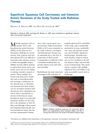 5 citations
,
May 2006 in “Dermatologic Surgery”
5 citations
,
May 2006 in “Dermatologic Surgery” Radiation therapy successfully treated an elderly man's skin cancer and pre-cancerous scalp lesions.
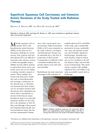 May 2006 in “Dermatologic Surgery”
 Radiation therapy successfully treated an elderly man's skin cancer and pre-cancerous scalp lesions.
 January 2017 in “Springer eBooks”
 The document concludes that Cutaneous Lupus Erythematosus has different forms, is influenced by genetic and environmental factors, and can be treated with various medications, but more targeted therapies are needed.
Different connective tissue disorders have unique symptoms and treatments, with varying outcomes and often require ongoing care from a specialist.
 10 citations
,
June 2019 in “Case reports in dermatology”
10 citations
,
June 2019 in “Case reports in dermatology” LALPS causes non-scarring hair loss along the Blaschko line, with unique trichoscopic findings.
 1 citations
,
October 2008 in “Expert Review of Dermatology”
1 citations
,
October 2008 in “Expert Review of Dermatology” Frontal Fibrosing Alopecia is a slowly progressing hair loss condition, likely underdiagnosed, with ineffective treatments, needing more research to understand it fully.
 16 citations
,
January 2013 in “Indian Journal of Dermatology, Venereology and Leprology”
16 citations
,
January 2013 in “Indian Journal of Dermatology, Venereology and Leprology” New treatments and early diagnosis methods for permanent hair loss due to scar tissue are important for managing its psychological effects.
 12 citations
,
December 2002 in “Archives of Dermatology”
12 citations
,
December 2002 in “Archives of Dermatology” Sweet syndrome can be the only sign of hairy cell leukemia relapse.
 6 citations
,
April 2020 in “Cureus”
6 citations
,
April 2020 in “Cureus” A woman with both TLE and SLE improved with hydroxychloroquine treatment.
 1 citations
,
April 2010 in “Expert Review of Dermatology”
1 citations
,
April 2010 in “Expert Review of Dermatology” The document concludes that early diagnosis and treatment are crucial for managing rare hair loss disorders and that more research is needed to improve treatment strategies.
 January 2015 in “Hair therapy & transplantation”
 New hair and scalp disease diagnosis methods are important for correct treatment.
 8 citations
,
August 1997 in “Australasian Journal of Dermatology”
8 citations
,
August 1997 in “Australasian Journal of Dermatology” Most HIV patients develop skin symptoms that can indicate the stage of their disease.
 94 citations
,
August 1975 in “Journal of Cutaneous Pathology”
94 citations
,
August 1975 in “Journal of Cutaneous Pathology” Male pattern baldness involves smaller hair follicles, larger oil glands, and other tissue changes, but not major blood supply issues.
 80 citations
,
June 2020 in “Dermatopathology”
80 citations
,
June 2020 in “Dermatopathology” COVID-19 can cause various skin lesions, which may result from the virus and immune response, and are not directly linked to illness severity.
 24 citations
,
January 2008 in “KARGER eBooks”
24 citations
,
January 2008 in “KARGER eBooks” The document concludes that ongoing research using animal models is crucial for better understanding and treating Alopecia Areata.