 1 citations
,
January 2006
1 citations
,
January 2006 Diagonal earlobe and preauricular creases may indicate higher coronary artery disease risk in men.
 5 citations
,
January 1985 in “Facial Plastic Surgery”
5 citations
,
January 1985 in “Facial Plastic Surgery” Flap surgery is effective for treating male baldness, offering immediate results with dense hair growth.
2 citations
,
July 2021 in “Bali Medical Journal” A preauricular crease is common in people with coronary artery disease.
7 citations
,
May 1996 in “PubMed” Milia en plaque can be caused by skin damage, tumors, or external factors.
4 citations
,
December 2014 in “Indian Journal of Dermatology” A rare skin condition with cysts was found on a 5-year-old boy's scalp.
10 citations
,
September 1994 in “International Journal of Dermatology” Three Iranian men had reddish-brown facial pigmentation with no effective treatment.
3 citations
,
August 2017 in “Clinical case reports” A rare skin condition causes red and dark patches on the face and limbs.
 4 citations
,
November 1996 in “European journal of endocrinology”
4 citations
,
November 1996 in “European journal of endocrinology” Spironolactone may help treat excessive hair growth in girls, but more research is needed.
 1 citations
,
August 2023 in “bioRxiv (Cold Spring Harbor Laboratory)”
1 citations
,
August 2023 in “bioRxiv (Cold Spring Harbor Laboratory)” Certain cells in the adult mouse ear come from cranial neural crest cells, but muscle and hair cells do not.
 2 citations
,
September 2002 in “Dermatologic Surgery”
2 citations
,
September 2002 in “Dermatologic Surgery” Each group of hair follicles on the scalp shares one muscle that helps control hair movement.
The model explains how mammal ear hair cells respond to sound and adapt.
 24 citations
,
September 2002 in “Dermatologic Surgery”
24 citations
,
September 2002 in “Dermatologic Surgery” The study found that hair follicles are above muscle connections in the scalp, which may help protect stem cell areas.
2 citations
,
January 2025 in “Development” BMP5 is essential for ear cartilage cell growth in rodents.
 34 citations
,
October 2004 in “Plastic and Reconstructive Surgery”
34 citations
,
October 2004 in “Plastic and Reconstructive Surgery” Nasolabial skin-fat grafts are good for nasal reconstruction with minimal scarring and no need for bolsters, but smoking may affect graft survival.
 7 citations
,
November 2017 in “Cureus”
7 citations
,
November 2017 in “Cureus” Ear creases might indicate heart disease risk, needing more research.
 14 citations
,
July 2016 in “Anatomical Science International”
14 citations
,
July 2016 in “Anatomical Science International” The study suggests that the arrector pili muscle is important for hair health and its damage might contribute to hair loss.
 September 2025 in “PubMed”
 Auricular electrostimulation reduces itching in mice.
 179 citations
,
December 2004 in “Journal of The American Academy of Dermatology”
179 citations
,
December 2004 in “Journal of The American Academy of Dermatology” Some postmenopausal women with frontal fibrosing alopecia stopped losing hair with finasteride treatment, hinting at a possible hormonal cause.
 14 citations
,
July 2012 in “Journal of the American Academy of Dermatology”
14 citations
,
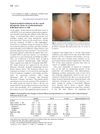
July 2012 in “Journal of the American Academy of Dermatology” Topical tacalcitol ointment can help improve symptoms of EFFC.
 10 citations
,
June 2011 in “Archives of Dermatology”
10 citations
,
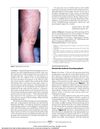
June 2011 in “Archives of Dermatology” Finasteride caused blisters on hands and feet.
 1 citations
,
June 1979 in “The Journal of Dermatologic Surgery and Oncology”
1 citations
,
June 1979 in “The Journal of Dermatologic Surgery and Oncology” Doctors successfully rebuilt a sideburn using skin and hair from near the ear in one surgery.
 April 2018 in “British Journal of Oral & Maxillofacial Surgery”
 The Gillies temporal incision is a safer and more cosmetically appealing method for biopsy of the superficial temporal artery.
 June 2015 in “Reactions Weekly”
 A man developed alopecia areata after starting cancer treatment with vandetanib.
 December 2014 in “Berkala Ilmu Kesehatan Kulit dan Kelamin”
 Griseofulvin effectively treats tinea capitis kerion type.
 29 citations
,
July 2010 in “Journal of Cutaneous Medicine and Surgery”
29 citations
,
July 2010 in “Journal of Cutaneous Medicine and Surgery” Treatments for Frontal Fibrosing Alopecia have not been proven effective.
 17 citations
,
November 2018 in “Dermatology”
17 citations
,
November 2018 in “Dermatology” Most patients with frontal fibrosing alopecia had facial bumps, with Hispanic/Latino and premenopausal women being more affected, suggesting a more severe condition.
 10 citations
,
December 1999 in “Journal of The American Academy of Dermatology”
10 citations
,
December 1999 in “Journal of The American Academy of Dermatology” The technique of using a skin and hair graft from behind the ear successfully reconstructed a large eyebrow defect with good cosmetic results.
 January 2022 in “Autopsy and Case Reports”
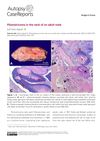
 A man had a non-cancerous neck tumor related to hair follicles removed with no return of the tumor.
 January 2019 in “Clinical Dermatology Open Access Journal”
 Combining corticosteroids and non-ablative fractional laser therapy may effectively treat extensive alopecia areata.
 1 citations
,
December 2021 in “Kathmandu University medical journal”
1 citations
,
December 2021 in “Kathmandu University medical journal” Adult earlobe can have a benign cyst that is usually removed by surgery.