 95 citations
,
January 2004 in “Archives of Dermatological Research”
95 citations
,
January 2004 in “Archives of Dermatological Research” Peripilar signs can help diagnose androgenetic alopecia and reveal its cause.
 46 citations
,
January 2015 in “Journal of The American Academy of Dermatology”
46 citations
,
January 2015 in “Journal of The American Academy of Dermatology” Trichoscopy helps diagnose and assess the severity of Frontal Fibrosing Alopecia.
 33 citations
,
July 1992 in “Journal of Investigative Dermatology”
33 citations
,
July 1992 in “Journal of Investigative Dermatology” Minoxidil doesn't affect perifollicular lymphoid infiltration in alopecia areata patients.
1 citations
,
January 2025 in “Dermatology Practical & Conceptual” Trichoscopy helps distinguish Lichen Planopilaris from Frontal Fibrosing Alopecia by identifying unique hair loss patterns.
August 2024 in “Indian Dermatology Online Journal” DCPA commonly affects males' lower legs, showing follicular pustules and white areas.
 July 2024 in “Iranian journal of pathology”
 Frontal fibrosing alopecia mainly affects women over 50, causing hair loss and specific skin changes.
July 2019 in “Indian dermatology online journal” Alopecia areata can show unusual red-dotted vessels and dithranol treatment may mask typical patterns.
 April 2016 in “Journal of The American Academy of Dermatology”
 The study found that Temporal Triangular Alopecia often starts in early childhood, while Folliculitis Decalvans is characterized by tufted hairs and redness around hair follicles.
October 2021 in “Technology transfer: innovative solutions in medicine” The combined treatment improved scalp health in women with early-stage hair loss.
 September 2014 in “Chinese Journal of Dermatology”
 Hair diameter difference, brown skin discoloration around hair follicles, and missing hair in certain areas are key signs of androgenetic alopecia (commonly known as hair loss) when viewed under a dermoscope.
 December 2023 in “Journal of dermatology”
 The study concluded that key signs of Keratosis follicularis spinulosa decalvans are changes in terminal hair and vellus hair follicles, which likely start the inflammation and damage to hair follicles.
 46 citations
,
January 1996 in “Journal of The American Academy of Dermatology”
46 citations
,
January 1996 in “Journal of The American Academy of Dermatology” People with late-stage HIV-1 often experience a specific type of hair loss linked to multiple factors, including nutritional issues and immune responses.
 4 citations
,
January 2019 in “PubMed”
4 citations
,
January 2019 in “PubMed” Patterned hair loss in women is linked to hormonal imbalances and biochemical changes, and should be evaluated for underlying health issues.
 December 2023 in “Clinical, cosmetic and investigational dermatology”
 The study found that white hair in vitiligo has specific patterns and structures, which vary with the stage of the disease and may be similar to another hair condition.
October 2025 in “Clinical and Experimental Dermatology” Fibrosing alopecia can be stabilized or improved with anti-inflammatory treatments and hair growth agents.
 November 2018 in “Skin appendage disorders”
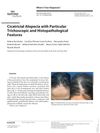
 The document concludes that a woman has both Frontal Fibrosing Alopecia and Lichen Simplex Chronicus, a previously unreported combination of conditions.
 33 citations
,
August 2013 in “British Journal of Dermatology”
33 citations
,
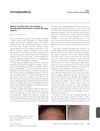
August 2013 in “British Journal of Dermatology” Lack of small, fine hair on the front hairline is a key sign of frontal fibrosing alopecia.
January 2023 in “Indian journal of pharmacy practice” Over-the-counter cosmetic creams can cause skin damage on the face that is visible under dermoscopy and confirmed by tissue analysis.
 April 2016 in “Journal of The American Academy of Dermatology”
 Low-cost videomicroscopes might not be reliable for examining scalp disorders compared to standard methods.
 April 2016 in “Journal of The American Academy of Dermatology”
 Low-cost videomicroscopes may not be reliable for diagnosing scalp disorders, smartphones could be reasonable for teledermatology, and U.S. residency programs need more teledermatology training.
Combining anti-androgenic, anti-inflammatory, and anti-fibrotic treatments may improve hair loss outcomes.
 8 citations
,
December 2017 in “Journal of The American Academy of Dermatology”
8 citations
,
December 2017 in “Journal of The American Academy of Dermatology” The authors updated the criteria for diagnosing frontal fibrosing alopecia, making it easier to diagnose without a biopsy.

COVID-19 can cause significant hair loss.
June 2023 in “American Journal of Dermatopathology” Young women in Jamaica often experience chronic scarring hair loss.
 January 2022 in “Przegla̧d dermatologiczny”
 The document concludes that there are various treatments for diseases linked to scarring hair loss, especially for primary scarring alopecia.
July 2026 in “Anais Brasileiros de Dermatologia” AGA and SD share similar features, making diagnosis challenging.
 November 2023 in “International Journal of Trichology”
 Trichoscopic features help diagnose and assess female pattern hair loss severity, with inflammation playing a key role.
Dermoscopic features can help distinguish female androgenetic alopecia from telogen effluvium and healthy controls.
 August 2016 in “Journal of Investigative Dermatology”
 Scalp psoriasis features reversible hair loss and specific immune activation, with no significant hair follicle damage.
 April 2023 in “Journal of Investigative Dermatology”
 The study suggests fibrosing alopecia in a pattern distribution has distinct features and may vary by race.