18 citations
,
March 2009 in “Experimental Dermatology” Pilomatricoma can develop into various hair-related structures.
December 2018 in “International journal of women’s dermatology” FFA in young women is often missed, and no single treatment works best.
5 citations
,
March 1943 in “Archives of Dermatology and Syphilology” A rare case of severe scalp hair loss and nail issues in keratosis follicularis was observed.
54 citations
,
November 2007 in “Actas Dermo-Sifiliográficas” Early diagnosis of frontal fibrosing alopecia is crucial to prevent permanent hair loss.
 8 citations
,
November 2015 in “The American journal of dermatopathology/American journal of dermatopathology”
8 citations
,
November 2015 in “The American journal of dermatopathology/American journal of dermatopathology” Punctate follicular porokeratosis is a skin condition with specific features seen in hair follicles.
 3 citations
,
June 2023 in “Cureus”
3 citations
,
June 2023 in “Cureus” Pilomatricomas should be considered to avoid misdiagnosis in children with unusual skin tumors.
January 2016 in “Indian dermatology online journal” Frontal fibrosing alopecia causes hair loss at the front hairline, and no effective treatment exists.
25 citations
,
May 1995 in “Journal of the American Academy of Dermatology” Erythromelanosis follicularis faciei can also affect women, though it's rare.
 1 citations
,
September 2021 in “CRC Press eBooks”
1 citations
,
September 2021 in “CRC Press eBooks” Frontal Fibrosing Alopecia is a hair loss condition mainly affecting postmenopausal women, with unclear causes and various clinical patterns.
7 citations
,
February 2019 in “Anais Brasileiros de Dermatologia” 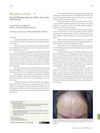 May 2019 in “Anais brasileiros de dermatologia/Anais Brasileiros de Dermatologia”
 Frontal fibrosing alopecia mostly affects postmenopausal women, with diagnosis often delayed by 3 years.
 1 citations
,
April 2017 in “Journal of Investigative Dermatology”
1 citations
,
April 2017 in “Journal of Investigative Dermatology” D-OCT shows increased blood vessel growth in response to tissue damage in Frontal Fibrosing Alopecia and is useful for diagnosis and monitoring.
11 citations
,
June 1974 in “Journal of Cutaneous Pathology” Follicular mucinosis causes significant damage to hair follicle cells.
Tricholemmoma is linked to Cowden syndrome and can be benign or malignant.
 1 citations
,
October 2008 in “Expert Review of Dermatology”
1 citations
,
October 2008 in “Expert Review of Dermatology” Frontal Fibrosing Alopecia is a slowly progressing hair loss condition, likely underdiagnosed, with ineffective treatments, needing more research to understand it fully.
14 citations
,
January 2014 in “Indian Journal of Dermatology Venereology and Leprology” Frontal fibrosing alopecia can affect men's beards and leads to permanent hair loss.
3 citations
,
January 2017 in “Acta Dermato Venereologica” Lipid-antigen stimulation may play a role in folliculotropic mycosis fungoides.
 13 citations
,
March 2011 in “British Journal of Dermatology”
13 citations
,
March 2011 in “British Journal of Dermatology” A woman with scalp lymphoma and hair loss improved with radiotherapy, highlighting the need for biopsies in similar cases.
12 citations
,
August 1988 in “Histopathology” The tumor likely shows dual neural crest differentiation.
 9 citations
,
August 2017 in “Journal of comparative pathology”
9 citations
,
August 2017 in “Journal of comparative pathology” Trichoblastomas in rabbits are linked to uncontrolled embryonic hair growth and have distinct histological features.
 April 2024 in “Journal of Cytology”
 A rare skin tumor with bone formation was successfully removed without recurrence.
 1 citations
,
February 2017 in “Clinical Dermatology Open Access Journal”
1 citations
,
February 2017 in “Clinical Dermatology Open Access Journal” A rare benign tumor was found in a man's scrotum, highlighting the need for accurate diagnosis.
 June 2024 in “British Journal of Dermatology”
 A 15-year-old boy was correctly diagnosed with a rare skin condition after initially being misdiagnosed.
 18 citations
,
November 2012 in “Australasian Journal of Dermatology”
18 citations
,
November 2012 in “Australasian Journal of Dermatology” A 66-year-old man with a rare case of male frontal fibrosing alopecia did not regrow hair despite treatment.
 May 2026 in “International Journal of Drug Delivery Technology”
 Accurate diagnosis of EFFC is crucial for effective counseling and cosmetic care.
 December 2020 in “Skin appendage disorders”
 A young man with an unusual type of scarring hair loss suggests a possible new variant of a known scalp condition.
1 citations
,
January 2015 in “Indian Journal of Veterinary Pathology” Two dogs had different types of hair follicle tumors.
53 citations
,
June 2019 in “JEADV. Journal of the European Academy of Dermatology and Venereology/Journal of the European Academy of Dermatology and Venereology” Frontal fibrosing alopecia mainly affects postmenopausal women and may be linked to thyroid hormones.
 21 citations
,
January 2018 in “Anticancer Research”
21 citations
,
January 2018 in “Anticancer Research” NBCCS and BFHS might be the same syndrome, helping better identify and manage cases.
 3 citations
,
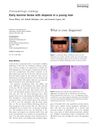
April 2016 in “International Journal of Dermatology”
3 citations
,
April 2016 in “International Journal of Dermatology” A young man was diagnosed with trichoepitheliomas, causing thick skin and hair loss.