 April 2023 in “The journal of investigative dermatology/Journal of investigative dermatology”
 People with alopecia areata have fewer IL-10 producing immune cells, which might contribute to the condition.

Microinfusion therapy and testosterone use may cause scalp inflammation, requiring early recognition and treatment.
 December 2024 in “Quality in Sport”
 PCOS involves immune system issues and inflammation, possibly leading to autoimmune diseases.
June 2026 in “kerbala journal of pharmaceutical sciences” Alopecia areata involves immune issues, inflammation, and nutrient deficiencies.

Iron deficiency worsens inflammatory skin diseases by disrupting iron balance and increasing inflammation.
 June 2023 in “Dermatology online journal”
 A person with thyroid problems had rare, swollen, bald spots on their scalp caused by a condition usually found on the shins.
7 citations
,
March 2018 in “Experimental Dermatology” Acne lesions don't show increased keratinocyte growth compared to healthy hair follicles.
8 citations
,
March 2023 in “BMC Research Notes” Laser-capture microdissection effectively analyzes hair follicle microbiomes, revealing region-specific bacterial differences.
 2 citations
,
November 2007 in “Journal of Investigative Dermatology”
2 citations
,
November 2007 in “Journal of Investigative Dermatology” Fluocinolone acetonide slows down hair follicle stem cells but speeds up skin cell growth in mice.
1 citations
,
September 2004 in “Experimental Dermatology” MC-1R is present in skin cells and may help reduce inflammation.
 12 citations
,
February 1997 in “British Journal of Dermatology”
12 citations
,
February 1997 in “British Journal of Dermatology” The enzyme type 1 5α-reductase is more active in the hair follicle's lower part than in the skin's outer layer.
8 citations
,
July 2017 in “The journal of investigative dermatology/Journal of investigative dermatology” Certain microRNAs might help identify and understand Frontal Fibrosing Alopecia.
July 2022 in “Journal of Investigative Dermatology” Arg1+ macrophages may play a role in Alopecia Areata, offering new treatment targets.
 52 citations
,
March 2010 in “British Journal of Dermatology”
52 citations
,
March 2010 in “British Journal of Dermatology” Alopecia areata shows a unique type 1 interferon signature, suggesting potential treatment by targeting this pathway.
 September 2023 in “Research Square (Research Square)”
 TNC+ fibroblasts play a key role in skin inflammation by interacting with T cells.
 August 2016 in “Journal of Investigative Dermatology”
 The research found that certain microRNAs are important for human hair growth and health.
April 2026 in “Health care of Tajikistan” Combined therapy reduces inflammation and restores immune balance in alopecia areata patients.
Bipotent dermal stem cells and specific macrophages are crucial for hair regrowth and regeneration.
3 citations
,
September 1998 in “International Journal of Dermatology” Acitretin effectively improved the woman's skin condition.
 14 citations
,
June 2013 in “Anais Brasileiros de Dermatologia”
14 citations
,
June 2013 in “Anais Brasileiros de Dermatologia” Follicular red dots may be a normal feature seen in people with less skin pigmentation, not necessarily indicating a scalp disorder.
 1 citations
,
February 2017 in “The American journal of dermatopathology/American journal of dermatopathology”
1 citations
,
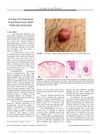
February 2017 in “The American journal of dermatopathology/American journal of dermatopathology” A man with a skin nodule was diagnosed with a rare skin condition called cutaneous focal mucinosis, which can be confused with other skin cancers.
February 2018 in “Archivio Istituzionale della Ricerca (Universita Degli Studi Di Milano)” Ferroportin in macrophages is crucial for hair growth and skin healing by managing iron distribution.
15 citations
,
May 2008 in “British Journal of Dermatology” Chronic scalp inflammation can turn into cancer, so regular check-ups are important.
May 2025 in “Journal of the Egyptian Womenʼs Dermatologic Society” Hair follicles in nonsegmental vitiligo are better protected from immune attacks than in alopecia areata.
23 citations
,
September 2020 in “Journal of Dermatological Science” Targeting Vδ1+T-cells may help treat alopecia areata.
July 2025 in “Skin Research and Technology” Hsa-miR-193a-5p is important in alopecia areata by promoting inflammation and involving specific genes in hair and immune function.
August 1994 in “Journal of Dermatological Science” 40 citations
,
July 2008 in “PROTEOMICS” A new model helps study acne and test treatments.
1 citations
,
September 2023 in “Portuguese Journal of Dermatology and Venereology” Trichoscopy can help diagnose and decide when to biopsy folliculotropic mycosis fungoides.
 35 citations
,
November 2010 in “Journal of Cutaneous Pathology”
35 citations
,
November 2010 in “Journal of Cutaneous Pathology” Dilated follicular infundibula and increased catagen/telogen follicles are key indicators for diagnosing alopecia areata.