3 citations
,
August 2017 in “Clinical case reports” A rare skin condition causes red and dark patches on the face and limbs.
 1 citations
,
April 2019 in “JAAD case reports”
1 citations
,
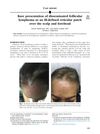
April 2019 in “JAAD case reports” A woman with lymphoma had a rare skin rash on her scalp and forehead, which was hard to diagnose but responded well to treatment.
August 2023 in “Portuguese journal of dermatology and venereology” Cyclosporine can reverse hair graying.
1 citations
,
April 2016 in “PubMed” Epidermis and dermis cells together can regenerate hair follicles.
 5 citations
,
April 2021 in “JAAD Case Reports”
5 citations
,
April 2021 in “JAAD Case Reports” Platelet-rich plasma therapy may help treat folliculitis decalvans but benefits might not last without ongoing treatment.
December 2025 in “Clinical Case Reports” Exosome therapy helped regrow and repigment beard hair in a man with alopecia.
Keratinocytes grew and migrated into hair follicle areas but disappeared after 15-20 days.
20 citations
,
January 1995 in “Cells tissues organs” Changing light periods synchronized wool growth cycles in sheep.
June 2025 in “Clinical and Experimental Dermatology” Baricitinib treatment led to dark brown hair regrowth in a red-haired woman with alopecia areata.
 13 citations
,
March 2011 in “British Journal of Dermatology”
13 citations
,
March 2011 in “British Journal of Dermatology” A woman with scalp lymphoma and hair loss improved with radiotherapy, highlighting the need for biopsies in similar cases.
6 citations
,
March 2005 in “Journal of the American Academy of Dermatology” Follicular dystrophy in immunocompromised patients may be linked to medication or viral factors and can improve with treatment changes.
 9 citations
,
June 1959 in “Archives of dermatology”
9 citations
,
June 1959 in “Archives of dermatology” Hair can darken after inflammation and then return to its original color.
 November 2023 in “Journal of the American Academy of Dermatology”
 Skin of color can spontaneously repigment after a phenol-croton oil chemical peel.
 September 2017 in “Journal of Investigative Dermatology”
 Hair follicle cells change their DNA packaging during growth cycles and when grown in the lab.
February 2013 in “Journal of the American Academy of Dermatology” Follicular red dots can appear where alopecia areata and vitiligo overlap.
September 2023 in “International Journal of Trichology” A rare hair regrowth pattern can occur in some people with alopecia areata.
September 2017 in “Journal of Investigative Dermatology” Photodynamic therapy can potentially remove nonpigmented hair by damaging hair follicles.
October 2025 in “International Journal of Molecular Sciences” Rebamipide may help regrow hair by activating hair follicle stem cells.
1 citations
,
October 2023 in “European Journal of Dermatology” Combining hair transplantation with PRP is more effective for treating hair loss than hair transplantation alone.
41 citations
,
January 2006 in “Dermatology” Noncultured epidermal cell transplantation is effective for repigmenting stable vitiligo.
 March 2026 in “European Journal of Biomedical and Life Sciences”
 Restorative dermopigmentation improves skin appearance and function by addressing specific skin issues.

Injecting follicular cells into skin can lead to the formation of new hair follicles.
 13 citations
,
March 2012 in “The Journal of Dermatology”
13 citations
,
March 2012 in “The Journal of Dermatology” Hair transplant surgery can rebuild muscle and nerve connections, allowing transplanted hairs to stand up like normal hairs.
1 citations
,
November 2021 in “Oman Medical Journal” Cyclosporine A treatment caused rare hair repigmentation in a 65-year-old man.
450 citations
,
January 2005 in “The journal of investigative dermatology/Journal of investigative dermatology” Hair color is determined by melanin produced and transferred in hair follicles.
5 citations
,
May 1958 in “Archives of Dermatology” Treatment with corticosteroids and zinc injections can help hair regrowth and restore pigmentation in alopecia totalis.
 29 citations
,
September 1997 in “PubMed”
29 citations
,
September 1997 in “PubMed” Follicular transplantation can greatly improve hair restoration if done with detailed planning and patient evaluation.

Permanent micropigmentation can help cancer survivors feel better about themselves by restoring eyebrows lost during chemotherapy.
 6 citations
,
November 2011 in “Journal of Dermatological Science”
6 citations
,
November 2011 in “Journal of Dermatological Science” A new gene mutation may allow some piebaldism patients to regain skin color in white patches.
November 2025 in “Journal of Cosmetic Dermatology” Exosome therapy can safely and effectively restore color to gray hair.