 38 citations
,
September 2014 in “Cell and Tissue Research”
38 citations
,
September 2014 in “Cell and Tissue Research” The hair follicle infundibulum plays a key role in skin health and disease, and understanding it better could lead to new skin disease treatments.
 March 2025 in “International Journal of Trichology”
 FAPD in children may not depend on androgens and should be treated with anti-inflammatory measures and minoxidil.
 1 citations
,
January 2018 in “Journal of SAFOMS”
1 citations
,
January 2018 in “Journal of SAFOMS” A rare ovarian tumor can cause unusual male-like symptoms, but surgery usually leads to a good outcome.
 179 citations
,
December 2004 in “Journal of The American Academy of Dermatology”
179 citations
,
December 2004 in “Journal of The American Academy of Dermatology” Some postmenopausal women with frontal fibrosing alopecia stopped losing hair with finasteride treatment, hinting at a possible hormonal cause.
 72 citations
,
November 2012 in “PloS one”
72 citations
,
November 2012 in “PloS one” The protein folliculin, involved in a rare disease, works with another protein to control how cells stick together and their organization, and changes in this interaction can lead to disease symptoms.
475 citations
,
October 2006 in “Proceedings of the National Academy of Sciences” Folliculin helps regulate energy and nutrient sensing, impacting Birt–Hogg–Dubé syndrome.
47 citations
,
September 2012 in “Human molecular genetics online/Human molecular genetics” Folliculin deficiency causes problems with cell division and positioning due to disrupted RhoA signaling and interaction with p0071.
April 2025 in “Indian Journal of Dermatology” A rare, benign facial tumor called fibrofolliculoma was successfully treated with surgery.
October 2025 in “Clinical and Experimental Dermatology” Fibrosing alopecia can be stabilized or improved with anti-inflammatory treatments and hair growth agents.
Basaloid follicular hamartoma is a rare, benign skin growth often misdiagnosed.
58 citations
,
April 1993 in “Developmental Biology” bFGF delays hair growth in mice.
A 16-year-old girl with gum overgrowth and excessive hair growth had successful gum surgery and healed well.
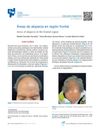 January 2025 in “Revista del Centro Dermatológico Pascua”
 Early diagnosis and treatment can help manage fibrosing alopecia in older women.
1 citations
,
January 2021 in “Figshare” The conclusion is that surgical removal of solitary fibrofolliculoma is effective with no relapses, and diagnosis requires a biopsy due to varied symptoms.
Genetic factors might cause fibrosing alopecia linked to hair shaft abnormalities.
 May 2025 in “Journal of Clinical Images and Medical Case Reports”
 Hair transplants can trigger a rare scarring hair loss that is hard to treat.
 August 2015 in “Dermatología Argentina”
 Frontal fibrosing alopecia causes hairline recession and eyebrow loss in postmenopausal women.
 7 citations
,
August 2018 in “The American Journal of Dermatopathology”
7 citations
,
August 2018 in “The American Journal of Dermatopathology” Researchers found a new early sign of Frontal Fibrosing Alopecia that could help avoid misdiagnosis.
6 citations
,
July 2004 in “JDDG Journal der Deutschen Dermatologischen Gesellschaft” Frontal fibrosing alopecia in postmenopausal women can be managed with early treatment using corticosteroids to stop hair loss.
 44 citations
,
January 2006 in “Biological & Pharmaceutical Bulletin”
44 citations
,
January 2006 in “Biological & Pharmaceutical Bulletin” Androgen hormones cause hair follicle scarring in hair loss, and finasteride helps reduce it.
 April 2012 in “Informa Healthcare eBooks”
 Fibrosing alopecia in a pattern distribution is a unique hair loss condition with inflammation and scarring, resembling but distinct from common balding.
 December 2016 in “Journal of Dermatology and Dermatologic Surgery”
 IFHUT shows better hair growth than FUE, but needs improvements in positioning, speed, and accuracy.
 16 citations
,
February 2010 in “Journal of the European Academy of Dermatology and Venereology”
16 citations
,
February 2010 in “Journal of the European Academy of Dermatology and Venereology” Fibrosing alopecia in a pattern distribution is a unique hair loss condition that may respond to antiandrogen therapy.
 January 2026 in “Clinical Cosmetic and Investigational Dermatology”
 Early diagnosis and targeted anti-inflammatory treatments can improve outcomes in androgenetic alopecia with perifollicular inflammation and fibrosis.
 57 citations
,
January 2003 in “Clinical and experimental dermatology”
57 citations
,
January 2003 in “Clinical and experimental dermatology” Postmenopausal frontal fibrosing alopecia is a type of hair loss in postmenopausal women that may stop on its own but has no effective treatment.
17 citations
,
June 2016 in “Archives de Pédiatrie” Frontal fibrosing alopecia can occur in children, not just postmenopausal women.
21 citations
,
April 2000 in “Journal of Cutaneous Pathology” The hamartoma is an abnormal hair growth with limited development in the upper hair follicle.
1 citations
,
April 2024 in “Journal of Cutaneous Pathology” Recurrent NICF is a rare skin condition with unclear causes, involving follicle inflammation and crystal deposits.
1 citations
,
August 2024 in “Pediatric Dermatology” A rare, harmless hair condition was found in an infant's eyebrow, needing no treatment.
28 citations
,
July 1993 in “The journal of investigative dermatology/Journal of investigative dermatology”