 1 citations
,
June 1987 in “British Journal of Dermatology”
1 citations
,
June 1987 in “British Journal of Dermatology” Patterned hair loss is relatively common in women and not usually a sign of serious health issues.
 September 2023 in “bioRxiv (Cold Spring Harbor Laboratory)”
 Some hair growth cells remain in partially bald areas of Indian men with hair loss.
 8 citations
,
March 2017 in “Experimental Dermatology”
8 citations
,
March 2017 in “Experimental Dermatology” Finasteride helps female-pattern hair loss.
September 2024 in “Indian Journal of Dermatology Venereology and Leprology”  23 citations
,
April 2002 in “Journal of the American Academy of Dermatology”
23 citations
,
April 2002 in “Journal of the American Academy of Dermatology” Depigmented hair regrowth after alopecia areata can be permanent.
 4 citations
,
July 2005 in “International Journal of Dermatology”
4 citations
,
July 2005 in “International Journal of Dermatology” Topical PUVA and tacrolimus ointment can effectively and safely treat infant alopecia universalis.
13 citations
,
November 2015 in “Journal of anesthesia” A woman permanently lost hair on her scalp after a long surgery.
5 citations
,
October 1990 in “Archives of Dermatology”  February 2011 in “Journal of the American Academy of Dermatology”
 A 60-year-old man with a long-term balding condition also developed a rare hair loss condition usually seen in postmenopausal women.
 7 citations
,
September 1977 in “PubMed”
7 citations
,
September 1977 in “PubMed” A new technique called hair-lifting was introduced to treat male-pattern baldness and can also give a partial face-lift.
 36 citations
,
April 2016 in “British journal of dermatology/British journal of dermatology, Supplement”
36 citations
,
April 2016 in “British journal of dermatology/British journal of dermatology, Supplement” A substance called VIP might protect hair follicles from being attacked by the immune system, and problems with VIP signaling could lead to hair loss in alopecia areata.
June 2011 in “European Journal of Pediatric Dermatology” An 11-year-old girl with hair thinning was diagnosed with monilethrix and early androgenetic alopecia.
17 citations
,
April 1997 in “American Journal of Dermatopathology” PC-associated alopecia has unique microscopic features.
February 1980 in “PubMed” 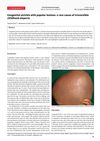 5 citations
,
January 2018 in “Acta Dermatovenerologica Alpina Pannonica et Adriatica”
5 citations
,
January 2018 in “Acta Dermatovenerologica Alpina Pannonica et Adriatica” Congenital atrichia with papular lesions causes permanent hair loss in children.

The patient with total hair loss did not regrow hair despite treatment, indicating a poor outlook for this type of hair loss.
January 2022 in “Voennaâ medicina” A new method for treating male pattern baldness in men with a low chance of improvement was discussed.
1 citations
,
April 1990 in “PubMed” Alopecia areata causes unpredictable hair loss and is hard to treat.
 July 2023 in “IntechOpen eBooks”
 Some types of hair loss can be reversed, others are permanent, and treatments vary by type.
June 2026 in “Skin Appendage Disorders” Diffuse unpatterned alopecia causes widespread hair thinning and is hard to diagnose and treat.
 95 citations
,
January 2004 in “Archives of Dermatological Research”
95 citations
,
January 2004 in “Archives of Dermatological Research” Peripilar signs can help diagnose androgenetic alopecia and reveal its cause.
 2 citations
,
December 1995 in “Pediatrics”
2 citations
,
December 1995 in “Pediatrics” Infant hair loss is usually temporary and grows back without treatment.
 September 1997 in “Journal of The European Academy of Dermatology and Venereology”
 Alopecia linked to higher anxiety and personality disorders.
January 2024 in “Elsevier eBooks” Alopecia areata causes patchy hair loss but hair can regrow on its own.
 August 2021 in “EMC - AKOS - Trattato di Medicina”
 Acquired alopecia is hair loss that can be reversible or irreversible, depending on whether the hair follicle is destroyed.
August 2025 in “EMC - AKOS - Trattato di Medicina” Non-scarring alopecia can regrow hair, but scarring alopecia is often permanent and needs quick treatment.
 March 2009 in “Medical & surgical dermatology”
 Women with androgenetic alopecia have fewer terminal hairs, phenol in nail surgery is safe, and a new hair transplant method is faster and less damaging.
58 citations
,
May 2004 in “British Journal of Dermatology” Diphenylcyclopropenone treatment helps hair growth in alopecia areata by promoting blood vessel growth and cell survival.