January 2015 in “Faculty of 1000 Research Ltd” Androgenetic alopecia may be irreversible due to the detachment of a muscle from hair follicles.
1 citations
,
January 2017 in “International journal of trichology” Diphenylcyclopropenone (DPCP) effectively treated both alopecia areata and verruca vulgaris.
 6 citations
,
May 1994 in “Hair transplant forum international”
6 citations
,
May 1994 in “Hair transplant forum international” Women can also experience hair loss due to hormone changes.
2 citations
,
July 2013 in “PubMed” The pubic hair loss was likely due to anorexia nervosa.
January 2026 in “Surgical & Cosmetic Dermatology”  22 citations
,
July 2012 in “International Journal of Trichology”
22 citations
,
July 2012 in “International Journal of Trichology” Miniaturized hairs stay connected to muscle in alopecia areata, allowing possible regrowth, but not in androgenetic alopecia.
 January 2023 in “Vìsnik problem bìologìï ì medicini”
 Androgenic alopecia causes hair follicle degradation and skin restructuring, but some hair elements remain.
 January 2018 in “Elsevier eBooks”
 The document concludes that alopecia has various forms, each with specific treatments, but no definitive cure for certain types like CCCA has been proven.
 September 2025 in “Cureus”
 Plica neuropathica can occur with diffuse alopecia and should be considered in diagnosis.

Preventive measures during surgery can avoid hair loss complications.
 4 citations
,
October 2011 in “Pediatric dermatology”
4 citations
,
October 2011 in “Pediatric dermatology” Head lice can cause unusual patchy hair loss.
 January 2022 in “Consultant”
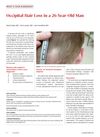
 The man's occipital hair loss was due to temporal triangular alopecia, not alopecia areata.
April 2023 in “The Medical Journal of Australia” A five-year-old girl has a harmless, unchanging bald patch on her scalp.
May 2025 in “International Journal of Trichology” Partially bald areas in Indian AGA patients still have hair growth cells, suggesting early treatment is best.
January 2026 in “International Journal of Dermatology” Treatment improved scalp conditions and hair loss with no recurrence after 1 year.
 December 2024 in “Australian Journal of General Practice”
 The woman's hair loss pattern doesn't match typical conditions like alopecia areata or female pattern hair loss.
 June 2023 in “Research Square (Research Square)”
 Hair loss in male pattern baldness is linked to changes in immune cell behavior around hair follicles.
July 2024 in “Clinical Case Reports” Recognizing rare hair loss patterns in young females can improve understanding and treatment.
 March 2019 in “Nasza Dermatologia Online”
 A rare scalp condition with hair loss was correctly diagnosed and treated, leading to hair regrowth.
January 2009 in “Journal watch” The treatment helped some patients with severe hair loss regrow hair.
 January 2000 in “대한피부과학회지”
 Hair loss was most commonly due to alopecia areata, androgenetic alopecia, and telogen effluvium, with a higher number of cases in the 1990s and equal occurrence in men and women.
May 1979 in “Archives of Dermatology” Alopecia can be linked to autoimmune issues, vitiligo, nail problems, and sometimes cancer treatments.
4 citations
,
September 2020 in “Journal of Cutaneous Pathology” 3 citations
,
November 2021 in “Frontiers in Medicine” Advanced male pattern baldness affects the back of the scalp, reducing hair follicles.
 February 2014 in “Medicine - Programa De Formación Médica Continuada Acreditado”
 The document concludes that non-scarring alopecias can be reversed, but scarring alopecias cause permanent hair loss.
 February 2023 in “Journal of vaccines and immunology”
 Alopecia areata causes sudden hair loss, often on the scalp, and can be severe, especially with early onset or related health issues.
 May 2023 in “Clinical and Experimental Dermatology”
 Alopecia areata has a high chance of persisting and relapsing, with a significant risk of total hair loss, especially if it starts in childhood.
1 citations
,
April 2020 in “European Journal of Dermatology” Apremilast showed mixed results for hair regrowth in alopecia areata.
Alopecia areata often starts around age 23, can be permanent in 30% of cases, and treatments are usually temporary.