Search
for
Sort by
Research
180-210 / 1000+ results
research A PAX1 enhancer locus is associated with susceptibility to idiopathic scoliosis in females
A genetic region near the PAX1 gene is linked to a higher risk of scoliosis in females.
research Formation of regulator/target gene relationships during evolution
Gene regulatory regions evolve faster than protein coding regions, allowing new gene relationships without changing transcription factors.
research Keeping up with the neighbours: local synchronisation of cell fate decisions during development
Cells communicate with neighbors to coordinate their development.
research THE USE OF PLATELET-RICH PLASMA TO IMPROVE IN VITRO EMBRYO PRODUCTION AND IMPLANTATION RATE IN MAMMALS
Platelet-rich plasma can boost embryo production and implantation in mammals.
research Mammalian-specific ectodermal enhancers control the expression of Hoxc genes in developing nails and hair follicles
HoxC genes are crucial for normal hair and nail development.
research Exogen involves gradual release of the hair club fibre in the vibrissa follicle model
Hair sheds gradually from the follicle, with readiness to shed indicated by less attachment material.

research Planar cell polarity-dependent and independent functions in the emergence of tissue-scale hair follicle patterns
Mice can correct hair follicle orientation without certain genes, but proper overall alignment needs those genes.

research Cyclical dermal micro-niche switching governs the morphological infradian rhythm of mouse zigzag hair
Mouse zigzag hair bends form due to a 3-day cycle of changes in hair progenitors and their environment.
research Expansion of specialized epidermis induced by hormonal state and mechanical strain
Hormones and stretching both needed for nipple area skin growth in mice.
research Transient agonism of the sonic hedgehog pathway triggers a permanent transition of skin appendage fate in the chicken embryo
Activating the sonic hedgehog pathway in chicken embryos can permanently change scales to feathers.

research Transcriptome analyses of reprogrammed feather / scale chimeric explants revealed co-expressed epithelial gene networks during organ specification
Key genes can rewire networks, changing skin appendage types.
research FOXN1 Duplication and Congenital Hypertrichosis
FOXN1 duplication can cause excessive hair growth.
research Hierarchical patterning modes orchestrate hair follicle morphogenesis
Hair follicle patterns form through a mix of self-organization and signaling interactions.
research Generation of Pax1/PAX1-Specific Monoclonal Antibodies
Researchers created specific antibodies that detect a protein important in development and various conditions, and can be used for research and diagnosis.
research Expression ofWise in chick embryos
The molecule Wise is involved in the development of various structures in chick embryos.
research Expression patterns of three estrogen receptor genes during zebrafish (Danio rerio) development: evidence for high expression in neuromasts
The three estrogen receptor genes are highly expressed in zebrafish neuromasts during development.
research 174 ISOLATION, CULTURE AND POTENTIAL USE OF THE PORCINE NEURAL AND EPIDERMAL STEM CELLS
Porcine hair follicles are useful for studying keratinocyte function, with galectin-1 as a potential stem cell marker.
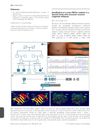
research Identification of a novelPNPLA1mutation in a Spanish family with autosomal recessive congenital ichthyosis
A new gene mutation linked to a skin condition was found in a Spanish family.
research Trias of keratosis pilaris, ulerythema ophryogenes and 18p monosomy: Zouboulis syndrome
Zouboulis syndrome is a rare condition that helps diagnose monosomy 18p early.
research Orchestration of tissue‐scale mechanics and fate decisions by polarity signalling
Cell polarity signaling controls tissue mechanics and cell fate, with complex interactions and varying pathways across species.

research Genetic basis of skin appendage development
Hair, teeth, and mammary glands develop similarly at first but use different genes later.

research Osteopontin Gene is Expressed in the Dermal Papilla of Pelage Follicles in a Hair-Cycle-Dependent Manner
The osteopontin gene is active in a specific part of rat hair follicles during a certain hair growth phase and might affect hair cycle and diseases.

research Pallister-Killian Syndrome
Pallister-Killian Syndrome is a complex genetic disorder requiring coordinated care and genetic counseling.
research Role of foxn1 in Xenopus laevis thymopoiesis.
FOXN1 is crucial for thymus development and immune response in Xenopus laevis.

research Feather arrays are patterned by interacting signalling and cell density waves
Feather patterns in birds are shaped by signaling interactions and cell movements, with EDA/EDAR crucial for pattern formation.

research α-parvin is required for epidermal morphogenesis, hair follicle development and basal keratinocyte polarity
α-parvin is necessary for skin and hair growth and for the correct orientation of skin cells.
research Author response: Selective amputation of the pharynx identifies a FoxA-dependent regeneration program in planaria
FoxA is crucial for pharynx regeneration in planarian flatworms.

research Protein kinase Akt2/PKBβ is involved in blastomere proliferation of preimplantation mouse embryos
Akt2 protein is essential for normal cell division in early mouse embryos.

research The BLMP-1 transcription factor promotes oscillatory gene expression to achieve timely molting
BLMP-1 is important for regular molting and gene expression cycles in worms.