November 2022 in “Indian Journal of Dermatology/Indian journal of dermatology” Valproic acid can cause dark lines on nails.
 5 citations
,
July 2013 in “Our Dermatology Online”
5 citations
,
July 2013 in “Our Dermatology Online” Lichen planopilaris is the most common type of scarring hair loss observed, with a variety of symptoms and tissue changes.
 1 citations
,
March 2015 in “Journal of the European Academy of Dermatology and Venereology”
1 citations
,
March 2015 in “Journal of the European Academy of Dermatology and Venereology” A clinically suspected melanoma appeared benign under the microscope but was confirmed by specific tests and a rare mutation.
 11 citations
,
August 2012 in “Canadian journal of ophthalmology”
11 citations
,
August 2012 in “Canadian journal of ophthalmology” Eyelash alopecia areata often goes undiagnosed and can lead to complete eyelash regrowth, especially in younger patients.
6 citations
,
June 2023 in “Experimental Dermatology” Targeting mitophagy may help treat alopecia areata by reducing inflammasome activation.
 2 citations
,
August 2016 in “Lasers in Surgery and Medicine”
2 citations
,
August 2016 in “Lasers in Surgery and Medicine” Photodynamic therapy can remove nonpigmented hair in mice and might work for humans.
 April 2023 in “The journal of investigative dermatology/Journal of investigative dermatology”
 The study found that a key immune pathway protecting hair follicles is reduced in a mouse model of scarring hair loss.
2 citations
,
December 2015 in “Journal of dermatology” β-interferon injections for melanoma can cause excessive hair growth at the injection sites.
PMEE may help reverse greying hair by boosting melanin production.
4 citations
,
January 2020 in “Dermatology Online Journal” Congenital atrichia with papular lesions causes permanent hair loss and skin bumps due to a gene mutation.
96 citations
,
February 2002 in “Journal of the American Academy of Dermatology” Pseudofolliculitis barbae is a chronic skin condition affecting mainly African American and Hispanic individuals, caused by shaving tightly curled hair, and managed by prevention and treatment but not curable.
April 2012 in “Journal of evolution of medical and dental sciences” No effective treatment exists to stimulate hair growth in atrichia with papular lesions.
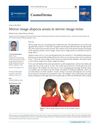
Mirror-image twins can have alopecia areata on opposite sides of their heads.
May 2006 in “The American journal of medicine” The man had persistent itchy bumps on his cheeks and neck despite trying different shaving products.
 1 citations
,
January 2015 in “Journal of Pigmentary Disorders”
1 citations
,
January 2015 in “Journal of Pigmentary Disorders” Treating melasma in men is difficult, especially for the deeper skin layers, and may need more than just topical treatments.
1 citations
,
November 2021 in “Oman Medical Journal” Cyclosporine A treatment caused rare hair repigmentation in a 65-year-old man.
 9 citations
,
June 2017 in “Journal of Cutaneous Pathology”
9 citations
,
June 2017 in “Journal of Cutaneous Pathology” People with pemphigus vulgaris and pemphigus foliaceus often have smaller sebaceous glands on their scalp.
 1 citations
,
June 2024 in “British Journal of Dermatology”
1 citations
,
June 2024 in “British Journal of Dermatology” Mycophenolate mofetil effectively improved skin pigmentation and itching in a woman with lichen planus pigmentosus and frontal fibrosing alopecia.
4 citations
,
April 1983 in “The Journal of Dermatology” A 15-year-old girl with hypothyroidism had excess hair and skin issues due to blocked hair follicles.
 1 citations
,
January 2009
1 citations
,
January 2009 A 25-year-old Malay fireman had skin bumps on his neck that were removed successfully after other treatments failed.
January 2013 in “Refubium (Universitätsbibliothek der Freien Universität Berlin)” Lichen planopilaris is more common in older women and may be linked to hormone therapy and autoimmune diseases.
 2 citations
,
September 2003 in “Annals of Plastic Surgery”
2 citations
,
September 2003 in “Annals of Plastic Surgery” The document concludes that hair from the forehead can be used to reconstruct eyebrows.
August 2024 in “Clinical Case Reports” Pilomatricoma is a rare, benign skin tumor that requires surgical removal for best results.
3 citations
,
May 2008 in “Journal of Clinical Oncology” Panitumumab treatment can cause unusual hair growth in some colorectal cancer patients.
2 citations
,
January 1990  August 2022 in “Case reports in medicine”
 Long eyelashes in a patient were an unusual sign of systemic lupus erythematosus.
 10 citations
,
March 2015 in “PubMed”
10 citations
,
March 2015 in “PubMed” Scalp micropigmentation, a cosmetic tattoo technique, is a promising non-surgical treatment for hair and scalp deformities, despite potential complications.
 April 2021 in “Journal of Investigative Dermatology”
 Photobiomodulation therapy may help treat hair loss in people with darker skin, but more research is needed.
 January 2013 in “Journal of dermatology”
 A new medical syndrome may include skin changes, hair loss, sweating issues, bone malformations, leg swelling, and low cortisol.

Secukinumab treatment may cause HBV reactivation and hair discoloration.