 11 citations
,
April 2016 in “The American Journal of Dermatopathology”
11 citations
,
April 2016 in “The American Journal of Dermatopathology” Special and immunohistochemical stains are not routinely needed for diagnosing hair disorders.
 54 citations
,
January 1983 in “Archives of Dermatology”
54 citations
,
January 1983 in “Archives of Dermatology” KFSD is a rare condition causing scarring hair loss, with no effective treatment known at the time of the report.
1 citations
,
January 2015 in “Journal of clinical case reports” KFSD causes scarring hair loss and skin roughness, mainly in males.
 1 citations
,
January 2012 in “Journal of Toxicologic Pathology”
1 citations
,
January 2012 in “Journal of Toxicologic Pathology” A rat had a cyst similar to a hair follicle structure.
July 2017 in “Chinese Journal of Dermatology” Dermoscopy is effective in diagnosing facial actinic keratosis using specific features.
May 2010 in “Journal of Investigative Dermatology” 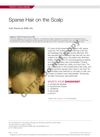
A 5-year-old girl has sparse, dry, and brittle hair but is otherwise healthy.
22 citations
,
January 2006 in “Journal of Structural Biology” Hair follicles form hard α-keratin filaments in four steps, showing structural differences.
130 citations
,
April 2003 in “Journal of Investigative Dermatology” Four specific keratins in hair follicles help understand hair structure and function.
 4 citations
,
May 2020 in “Journal of The American Academy of Dermatology”
4 citations
,
May 2020 in “Journal of The American Academy of Dermatology” Cicatricial pattern hair loss is likely advanced common baldness, not a type of lichen planopilaris.
 64 citations
,
July 1997 in “Journal of The American Academy of Dermatology”
64 citations
,
July 1997 in “Journal of The American Academy of Dermatology” Finding eosinophils near hair bulbs helps diagnose alopecia areata.
8 citations
,
April 2017 in “Journal of The Royal Society Interface” Giant axonal neuropathy changes the structure of keratin in human hair.
 1 citations
,
July 2012 in “Nasza Dermatologia Online”
1 citations
,
July 2012 in “Nasza Dermatologia Online” CCCA may be caused by both hair traction and an immune response.
 January 2018 in “Indian Dermatology Online Journal”
 Trichoscopy can help tell the difference between artificial hair fibers and other scalp artifacts.
 17 citations
,
February 2015 in “Cell Death and Disease”
17 citations
,
February 2015 in “Cell Death and Disease” Inhibiting AP1 in mice skin causes structural changes and weakens the skin barrier.
July 2025 in “Case Reports in Dermatology” Early detection and treatment are crucial to prevent irreversible hair loss in Lichen Planopilaris.
18 citations
,
January 2018 in “Advances in experimental medicine and biology” Hair keratins evolved from ancient proteins, diversifying through gene changes, crucial for forming claws and later hair in mammals.

Aluminum phosphide poisoning can cause horizontal nail grooves and hair loss.
22 citations
,
January 2020 in “PeerJ” Keratin peptides in hair might help identify gender and ethnicity.
 January 1999 in “Journal of the European Academy of Dermatology and Venereology”
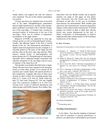
 RAPK is a rare skin disorder with pigmented spots, mainly on hands and feet, starting in youth.
25 citations
,
October 1985 in “Archives of Ophthalmology” The pigment in black eyeliner can spread in the skin and may cause permanent eyelash loss.
 April 2023 in “Journal of Investigative Dermatology”
 The document's conclusion cannot be provided because the content is not accessible.
June 2020 in “The journal of investigative dermatology/Journal of investigative dermatology” Hair follicle bumps with stem cells might contribute to permanent hair loss by getting disconnected due to scarring.
24 citations
,
February 2002 in “The journal of investigative dermatology/Journal of investigative dermatology” Two new proteins, hKAP1.6 and hKAP1.7, are found in the hair follicle cortex.
 December 2014 in “Berkala Ilmu Kesehatan Kulit dan Kelamin”
 Griseofulvin effectively treats tinea capitis kerion type.
7 citations
,
January 1992 in “Acta Histochemica” Porcine and human pilosebaceous units are very similar.
 33 citations
,
December 2013 in “Journal of cutaneous pathology”
33 citations
,
December 2013 in “Journal of cutaneous pathology” A fungal infection can look like a different scalp condition in teens, leading to wrong treatment until proper tests are done.
 2 citations
,
September 2020 in “Biomedical materials”
2 citations
,
September 2020 in “Biomedical materials” Recombinant keratin materials may better promote skin cell differentiation than natural keratin.
February 2026 in “JEADV Clinical Practice” Lichen planopilaris can cause hair loss on limbs, not just the scalp.
17 citations
,
January 2014 in “Journal of Oral and Maxillofacial Pathology” Seborrheic keratosis is a common, harmless skin growth that can look like cancer, so it may need a biopsy.