April 2020 in “The FASEB journal” Poncirin is a promising inhibitor of Janus Kinase 3, potentially better than tofacitinib.
 13 citations
,
July 2012 in “Pigment Cell & Melanoma Research”
13 citations
,
July 2012 in “Pigment Cell & Melanoma Research” A mutation in the Adam10 gene causes freckle-like spots on Hairless mice.
26 citations
,
January 2014 in “ALTEX” Pesticides can cause reproductive and adrenal health issues.
22 citations
,
July 2015 in “PloS one” Foxp1 helps control hair stem cell growth and response to stress during hair growth cycles.
 September 2024 in “Frontiers in Genetics”
 A specific genetic marker is linked to male pattern baldness in Han Chinese men.
 2 citations
,
April 2012 in “Science-business Exchange”
2 citations
,
April 2012 in “Science-business Exchange” Blocking a protein called prostaglandin D2 might help treat hair loss.
7 citations
,
March 2023 in “JEADV. Journal of the European Academy of Dermatology and Venereology/Journal of the European Academy of Dermatology and Venereology”  6 citations
,
February 2019 in “JAAD case reports”
6 citations
,
February 2019 in “JAAD case reports” Acitretin helped improve hand mobility and skin condition in a patient.
 June 2018 in “Journal of Dermatological Science”
 UV radiation may cause DNA changes in skin, certain UVB therapy helps psoriasis, a new gene mutation is linked to mild piebaldism, different immune cells affect psoriasis, a drug promotes hair growth, and some cancer drugs could treat skin barrier issues.
 August 2024 in “Quality in Sport”
 PRP helps with skin, hair, and wound treatments but needs more research for standard use.
 August 2015 in “MOJ proteomics & bioinformatics”
 ePUKs could be valuable for regenerative medicine due to their wound healing abilities.
3 citations
,
October 1993 in “Endocrinology” 117 citations
,
August 1999 in “Nature Genetics” September 2017 in “ics.org” 7 citations
,
September 1991 in “Journal of Andrology” 4‐MAPC reduces rat prostate weight and prostatein levels.
 6 citations
,
August 2005 in “The Journal of Clinical Endocrinology & Metabolism”
6 citations
,
August 2005 in “The Journal of Clinical Endocrinology & Metabolism” Finasteride causes temporary cell death in BPH tissues.
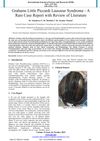 October 2023 in “International Journal of Science and Research (IJSR)”
 Early diagnosis of GLPLS is crucial to prevent complications, but scarring alopecia is irreversible.
 72 citations
,
January 2003 in “American Journal of Pathology”
72 citations
,
January 2003 in “American Journal of Pathology” A protein called CBP is found in prostate cancer and can increase the effectiveness of certain prostate cancer treatments.
15 citations
,
September 2018 in “Frontiers in Plant Science” BcFLA1 protein is crucial for root hair growth in response to low phosphate in Brassica carinata.
 60 citations
,
August 2008 in “Human molecular genetics online/Human molecular genetics”
60 citations
,
August 2008 in “Human molecular genetics online/Human molecular genetics” A position effect on the TRPS1 gene causes excessive hair growth in humans and mice.
2 citations
,
December 2013 in “Journal of dermatology” A specific gene mutation causes a rare hair loss condition in a Chinese patient.
April 2020 in “The FASEB Journal” Finasteride may cause lasting sexual issues by altering specific genes in human cells.
April 2016 in “The journal of investigative dermatology/Journal of investigative dermatology” Sebaceous gland atrophy and abnormal function may contribute to hair loss in psoriasis.
 February 2024 in “Australasian journal of dermatology”
 Janus kinase inhibitors may help treat lichen planopilaris.
April 2008 in “Progrès en Urologie”  April 2023 in “Journal of Investigative Dermatology”
 Changing YBX1 protein activity affects skin stem cell function and aging.

PRP injections with tadalafil and stretching safely improved Peyronie's symptoms but didn't significantly change curvature long-term.
21 citations
,
July 2011 in “Journal of the American Academy of Dermatology” A man developed a rash similar to pityriasis rubra pilaris after starting sorafenib for cancer, possibly due to the drug's effect on skin cells.
28 citations
,
February 2010 in “Experimental Dermatology” The frizzy mouse and hairless rat mutations are due to changes in the Prss8 gene.

The project developed and tested a method using plasma rich platelets to treat hair loss.