 3 citations
,
April 2021 in “GSC Biological and Pharmaceutical Sciences”
3 citations
,
April 2021 in “GSC Biological and Pharmaceutical Sciences” Elephantopus scaber has many health benefits, including antibacterial, antifungal, anticancer, and antioxidant properties.
 3 citations
,
March 2018 in “Pediatric Dermatology”
3 citations
,
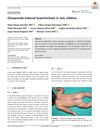
March 2018 in “Pediatric Dermatology” Two children grew extra hair from taking omeprazole, which went away after they stopped the medication.
 2 citations
,
December 2021 in “Asian Journal of Beauty and Cosmetology”
2 citations
,
December 2021 in “Asian Journal of Beauty and Cosmetology” The optimal mix of Dendropanax, sea salt, and other extracts can help reduce hair loss.
 2 citations
,
August 2019 in “Reviews on Clinical Pharmacology and Drug Therapy”
2 citations
,
August 2019 in “Reviews on Clinical Pharmacology and Drug Therapy” Fullerenes are safe and useful antioxidants in cosmetics.
 1 citations
,
May 2022 in “Archiv Euromedica”
1 citations
,
May 2022 in “Archiv Euromedica” Topical treatment is recommended for Folliculitis decalvans in pregnant women.
 1 citations
,
May 2021 in “Revista Eletrônica Acervo Científico”
1 citations
,
May 2021 in “Revista Eletrônica Acervo Científico” The document concludes that more research is needed on treatments for hair loss in both men and women, especially on medication combinations and their benefits.
 1 citations
,
January 2019 in “International Journal of ChemTech Research”
1 citations
,
January 2019 in “International Journal of ChemTech Research” Eclipta prostrata has many medicinal benefits, but more research is needed to understand how it works.
 April 2026 in “DiRROS repository (University of Maribor)”
 MSC-derived EVs have potential as therapeutic agents but face challenges like production complexity and high costs.
 February 2026 in “Frontiers in Medicine”
 Topical immunotherapy is still effective for managing alopecia areata, even with new treatments available.
 October 2025 in “Journal of Translational Medicine”
 Combining biomaterials and cell pathways can improve hair follicle regeneration.
 September 2025 in “International Journal of Innovative Technologies in Social Science”
 Low-dose oral minoxidil is effective and safe for hair loss, but more research is needed.
 June 2025 in “Clinical Cosmetic and Investigational Dermatology”
 There's an urgent need for better treatments for hair loss caused by radiation therapy.
 January 2025 in “Medical Research Archives”
 Low-level laser therapy can help with inflammation but isn't widely accepted yet.
 January 2025 in “Journal of Pharmacognosy and Phytochemistry”
 Vitex negundo has potential health benefits, including anti-inflammatory and anti-cancer effects.
Ion sequential therapy improves heart function after a heart attack.
 July 2024 in “International Journal of Medical Arts”
 Latanoprost is more effective than minoxidil for treating alopecia areata.
 December 2023 in “International journal of multidisciplinary research and analysis”
 SH-MSCs gel can effectively treat alopecia by increasing IL-10 and decreasing TNF-α gene expression.
 October 2022 in “Journal of Pharmaceutical Negative Results”
 Photobiomodulation therapy shows promise in treating various health conditions by using specific light wavelengths.
 June 2022 in “Research Square (Research Square)”
 Lipid peroxidation may worsen social behavior issues in autism.
 January 2017 in “Korean Journal of Pharmacognosy”
 Modified red ginseng extract promotes hair growth and has antioxidant and anti-inflammatory effects.
Low-level laser therapy may help stem cells grow and function better, aiding in healing and tissue repair.
 April 2016 in “Annals of laboratory medicine”
 The method reliably profiles eicosanoids and shows epitestosterone reduces their levels, similar to common anti-inflammatory drugs.
 April 2016 in “Plastic and reconstructive surgery. Global open”
 Tafluprost could be a potential treatment for hair loss by promoting hair growth phase changes.
 April 2016 in “Plastic and reconstructive surgery. Global open”
 Surgery may help infants with sagittal craniosynostosis develop more typical language processing.
 January 2015 in “Our Dermatology Online”
 Intralesional triamcinolone is the most effective treatment for hair regrowth in alopecia areata patients.
 January 2015 in “Przegla̧d dermatologiczny”
 Intralesional triamcinolone is the most effective treatment for alopecia areata, followed by excimer light therapy, and then topical minoxidil. The scalp responds better to treatment than the beard area.
 June 2011 in “Journal of medicine and life science”
 Hizkia fusiforme seaweed extract can help promote hair growth.
 July 1998 in “Proceedings of SPIE”
 Low-power laser therapy is an effective, side-effect-free treatment that speeds up hair regrowth and crural ulcer healing.
 April 2016 in “Journal of Investigative Dermatology”
 Sonic hedgehog signaling is needed for the development of touch-receptor cells in the skin, and the loss of Polycomb repressive complex 2 can lead to more of these cells.
 October 2015 in “Regenerative Medicine”
 Two growth factors, PDGF and FGF2, can potentially be used together to grow enough cells for a hair loss treatment, but their exact function on human cells needs further confirmation.