August 2004 in “Veterinary Dermatology” Cats with internal diseases can develop skin issues that may require specific treatments.
 4 citations
,
May 2013 in “Dermatologic Surgery”
4 citations
,
May 2013 in “Dermatologic Surgery” Three new techniques simplify and improve the preparation of tissue samples for skin cancer surgery.
6 citations
,
October 1998 in “PubMed” Antifungal treatment can improve severe skin infections with cutaneous horns.
 March 2025 in “Journal of Bio Innovation”
 Microsporum canis causes ringworm in dogs and cats, treatable with topical and oral antifungals.
 January 2010 in “Actas Dermo-Sifiliográficas”
 A woman developed thick gums from everolimus treatment after a kidney transplant.
23 citations
,
January 2016 in “Clinical & Biomedical Research” Dermatophytoses are common fungal infections treated with antifungal medications, but resistance is a concern.
 3 citations
,
January 2022 in “Medical Mycology Journal”
3 citations
,
January 2022 in “Medical Mycology Journal” Malassezia fungi in healthy noses can form a "spaghetti-and-meatballs" structure.
 33 citations
,
April 2017 in “American journal of clinical dermatology”
33 citations
,
April 2017 in “American journal of clinical dermatology” Early treatment of superficial fungal infections in immunocompromised patients is crucial.
 22 citations
,
April 2000 in “International Journal of Dermatology”
22 citations
,
April 2000 in “International Journal of Dermatology” A 78-year-old farmer with lung disease had skin lesions from a fungal infection that healed completely with medication.
 9 citations
,
January 2008 in “Medical mycology”
9 citations
,
January 2008 in “Medical mycology” A dog's skin infection caused by the fungus Chaetomium globosum was effectively treated with ketoconazole.
 2 citations
,
January 2005 in “Elsevier eBooks”
2 citations
,
January 2005 in “Elsevier eBooks” The document describes skin diseases affecting the outer ear in dogs and cats, their spread to other body parts, and treatment options.
 1 citations
,
August 2012
1 citations
,
August 2012 The document discusses various diseases of the outer ear, categorized by symptoms like redness, crusts, bumps, pus-filled lesions, lumps, ulcers, and hair loss.

Experts created guidelines to better diagnose and treat uncommon fungal skin infections.

The document is a detailed guide on skin conditions and treatments for dermatologists.
 October 2018 in “Journal of the European Academy of Dermatology and Venereology”
  March 2014 in “Journal of The American Academy of Dermatology”
 The document lists various dermatology topics, treatments, and diagnostic methods.
1 citations
,
February 2005 in “The Journal of Laryngology & Otology” A fungal infection in the neck caused severe breathing issues, treated successfully with antibiotics and antifungal medication.
 22 citations
,
December 2003 in “Veterinary clinical pathology”
22 citations
,
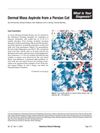
December 2003 in “Veterinary clinical pathology” The Persian cat has a skin infection caused by a fungus, treatable with antifungal medication.
 4 citations
,
January 2015 in “Türk Patoloji Dergisi”
4 citations
,
January 2015 in “Türk Patoloji Dergisi” Hormone imbalances from endocrine diseases can cause various skin conditions that help diagnose and treat these diseases early.
2 citations
,
January 2002 in “PubMed” Proper identification of dermatophytes is crucial for diagnosing and treating infections like athlete's foot and ringworm.
February 1988 in “Journal of the American Academy of Dermatology” Fungal infections like ringworm affect skin, hair, and nails in humans and animals, requiring culture for diagnosis and specific treatments.
January 2016 in “Elsevier eBooks” Dermatophycosis is a treatable fungal skin infection spread by contact with infected animals.
1 citations
,
October 2010 in “EUR Research Repository (Erasmus University Rotterdam)” Botryomycosis can be effectively treated with long-term oral antibiotics.
18 citations
,
June 2004 in “Mycoses” Two patients with a rare scalp fungus in Poland were successfully treated with griseofulvin and ciclopirox.
20 citations
,
November 1989 in “PubMed” Accurate fungal identification is crucial for proper treatment in immunocompromised patients.
 November 2025 in “Zenodo (CERN European Organization for Nuclear Research)”
 Dermatophytosis is a common cat fungal infection, usually mild but can be severe in weak or young animals.
 September 2024 in “BMJ Case Reports”
 An adult had a rare scalp infection in the forehead area, treated successfully with itraconazole.
15 citations
,
March 1987 in “Phycologia” Phosphorus limitation causes significant hair growth in certain algae.
1 citations
,
June 2024 in “Access Microbiology” Some moulds can cause skin issues and produce enzymes that may increase their harmfulness.