
The document concludes that the development of certain tumors is influenced by genetic background and that a specific gene modification can lead to tumor regression and reduced growth.
March 2021 in “AACE clinical case reports” A man with both Klinefelter syndrome and primary hyperparathyroidism showed a rare combination of symptoms and genetic patterns.
The article concludes that better diagnosis and management of Polycystic Ovarian Syndrome are needed to improve women's health and prevent related diseases.
 November 2009 in “Medical & surgical dermatology”
 The document concludes that Borrelia afzelii causes a skin condition in France, a gene is linked to hair loss in Caucasian women, and various genetic mutations affect skin diseases.
May 2009 in “OPAL (Open@LaTrobe) (La Trobe University)” Suppressing the HGPS mutation may improve symptoms and suggest reversibility.
April 2019 in “Journal of Investigative Dermatology” Stabilizing HIF1A in hair follicles may boost hair growth by enhancing energy production and blood vessel formation.
 July 2012 in “Medical Hypotheses”
 Artemis dysfunction might cause hair loss through telomere shortening.
 54 citations
,
April 2010 in “Baillière's best practice and research in clinical endocrinology and metabolism/Baillière's best practice & research. Clinical endocrinology & metabolism”
54 citations
,
April 2010 in “Baillière's best practice and research in clinical endocrinology and metabolism/Baillière's best practice & research. Clinical endocrinology & metabolism” Impaired androgen production in 46,XY DSDs causes ambiguous genitalia and requires long-term care.
 33 citations
,
September 2017 in “Journal of clinical immunology”
33 citations
,
September 2017 in “Journal of clinical immunology” New treatments for immune disorders caused by FOXN1 deficiency are promising.
 22 citations
,
June 2004 in “Journal of The European Academy of Dermatology and Venereology”
22 citations
,
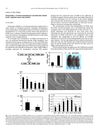
June 2004 in “Journal of The European Academy of Dermatology and Venereology” A woman had both Graham Little-Piccardi-Lassueur syndrome, causing hair loss, and complete androgen insensitivity syndrome, making her genetically male but physically female. This suggests androgens don't affect the hair loss condition.
 7 citations
,
December 2008 in “Journal of Dermatological Science”
7 citations
,
December 2008 in “Journal of Dermatological Science” Progranulin overexpression leads to shorter, thinner hair and increased cell death in mouse hair follicles.
6 citations
,
November 2022 in “Antioxidants” OR2AT4 helps reduce aging and cell damage in human skin cells.
 1 citations
,
June 2021 in “bioRxiv (Cold Spring Harbor Laboratory)”
1 citations
,
June 2021 in “bioRxiv (Cold Spring Harbor Laboratory)” GTL1 is needed to control root hair growth and prevent problems when there are too many nutrients.
 35 citations
,
May 2015 in “Thrombosis Research”
35 citations
,
May 2015 in “Thrombosis Research” Prostaglandin E2 affects human platelet activity in complex ways that could lead to personalized heart disease treatments.
 25 citations
,
November 2018 in “Cell reports”
25 citations
,
November 2018 in “Cell reports” The study concluded that specific proteins are necessary to maintain the structure that holds epithelial cells tightly together.
25 citations
,
June 2017 in “Journal of steroid biochemistry and molecular biology/The Journal of steroid biochemistry and molecular biology” VDR regulation varies by tissue and is crucial for its biological functions.
 14 citations
,
January 2012 in “Endocrine development”
14 citations
,
January 2012 in “Endocrine development” The conclusion is that a thorough approach is needed to diagnose and manage hyperandrogenism in teenage girls, recognizing its major psychological and health effects.
5 citations
,
October 2021 in “American Journal of Medical Genetics Part A” A new genetic variant causes BRESHECK syndrome by disrupting cell growth and stress response.
 3 citations
,
January 2012 in “Elsevier eBooks”
3 citations
,
January 2012 in “Elsevier eBooks” Burn scars form abnormally due to changes in wound healing, and more research is needed to improve treatments.
2 citations
,
February 2022 in “bioRxiv (Cold Spring Harbor Laboratory)” Impaired LEF1 activation speeds up skin cell development in Hutchinson-Gilford Progeria Syndrome.
 1 citations
,
January 2019 in “Elsevier eBooks”
1 citations
,
January 2019 in “Elsevier eBooks” Electrospun matrices help regenerate skin and hair follicles using PCL and collagen scaffolds.
 January 2026 in “MDPI (MDPI AG)”
 The hairy ear mutation in mice is linked to changes in gene expression affecting hair growth.
January 2016 in “UNESP Institutional Repository (São Paulo State University)” Melasma results from changes in the skin's pigment and structure, not just pigment cell growth.
 989 citations
,
August 2007 in “The Lancet”
989 citations
,
August 2007 in “The Lancet” PCOS is a complex condition with major health impacts, needing more research for better diagnosis and treatment.
249 citations
,
May 2003 in “Developmental Biology” Ectodysplasin-A1 is crucial for developing hair, teeth, and glands.
 237 citations
,
December 2001 in “Urology”
237 citations
,
December 2001 in “Urology” Blocking the enzyme 5α-reductase can shrink the prostate and help treat enlarged prostate issues.
 212 citations
,
May 2010 in “American Journal of Obstetrics and Gynecology”
212 citations
,
May 2010 in “American Journal of Obstetrics and Gynecology” Diagnosing PCOS in teenagers is challenging and should use strict criteria to avoid misdiagnosis and unnecessary worry.
189 citations
,
May 1999 in “Microscopy Research and Technique” Neurotrophins, especially NGF, are crucial for pain development and management.
170 citations
,
January 2010 in “animal” Hair follicle growth and fiber production in animals are influenced by chemical signals, proteins, pigmentation, genetics, and nutrients.
 131 citations
,
March 2004 in “The American journal of pathology”
131 citations
,
March 2004 in “The American journal of pathology” Modulating BMP activity changes the number, size, shape, and type of ectodermal organs.