June 2026 in “ACS Applied Materials & Interfaces” Dandelion-derived carbon dots effectively kill bacteria and speed up wound healing.
 31 citations
,
April 1999 in “Dermatologic Clinics”
31 citations
,
April 1999 in “Dermatologic Clinics” Nd:YAG laser can reduce hair with multiple treatments, but permanent removal isn't guaranteed.
 51 citations
,
November 2018 in “JAMA Dermatology”
51 citations
,
November 2018 in “JAMA Dermatology” PRP injections may improve skin texture and wrinkles based on patient feedback, despite no significant changes seen by dermatologists.
9 citations
,
September 2020 in “Journal of cosmetic dermatology” A woman developed vitiligo from repeated eyebrow microblading.
 January 2001 in “Dermatologic Surgery”
 The letters discussed medical tools, costs, treatment efficacy, and patient care complexities.

Laser hair removal may cause skin changes that prevent hair regrowth.
February 2022 in “arXiv (Cornell University)” A new method accurately captures and renders hair color for real and synthetic images.
 19 citations
,
December 2015 in “Journal of Investigative Dermatology”
19 citations
,
December 2015 in “Journal of Investigative Dermatology” The protein p53 directly reduces the production of Keratin 17, a skin and hair protein, in rats with radiation dermatitis.
20 citations
,
January 2013 in “Plastic & Reconstructive Surgery” The new device safely and effectively rejuvenates skin, making it thicker and healthier.
 4 citations
,
April 1999 in “Dermatologic Clinics”
4 citations
,
April 1999 in “Dermatologic Clinics” Long-pulsed ruby lasers effectively reduce hair for up to 2 years with minimal pain.
 86 citations
,
August 2011 in “Toxicological sciences”
86 citations
,
August 2011 in “Toxicological sciences” TCDD speeds up skin barrier formation by increasing certain gene expressions.
 1 citations
,
January 2021 in “Journal of Dermatology and Dermatologic Surgery”
1 citations
,
January 2021 in “Journal of Dermatology and Dermatologic Surgery” Taking Vitamin D supplements may increase the risk of skin darkening after laser hair removal.
33 citations
,
April 2003 in “Oncogene” 1 citations
,
January 1994 in “Drug Development and Industrial Pharmacy” Topical radioprotectors can reduce radiation-induced hair loss.
 April 2016 in “Journal of Investigative Dermatology”
  May 2024 in “Proteome science”
 Bleaching damages hair by reducing the quality of keratin and keratin-associated proteins.
July 1999 in “Journal of the American Academy of Dermatology” 15 citations
,
July 2010 in “Journal of Allergy and Clinical Immunology” A new cream, DHMEQ, reduces allergic skin inflammation effectively.
EDM is better for isolating and growing human foreskin fibroblasts, and PPP helps repair UVB damage.
November 2025 in “The Journal of Dermatology” Chemical leukoderma is temporary, while chemical-induced vitiligo can be persistent and harder to treat.
 January 2019 in “Durham e-Theses (Durham University)”
 Advanced microscopy shows hair damage and keratin proteins' roles, aiding future cosmetic treatments.
15 citations
,
January 2019 in “Lasers in surgery and medicine” Home-use light devices can significantly reduce hair but are less effective on very dark skin and slower than professional devices.
52 citations
,
February 2005 in “Biopolymers” Chemical hair straightening changes hair proteins and mostly fixes broken bonds.
 63 citations
,
February 2013 in “Human cell”
63 citations
,
February 2013 in “Human cell” PEGL-DOX causes Hand-Foot Syndrome due to skin reactions from prolonged circulation and ROS generation.
 1 citations
,
January 2021 in “Dermatologic Therapy”
1 citations
,
January 2021 in “Dermatologic Therapy” Trichobiolight effectively treats hair loss with 82.5% success.
 172 citations
,
November 1983 in “Journal of The American Academy of Dermatology”
172 citations
,
November 1983 in “Journal of The American Academy of Dermatology” Chemotherapy can cause skin problems like hair loss, mouth sores, and skin darkening, and recognizing these can affect treatment decisions.
93 citations
,
May 2002 in “Journal of Investigative Dermatology” Overexpressing thrombospondin-1 in mice skin prevents UVB-induced skin damage.
Trichopigmentation is a non-invasive, reversible treatment for hair loss that offers natural-looking results for both men and women.
 July 2018 in “Journal of The American Academy of Dermatology”
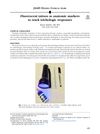
 Fluorescent tattoos are a good way to mark the scalp for hair treatments because they're accurate, invisible in normal light, and have low risk.
 89 citations
,
June 2012 in “Anais Brasileiros de Dermatologia”
89 citations
,
June 2012 in “Anais Brasileiros de Dermatologia” Actinic keratosis can lead to skin cancer, is more common in fair-skinned people, and can be reduced with sunscreen and treated effectively.