September 2023 in “Minia Journal of Medical Research” Intralesional vitamin D3 is a safe, effective treatment for patchy alopecia areata.
 2 citations
,
August 2021 in “Photodiagnosis and Photodynamic Therapy”
2 citations
,
August 2021 in “Photodiagnosis and Photodynamic Therapy” Using 5-aminolevulinic acid photodynamic therapy for hair loss didn't increase hair growth but slightly reduced scalp oiliness, and it was safe with mild side effects.
2 citations
,
July 2009 in “Mayo Clinic Proceedings” A 66-year-old woman with skin lesions and other symptoms improved after treatment for porphyria cutanea tarda.
Finasteride is more stable in sunlight than Diclofenac and Naproxen.
 September 2023 in “Journal of The American Academy of Dermatology”
 People were generally happy with the home light therapy devices for hair loss.
 105 citations
,
December 2009 in “Archives of dermatology”
105 citations
,
December 2009 in “Archives of dermatology” A specific drug can help treat Lichen Planopilaris, a condition causing permanent hair loss.
 April 2021 in “Journal of Investigative Dermatology”
 The new skin-targeted COVID-19 vaccine creates strong immune responses and could improve vaccination methods.

Light fraction patchouli oil at 1.5% effectively treats dandruff and promotes hair growth.
April 2026 in “Spectrochimica Acta Part A Molecular and Biomolecular Spectroscopy”  1 citations
,
July 2019 in “Microscopy Today”
1 citations
,
July 2019 in “Microscopy Today” Microfluorometry effectively measures how much polymer coats and penetrates hair, useful for evaluating hair products.
34 citations
,
February 2012 in “International Journal of Dermatology” Dermatoscopy can help identify hydroquinone-induced skin issues, avoiding invasive biopsies.
 June 2023 in “International Journal of Research in Dermatology”
 Early diagnosis and treatment of alopecia areata in children is crucial to prevent severe progression.
 August 1996 in “Australasian Journal of Dermatology”
 The document concludes that "Photodamage" and "Photoimmunology" are valuable resources, while "Pediatric Dermatopathology" and "Hair and Scalp Disorders" have limitations.
 24 citations
,
January 2012 in “Indian Journal of Dermatology, Venereology and Leprology”
24 citations
,
January 2012 in “Indian Journal of Dermatology, Venereology and Leprology” Diffuse alopecia areata involves more inflammation and higher allergy-related antibodies than patchy types.
 November 2023 in “Journal of cosmetic dermatology”
 The 595-nm pulsed dye laser effectively reduces symptoms of EFFC with minimal side effects.
 April 2018 in “Journal of Investigative Dermatology”
 The new protocol using Cellutome™ and RCM safely assesses wound healing in detail.
 January 2015 in “Przegla̧d dermatologiczny”
 308 nm excimer light therapy may help hair regrowth in alopecia areata with delayed results and no serious side effects.
 19 citations
,
May 1992 in “International Journal of Dermatology”
19 citations
,
May 1992 in “International Journal of Dermatology” Some alternative vitiligo treatments show promise, but none are as effective as psoralens and UVA.
May 1988 in “Journal of Forensic Sciences” A new method accurately determines hair blood type and can be used on dust samples.
June 2024 in “Bioscientia Medicina Journal of Biomedicine and Translational Research” Most children with alopecia areata have patchy hair loss and common trichoscopic features like yellow and black dots.
 April 2021 in “Journal of Investigative Dermatology”
 People with atopic dermatitis have more CD4+ T cells that respond to a certain bacterial lipid, which may play a role in the skin condition's inflammation.
 April 2017 in “Journal of Investigative Dermatology”
 Researchers improved a method to study individual cells in newborn mouse skin and found a way to assess the severity of a skin condition in humans.
PRP injections can effectively and safely treat alopecia areata.
 October 2025 in “EMJ Dermatology”
 Histopathology is crucial for accurately diagnosing eruptive vellus hair cysts.
 4 citations
,
April 2018 in “Journal of Investigative Dermatology”
4 citations
,
April 2018 in “Journal of Investigative Dermatology” Hydroxypinacolone retinoate is a potent anti-aging ingredient for skin that is more effective and less irritating than other forms of retinoids.

A new microneedle patch helps repair spinal cord injuries by reducing scarring and promoting nerve growth.
July 2022 in “British Journal of Dermatology” 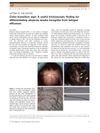 2 citations
,
March 2018 in “The Journal of Dermatology”
2 citations
,
March 2018 in “The Journal of Dermatology” The "color-transition sign" helps tell apart alopecia areata incognita from telogen effluvium by looking at hair color changes.
January 2020 in “International Journal of Trichology” PRP injections are not effective for long-term treatment of temporal triangular alopecia.
 8 citations
,
March 2017 in “Journal of Cosmetic and Laser Therapy”
8 citations
,
March 2017 in “Journal of Cosmetic and Laser Therapy” Punch grafting treats vitiligo faster but can cause a cobblestone look, while follicular hair transplantation is slower but looks better and has no side effects.