1 citations
,
September 2020 in “Journal of dermatology” Researchers found a new mutation in the LIPH gene of a woman with a rare hair condition.
 19 citations
,
September 2016 in “Journal of the European Academy of Dermatology and Venereology”
19 citations
,
September 2016 in “Journal of the European Academy of Dermatology and Venereology” Trichofolliculoma is a unique benign tumor mainly affecting middle-aged adults' faces, often misdiagnosed without histopathology.
1 citations
,
January 2017 in “International Journal of Trichology” A new mutation caused a rare hair disorder in a Polish girl, not inherited from her family.
 1 citations
,
May 2024 in “Cureus”
1 citations
,
May 2024 in “Cureus” Lichen planopilaris can unusually affect only the face, causing pigmentation and scarring.
 September 2024 in “Cosmoderma”
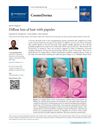
 The young man has complete hair loss and skin bumps, with no other health issues or family history.
 6 citations
,
March 2015 in “Journal of The American Academy of Dermatology”
6 citations
,
March 2015 in “Journal of The American Academy of Dermatology” Hair dye can make it hard to diagnose scalp conditions correctly.
June 2025 in “British Journal of Dermatology” Topical minoxidil may help improve hair growth in rare congenital hypotrichosis.
 January 1990 in “Springer eBooks”
 Some chemicals can permanently or temporarily remove color from skin and hair, which can be distressing and is not well-regulated in cosmetics.
December 2025 in “Annals of African Medicine” 8 citations
,
August 2012 in “Archives of dermatology” Psoriasis can cause hair growth in areas affected by alopecia areata.
 May 2024 in “Pigment International”
 Several treatments are effective for pigmentary disorders like vitiligo and melasma.
 March 2007 in “The FASEB Journal”
 Henna mixed with PPD can cause skin reactions, scarring, and a specific type of baldness, and needs more research to understand these effects.
 11 citations
,
May 1998 in “Child's nervous system”
11 citations
,
May 1998 in “Child's nervous system” A baby had a rare condition with abnormal blood vessels in the brain and unusual skin and hair growth, possibly a new syndrome.
August 2024 in “Journal of the American Academy of Dermatology” Nail color change might be an early sign of skin pigmentation from minocycline.
10 citations
,
February 2012 in “Journal of Clinical Investigation” Advancements in skin and hair biology improve dermatology care and cosmetic treatments.
September 1973 in “Primates” Multiphoton microscopy helps understand and improve vitiligo treatments by visualizing skin cell changes.
 March 2024 in “Brazilian Journal of Veterinary Pathology”
 The dog likely has a canine alopecia X-like disorder.
January 2019 in “Clinical pediatric dermatology” Scalp micropigmentation is a non-surgical alternative to hair transplants that mimics hair follicles and requires no downtime.
 3 citations
,
January 2015 in “Dermatology Online Journal”
3 citations
,
January 2015 in “Dermatology Online Journal” Hair loss can be a symptom of syphilis.
 January 2019 in “The Egyptian Journal of Hospital Medicine”
 Trichoscopy helps effectively tell apart different types of patchy hair loss in Egyptian patients.
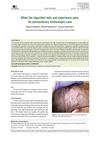 January 2026 in “Forum Dermatologicum”
 Thorough hair examination is crucial for accurate diagnosis and treatment.

A man's scalp hair loss was due to a combined melanocytic nevus and alopecia areata, suggesting a possible link between the two conditions.
3 citations
,
July 2024 in “Dermatology and Therapy” Hair shaft abnormalities can help distinguish mycosis fungoides from other skin conditions.
December 2024 in “Minia Journal of Medical Research” White hair in alopecia areata may be linked to reduced Sox10 expression.
44 citations
,
August 2004 in “Journal of Investigative Dermatology” A gene deletion in DSG4 causes sparse hair in some Pakistani families.
January 2026 in “Indian Journal of Paediatric Dermatology” A 14-year-old boy has a skin condition called nevus comedonicus, treated with tretinoin cream.
 210 citations
,
July 1993 in “The journal of investigative dermatology/Journal of investigative dermatology”
210 citations
,
July 1993 in “The journal of investigative dermatology/Journal of investigative dermatology” Hair color production in mice is closely linked to the hair growth phase and may also influence hair growth itself.
14 citations
,
January 1998 in “Dermatology” Polythelia pilosa is a type of extra breast tissue with hair and should be classified as such.
12 citations
,
January 2000 in “Journal of cutaneous medicine and surgery” Microorganism overgrowth and hyperkeratosis may trigger immune reactions causing lichen planopilaris.