November 2025 in “Journal of Investigative Dermatology” Combining MMP-9 and JAK inhibitors can effectively prevent skin depigmentation in vitiligo.
 March 2025 in “JDDG Journal der Deutschen Dermatologischen Gesellschaft”
 Facial hyperpigmentation improved with oral isotretinoin and ivermectin cream after Demodex mites were identified as the cause.
86 citations
,
August 2000 in “Pigment cell research” Melanocyte activity in hair follicles is linked to the hair growth cycle, being active in growth phases and inactive in rest phases.
 1 citations
,
January 2018 in “Methods in molecular biology”
1 citations
,
January 2018 in “Methods in molecular biology” The research found ways to activate melanocyte stem cells for potential treatment of skin depigmentation conditions.
 October 2024 in “Journal of Cutaneous Immunology and Allergy”
 Steroid injections improved symptoms and hair regrowth in a woman with a reaction to permanent makeup.

A natural hair dye from cuttlefish ink and chitosan effectively colors hair black without harmful chemicals.
16 citations
,
February 2008 in “PubMed” Vitamin B12 deficiency can cause skin darkening and white hair, but it's reversible.
1 citations
,
May 2012 in “Clinical and Experimental Dermatology” Iron can be present in hair color changes without overall iron deficiency.
2 citations
,
May 2018 in “Dermatologic Surgery”  18 citations
,
September 2016 in “International Journal of Molecular Sciences”
18 citations
,
September 2016 in “International Journal of Molecular Sciences” Polydeoxyribonucleotide (PDRN) may help lighten skin and treat hyperpigmentation.
 5 citations
,
October 2021 in “Dermatologic Surgery”
5 citations
,
October 2021 in “Dermatologic Surgery” Platelet-rich plasma (PRP) can significantly improve melasma, a skin pigmentation disorder, but may not add benefits when used with certain other treatments.
 August 2024 in “Journal of the Korean Society of Cosmetology”
 Wild peach leaf extract improves hair strength, thickness, and shine after dyeing.
 November 2022 in “Journal of Investigative Dermatology”
 A new molecule was found to be a safe and effective skin lightener and anti-aging product.

MITF and WNT3A are key in Dun Mongolian horse pigmentation.
 10 citations
,
May 2016 in “Journal of Dermatological Science”
10 citations
,
May 2016 in “Journal of Dermatological Science” PDGF-BB helps young melanocytes grow but stops mature ones from growing, and it makes melanocytes more specialized.
12 citations
,
September 2020 in “Nanomaterials” The new drug delivery system improves vitiligo treatment by enhancing melanocyte activity and viability.
8 citations
,
July 2001 in “JEADV. Journal of the European Academy of Dermatology and Venereology/Journal of the European Academy of Dermatology and Venereology” New treatments for vitiligo show promise but still face challenges, especially for hands and feet.
 December 2023 in “Journal of ethnopharmacology”
 Tribuloside can increase skin pigmentation by enhancing melanin production and distribution.
 6 citations
,
September 2022 in “Frontiers in pharmacology”
6 citations
,
September 2022 in “Frontiers in pharmacology” Epimedium extract helps increase skin pigmentation and could be a new treatment for conditions with reduced pigmentation.
March 2013 in “Pigment Cell & Melanoma Research” A gene called Taqpep affects cat coat patterns like stripes and blotches.
7 citations
,
May 1988 in “International Journal of Dermatology” The patient's hair has unique structural differences with alternating bright and dark bands.
April 2024 in “International journal of molecular sciences” Dermal factors are crucial in regulating melanin production in skin.
 44 citations
,
April 2017 in “Genes & development”
44 citations
,
April 2017 in “Genes & development” Scientists found cells in hair that are key for growth and color.
 2 citations
,
September 2020 in “International journal of radiology & radiation therapy”
2 citations
,
September 2020 in “International journal of radiology & radiation therapy” Radiotherapy can cause rare changes in hair color, which should be discussed with patients.
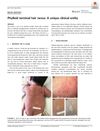 August 2018 in “Pediatric Dermatology”
 A baby had a unique skin condition with a pale patch and surrounding dark hairs, not linked to other health issues.
July 2025 in “Journal of Oncology Research and Therapy”  September 2025 in “Universal library of medical and health sciences.”
 Permanent makeup can effectively restore lip shape and color after tissue loss, improving appearance and well-being.
 4 citations
,
March 2013 in “The American Journal of Cosmetic Surgery”
4 citations
,
March 2013 in “The American Journal of Cosmetic Surgery” Melanin absorbing light is necessary but not enough for effective hair removal by light treatment.
1 citations
,
January 2021 in “Processes” Researchers successfully grew horse skin cells that produce pigment from hair follicle samples.
1 citations
,
December 2018 in “IOP conference series. Materials science and engineering” CD34+ hair follicle stem cells can become melanin-producing cells for treating skin conditions.