 34 citations
,
April 2018 in “EMBO journal”
34 citations
,
April 2018 in “EMBO journal” The protein SLC1A3 is important for activating skin stem cells and is necessary for normal hair and skin growth in mice.
ERK activation spreads between cells in mouse skin, linked to cell division and influenced by TPA and EGF receptors.
 245 citations
,
January 1998 in “Genes & Development”
245 citations
,
January 1998 in “Genes & Development” Hoxc13 gene is essential for hair, nail, and papilla development.
 3 citations
,
June 2022 in “European journal of human genetics”
3 citations
,
June 2022 in “European journal of human genetics” A new type of pachyonychia congenita linked to a specific keratin gene mutation was found in two Pakistani families.
6 citations
,
January 2004 in “DNA Research” A mutation in the Sgkl gene causes defective hair growth in mice.
20 citations
,
September 2022 in “Journal of Biomedical Optics” PBM helps improve cell survival in 3D tissue engineering.
12 citations
,
March 2004 in “Journal of Investigative Dermatology”  354 citations
,
February 2011 in “Genes & Development”
354 citations
,
February 2011 in “Genes & Development” EZH1 and EZH2 are crucial for healthy hair growth and skin repair.
34 citations
,
June 2005 in “Developmental dynamics” Runx3 helps determine hair shape.
 39 citations
,
March 2008 in “Growth hormone & IGF research”
39 citations
,
March 2008 in “Growth hormone & IGF research” Raspberry ketone may help grow hair and improve skin elasticity.
January 2014 in “프로그램북(구 초록집)” Certain electrical settings can boost hair growth.
11 citations
,
January 2021 in “British Journal of Dermatology” Mutations in the AP1B1 gene cause a new syndrome with skin, hearing, and developmental issues.
August 2009 in “Mechanisms of Development” December 2021 in “Figshare” BBS7 is essential for maintaining healthy gums and teeth.
The curly mutation in SELH/Bc mice affects hair and may help study human genetic disorders.
April 2019 in “The journal of investigative dermatology/Journal of investigative dermatology” A specific mutation in the TRPV3 gene causes hair follicle cells to develop improperly, leading to hair loss.
The protein's size was reduced, but more work is needed to confirm its function.
 23 citations
,
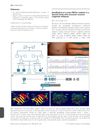
December 2013 in “British Journal of Dermatology”
23 citations
,
December 2013 in “British Journal of Dermatology” A new gene mutation linked to a skin condition was found in a Spanish family.
15 citations
,
September 2018 in “Frontiers in Plant Science” BcFLA1 protein is crucial for root hair growth in response to low phosphate in Brassica carinata.
 1 citations
,
January 2019 in “Annals of dermatology/Annals of Dermatology”
1 citations
,
January 2019 in “Annals of dermatology/Annals of Dermatology” STAT5 is crucial for hair growth in 3D cultured human dermal papilla cells.
19 citations
,
May 2022 in “International journal of molecular sciences” PRX01, PRX44, and PRX73 are essential for root hair growth in Arabidopsis thaliana.
 11 citations
,
August 2010 in “Developmental neurobiology”
11 citations
,
August 2010 in “Developmental neurobiology” Ptprq has multiple forms that change during inner ear development.
 February 2025 in “PubMed”
 CS12192 effectively treats alopecia areata with better safety than current options.
151 citations
,
August 2011 in “The EMBO Journal” The enzyme PA-PLA1α is important for proper hair follicle development.
 April 2023 in “Journal of Investigative Dermatology”
 POUF51 and HES3 are key in controlling stem cell numbers in psoriasis.
53 citations
,
October 2003 in “Genetics” The mK6irs1/Krt2-6g gene likely causes wavy hair in mice.
33 citations
,
February 2012 in “British Journal of Dermatology” Mutations in the p63 gene affect skin adhesion, barrier integrity, and hair growth.
1 citations
,
July 2024 in “Journal of Investigative Dermatology” MPZL3 protein affects hair growth cycles and could help manage hair loss.
 98 citations
,
June 2008 in “Human mutation”
98 citations
,
June 2008 in “Human mutation” A genetic change in the EDAR gene causes the unique hair traits found in East Asians.
 56 citations
,
December 2011 in “The Plant Journal”
56 citations
,
December 2011 in “The Plant Journal” AGD1 is important for root hair development in Arabidopsis, working with phosphoinositide signaling and the actin cytoskeleton.