 2 citations
,
March 2015 in “Toxicology and Environmental Health Sciences”
2 citations
,
March 2015 in “Toxicology and Environmental Health Sciences” Rice bran extract caused moderate skin irritation but no eye irritation, while a diluted essence was not irritating to skin and only slightly to guinea pigs.
 January 2026 in “Frontiers in Pharmacology”
 Personalized medicine and new technologies offer promising strategies for better skin disease treatments.
 May 2025 in “Journal of Drug Delivery and Therapeutics”
 Combining modern and Unani medicine may improve BPH treatment with fewer side effects.
 March 2025 in “GSC Biological and Pharmaceutical Sciences”
 Wood tar could be useful for skin care in dermatology and cosmetics.
 December 2024 in “International Ayurvedic Medical Journal”
 Ayurvedic treatments may help reduce hypothyroidism symptoms.
 September 2024 in “Cermin Dunia Kedokteran”
 Fahr syndrome causes brain calcification and is managed by treating symptoms and underlying issues.
 March 2024 in “Tropical Journal of Natural Product Research”
 Many people in Fez-Meknes use potentially toxic plants for various health and cosmetic purposes, but more research is needed to ensure their safety.
 January 2023 in “Editora Conhecimento Livre eBooks”
 A balanced diet with key nutrients and possible supplements can help manage post-COVID-19 symptoms.
 February 2022 in “International Journal of Complementary & Alternative Medicine”
 Good hair and scalp health indicate good overall health.
 January 2022 in “Acta botanica Caucasica”
 Turkish herbal cosmetics use various plants for hair care, skincare, and other personal hygiene purposes.
 February 2016 in “Online journal of biological sciences”
 Henna and honey improved burn healing and hair growth in rabbits.
January 2026 in “Animal Genetics” A genetic variant in the GJB6 gene likely caused the Labrador's paw pad condition.
May 2025 in “OPAL (Open@LaTrobe) (La Trobe University)” Key genes affect cashmere quality differences between Jiangnan and Changthangi goats.
 August 2018 in “Journal of Investigative Dermatology”
 A woman with dermatomyositis improved after treatment for neck panniculitis, suggesting similar treatment for related conditions.
April 2025 in “Digital Commons - East Tennessee State University (East Tennessee State University)” Long COVID can cause lasting health issues like fatigue and brain fog, especially in those with severe initial infections or no vaccination.
 4 citations
,
January 2024 in “Scientific Reports”
4 citations
,
January 2024 in “Scientific Reports” Pumpkin seeds may help expel parasites, but findings are retracted.
4 citations
,
December 2022 in “Evidence-based Complementary and Alternative Medicine” Phenolic compounds from Quercus acutissima leaves, especially casuarinin, may help treat acne.
 December 2025 in “Cureus”
 Post-COVID syndrome symptoms are common and overlap with general health issues.
Maternal and extranuclear factors affect fruit traits in winter squash.
175 citations
,
September 1998 in “British Journal of Dermatology” Keratin 17 gene mutations cause both steatocystoma multiplex and pachyonychia congenita type 2.
10 citations
,
October 2011 in “Dermatologica Sinica” A patient with PPP had rare skin reactions to adalimumab, which improved after stopping smoking and continuing acitretin.
13 citations
,
October 2016 in “Acta Biochimica et Biophysica Sinica” GhPLDα1 helps thicken cotton fiber walls by boosting cellulose production.
July 2025 in “Actas Dermo-Sifiliográficas” Trichodynia is a challenging scalp condition to treat, needing gentle care and more research for better solutions.
1 citations
,
September 2023 in “Animals” A new goat gene affects cashmere fiber thickness; certain variations can make the fibers coarser.
1 citations
,
August 2024 in “Pediatric Dermatology” A rare, harmless hair condition was found in an infant's eyebrow, needing no treatment.
61 citations
,
December 1994 in “Planta”  13 citations
,
January 2012 in “International Journal of Trichology”
13 citations
,
January 2012 in “International Journal of Trichology” Eating too many paradise nuts for cancer prevention caused a woman to lose all her hair due to selenium poisoning.
 13 citations
,
June 2010 in “Journal of The American Academy of Dermatology”
13 citations
,
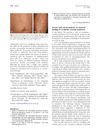
June 2010 in “Journal of The American Academy of Dermatology” A man with Cronkhite-Canada syndrome had all 20 nails detach but improved with treatment.
22 citations
,
September 2014 in “JAMA dermatology” Ichthyosis with confetti is a genetic skin disorder with consistent ectodermal malformations and various KRT10 gene mutations.
 September 2016 in “Journal of Dermatological Science”
 A gene mutation worsens skin irritation in mice due to a lack of certain fats.