39 citations
,
August 1998 in “FEBS Letters” Two new enzymes, PAD-R11 and PAD-R4, were cloned and showed activity, with PAD-R11 resembling epidermal enzymes.
September 2020 in “Zenodo (CERN European Organization for Nuclear Research)” Reducing Zyxin may help treat hair loss.
26 citations
,
March 1995 in “Differentiation” A rabbit gene important for hair development was identified and detailed.
 January 2008 in “Yearbook of Dermatology and Dermatologic Surgery”
 One type of progenitor cell can maintain normal skin in mice.
23 citations
,
June 2023 in “Cell Reports” Early hair follicle development involves distinct cell populations and Wnt signaling influences cell identity.
 178 citations
,
October 2001 in “Genes & Development”
178 citations
,
October 2001 in “Genes & Development” The mutated hairless gene causes hair loss by acting as a new type of corepressor affecting thyroid hormone receptors.
1 citations
,
January 2025 in “Regenerative Biomaterials” Exosomes from Pinctada martensii mucus can safely reduce melanin production, offering a new treatment for skin pigment issues.
 11 citations
,
April 2020 in “Life sciences”
11 citations
,
April 2020 in “Life sciences” Pantothenic acid helps mink hair follicles grow by affecting certain cell signals.
99 citations
,
February 2000 in “PubMed” Overexpressing PKCepsilon in mice reduces papillomas but increases carcinomas.
January 2026 in “Animal Genetics” A genetic variant in the GJB6 gene likely caused the Labrador's paw pad condition.
28 citations
,
February 2006 in “Biochemical and Biophysical Research Communications” Wnt-10b helps skin cells and hair grow.
5 citations
,
May 2023 in “Frontiers in Cell and Developmental Biology” Integrin α6 helps identify different neural crest cell types in the skin.
January 2012 in “Infoscience (Ecole Polytechnique Fédérale de Lausanne)” Human thymus has stem cells that can self-renew and maintain their identity.

CaBP1 and 2 are important for maintaining the activity of calcium channels necessary for hearing in inner ear cells.
 2 citations
,
January 2025 in “动物学研究”
2 citations
,
January 2025 in “动物学研究” YAP1 helps fat cell formation by influencing the Hippo pathway.
 September 2016 in “Journal of Dermatological Science”
 Wnt-10b is important for keeping mouse skin cells healthy for hair growth.
37 citations
,
November 2007 in “Journal of Biological Chemistry” Ku80 is a key receptor for Thymosin β4, affecting cell migration and wound healing.
42 citations
,
June 2002 in “Molecular and Cellular Biology” Keratinocyte gene expression is controlled by multiple modules with specific binding sites.
December 2022 in “Biochemical and Biophysical Research Communications” HtrA2 activity is crucial for normal hair growth by regulating fat cell development.
GPC1 is important for blood vessel growth in hair follicles and could help treat hair loss.
 3 citations
,
January 2023 in “Journal of Hard Tissue Biology”
3 citations
,
January 2023 in “Journal of Hard Tissue Biology” Wnt10a may help regenerate dental pulp and form dentine.
3 citations
,
July 2015 in “Biotechnic & histochemistry” Bim and Puma proteins are found in developing mouse hair follicles and are involved in more than just cell death.
 314 citations
,
April 2010 in “Developmental Cell”
314 citations
,
April 2010 in “Developmental Cell” β-catenin in the dermal papilla is crucial for normal hair growth and repair.
 103 citations
,
January 2011 in “Blood”
103 citations
,
January 2011 in “Blood” Thymus transplantation successfully restored immune function in infants with FOXN1 deficiency.
July 2026 in “Research Square” 62 citations
,
December 2007 in “Journal of Cellular and Molecular Medicine” Kremen is crucial for proper development and preventing tumors by regulating Wnt signaling.

A genetic mutation in the EDA gene causes hypohidrotic ectodermal dysplasia in cats.
 October 2021 in “Journal of Investigative Dermatology”
 Dkk4 protein is necessary for the proper development and arrangement of hair follicles.
 8 citations
,
December 2009 in “Journal of The European Academy of Dermatology and Venereology”
8 citations
,
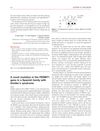
December 2009 in “Journal of The European Academy of Dermatology and Venereology” Researchers found a new mutation in the FERMT1 gene in a Spanish family with Kindler syndrome.
 July 2024 in “British journal of dermatology/British journal of dermatology, Supplement”
 A variant in the KRT31 gene causes a rare hereditary hair disorder called monilethrix.