April 2016 in “Journal of the American Academy of Dermatology” A 4-year-old girl had a rare hair disorder affecting only part of her scalp.
January 2020 in “Journal of Womens Health, Issues and Care” Scalp micropigmentation is a successful, non-surgical way to make hair look fuller.
28 citations
,
December 1999 in “British Journal of Plastic Surgery” May 2016 in “Hair transplant forum international” 48 citations
,
August 1998 in “Developmental Biology” Deleting part of a gene in mice causes wavy hair and high pup loss.
 January 2008 in “대한피부과학회지”
 Micropigmentation is a safe procedure that effectively improves the appearance of scars on the scalp and eyebrows, with most patients showing excellent or good results.
May 2016 in “Hair transplant forum international” 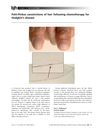 8 citations
,
February 2005 in “British Journal of Haematology”
8 citations
,
February 2005 in “British Journal of Haematology” Chemotherapy caused the patient's hair to have alternating thick and thin segments.
 1 citations
,
January 2022 in “Electronic Imaging”
1 citations
,
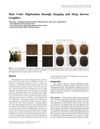
January 2022 in “Electronic Imaging” A new method accurately captures and renders hair color for virtual reality and hair dye use.
96 citations
,
February 2002 in “Journal of the American Academy of Dermatology” Pseudofolliculitis barbae is a chronic skin condition affecting mainly African American and Hispanic individuals, caused by shaving tightly curled hair, and managed by prevention and treatment but not curable.
 1 citations
,
January 2013 in “International Journal of Trichology”
1 citations
,
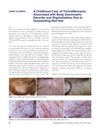
January 2013 in “International Journal of Trichology” A girl with red hair developed hair-pulling and body image disorders after being bullied for her hair color.
2 citations
,
December 2024 in “JAAD reviews.” Modifying grooming techniques and using treatments like chemical depilatories or laser hair removal can help manage Pseudofolliculitis barbae.
 8 citations
,
February 2017 in “Archives of Dermatological Research”
8 citations
,
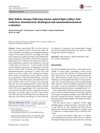
February 2017 in “Archives of Dermatological Research” Intense pulsed light treatment effectively reduces underarm hair by making hair follicles smaller and extending their resting phase.
October 2021 in “Journal of Investigative Dermatology” Pink berry extract effectively treats scalp issues from frequent head covering.
6 citations
,
April 1971 in “Journal of Wildlife Diseases” Switching flying squirrels' diet from seeds to mouse chow restored their hair.
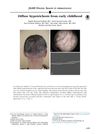 September 2016 in “Journal of The American Academy of Dermatology”
 The girl has a genetic hair condition causing thin hair since childhood.
 December 2020 in “International journal of medical science and clinical invention”
 Rapunzel syndrome can show vague symptoms and needs long-term psychiatric care to prevent recurrence.

Polarized microscopy helps identify hair irregularities in genetic disorders.

Miniflap hair restoration is a method to regrow hair.
July 2024 in “Journal of Investigative Dermatology” August 2025 in “Brazilian Journal of Hair Health” Hair-related body dysmorphic disorder is common in hair loss patients and needs early recognition for proper treatment.
 March 2024 in “Hair transplant forum international”
 A single hair transplant treatment was effective for a mild scalp condition.
 2 citations
,
August 2016 in “Lasers in Surgery and Medicine”
2 citations
,
August 2016 in “Lasers in Surgery and Medicine” Photodynamic therapy can remove nonpigmented hair in mice and might work for humans.
 January 2021 in “Nasza Dermatologia Online”
 Plica polonica is a rare condition where hair becomes irreversibly tangled, and the treatment is to cut the matted hair.
January 2025 in “Figshare” Stress can cause sudden hair whitening in children, but it may reverse on its own.
 4 citations
,
January 2019 in “Annals of dermatology/Annals of Dermatology”
4 citations
,
January 2019 in “Annals of dermatology/Annals of Dermatology” Changing hairstyles can help hair regrow in children with hair loss from tight braids or ponytails.
January 2025 in “Figshare” Stress can cause sudden hair whitening in children, but it may reverse on its own.

Permanent micropigmentation can help cancer survivors feel better about themselves by restoring eyebrows lost during chemotherapy.