 4 citations
,
October 2021 in “Scientific Reports”
4 citations
,
October 2021 in “Scientific Reports” NKIRAS2 can suppress certain skin tumors but its effect on cancer varies with context and expression level.
13 citations
,
January 2018 in “Advances in experimental medicine and biology” January 2009 in “Bradford Scholars (University of Bradford)” BMP signaling helps prevent skin tumors by blocking cancer-promoting pathways.
53 citations
,
June 2005 in “The journal of investigative dermatology/Journal of investigative dermatology” KAP genes show significant genetic variability, but its impact on hair traits is unclear.
 April 2023 in “Journal of Investigative Dermatology”
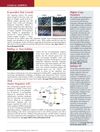
 The research found that a protein called caveolin-1 is reduced in psoriasis, but reintroducing it can help alleviate some psoriasis symptoms.
 July 2016 in “Experimental Dermatology”
 New treatments for hair growth and psoriasis may be possible, and gene differences could affect baldness and the severity of skin conditions.
 26 citations
,
July 2016 in “PLOS ONE”
26 citations
,
July 2016 in “PLOS ONE” Activating β-catenin in certain skin cells speeds up hair growth in mice.
29 citations
,
February 2001 in “Proceedings of the National Academy of Sciences” A specific DNA region controls skin cell gene expression by working with certain proteins.
22 citations
,
March 2019 in “The Journal of Cell Biology” The Wave complex controls skin growth by suppressing certain signals.
January 2016 in “Memorial University Research Repository (Memorial University)” Hereditary hyperplastic gingivitis in silver foxes may be linked to errors in the MAPK signaling pathway, influenced by androgens.