 8 citations
,
January 2018 in “Journal of the American Academy of Dermatology”
8 citations
,
January 2018 in “Journal of the American Academy of Dermatology” Diphenylcyclopropenone treatment helps prevent hair loss relapse in alopecia areata patients.

SNP rs2479106 in the DENND1A gene may increase PCOS risk in Saudi Arabian females.
 April 2021 in “The journal of investigative dermatology/Journal of investigative dermatology”
 6.1% of patients seeking PRP for hair loss had undiagnosed cicatricial alopecia, which PRP cannot treat.
A specific gene change in APCDD1 increases the risk of hair loss.
July 2024 in “Journal of Investigative Dermatology” ITK inhibitors may effectively treat alopecia areata.
2 citations
,
May 2024 in “International Journal of Medical Arts” Diphenylcyclopropenone (DPCP) is more effective than anthralin for treating resistant alopecia areata.
 December 2011 in “Korean journal of veterinary research”
 A Miniature Pinscher dog with hair loss and scaling was diagnosed with pattern alopecia and improved with melatonin treatment.
1 citations
,
August 2024 in “Journal of Pharmacy & Pharmaceutical Sciences” The DPCP/HPβCD complex improves solubility and anti-inflammatory effects for alopecia areata treatment.
September 2019 in “The journal of investigative dermatology/Journal of investigative dermatology” Mononuclear cells may protect against certain chemotherapy-induced hair loss.
1 citations
,
October 2024 in “Veterinary Dermatology” A Cavalier King Charles Spaniel had both uveodermatological syndrome and alopecia areata, and treatment with ciclosporin helped regrow hair.
January 2022 in “Mammalian Genome” The wavy coat in NCT mice is caused by multiple genes, including a mutation in the Prss53 gene.
3 citations
,
May 2018 in “The Indian Journal of Animal Sciences” The KAP 7 gene affects wool traits in Rambouillet sheep, with the BB genotype showing the best wool characteristics.
 72 citations
,
January 2003 in “American Journal of Pathology”
72 citations
,
January 2003 in “American Journal of Pathology” A protein called CBP is found in prostate cancer and can increase the effectiveness of certain prostate cancer treatments.
Cadd4 effectively reduces cholesterol levels without side effects.
 5 citations
,
March 2005 in “Journal of The American Academy of Dermatology” 1 citations
,
October 2024 in “Canine Medicine and Genetics”
5 citations
,
March 2005 in “Journal of The American Academy of Dermatology” 1 citations
,
October 2024 in “Canine Medicine and Genetics” The MLPH gene is not linked to seasonal hair loss in Rhodesian Ridgeback dogs.
 October 2024 in “Journal of the Endocrine Society”
 Certain genetic variants impair enzyme activity, contributing to non-classic congenital adrenal hyperplasia.
August 2025 in “Veterinary Dermatology” Canine alopecia areata is a chronic condition needing long-term management.
 November 2025 in “International Journal of Clinical Obstetrics and Gynaecology”
 PCOS is likely inherited in families, increasing risk for first-degree relatives.
2 citations
,
July 2021 in “Genes” A specific genetic change in the KRT71 gene causes a hair loss condition in Hereford cattle.
March 2026 in “International Journal of Cosmetic Science” Pal-KCV peptide strengthens hair and reduces breakage by up to 52%.
1 citations
,
April 2008 in “Progrès en Urologie” Systematic end-of-trial biopsies are the most reliable way to assess outcomes.
 18 citations
,
February 2015 in “Acta Crystallographica Section D: Structural Biology”
18 citations
,
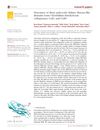
February 2015 in “Acta Crystallographica Section D: Structural Biology” The study concludes that certain domains in Clostridium histolyticum enzymes are structurally unique, bind calcium to become more stable, and play distinct roles in breaking down collagen, with potential applications in medicine and drug delivery.
36 citations
,
May 2005 in “BMC dermatology” DPCP is effective for treating severe alopecia areata, but relapse is common.
 July 2021 in “International journal of dermatology, venereology and leprosy sciences”
 Diphenylcyclopropenone is more effective and has fewer side effects than dinitrochlorobenzene for treating alopecia areata.
 September 2021 in “CRC Press eBooks”
 CCCA is a common hair loss condition in African American women, often inherited and influenced by hairstyling, with unique scalp features detectable by special tools.
July 2024 in “Journal of Investigative Dermatology” PH-762 shows promise in treating skin cancer by effectively targeting and silencing PD-1 in tumors with minimal side effects.
June 2025 in “British Journal of Dermatology” Ruxolitinib helped a woman with a genetic mutation regrow her hair and improved her health.