 November 2022 in “The journal of investigative dermatology/Journal of investigative dermatology”
 Different types of PPARγ are found in varying amounts in human skin and its parts, which could affect how skin treatments work.
 January 2022 in “bioRxiv (Cold Spring Harbor Laboratory)”
 Skin lesions in Carney complex are likely caused by a specific group of skin cells that promote pigment production due to a genetic mutation.
33 citations
,
September 2017 in “Journal of Investigative Dermatology” A mutation in the KRT25 gene causes woolly hair and hair loss.
 13 citations
,
January 2021 in “Scientific Reports”
13 citations
,
January 2021 in “Scientific Reports” Pannexin 3 helps skin and hair growth by controlling a protein called Epiprofin.
52 citations
,
October 1995 in “Experimental Cell Research” Human hair keratin genes hHa2 and hHb1 are located on chromosomes 17 and 12.
January 2014 in “生命科学(ISSN1934-7391)” A certain gene variation can affect protein production and is linked to male pattern baldness.
 13 citations
,
January 2017 in “Molecules”
13 citations
,
January 2017 in “Molecules” Compounds from Alpinia zerumbet may help with hair regrowth and cancer treatment by targeting PAK1.
GPC1 is important for blood vessel growth in hair follicles and could help treat hair loss.
 24 citations
,
April 2017 in “Oncology Reports”
24 citations
,
April 2017 in “Oncology Reports” The hair keratin gene KRT81 is found in both normal and breast cancer cells and helps them invade surrounding tissues.
 August 1994 in “Molecular Endocrinology”
 Changing protein kinase levels in pituitary cells affects calcium flow and beta-endorphin release.
 9 citations
,
August 2013 in “PLOS ONE”
9 citations
,
August 2013 in “PLOS ONE” Genetic variants at 20p11 increase baldness risk in Chinese Han people.
May 2010 in “Faculty Opinions – Post-Publication Peer Review of the Biomedical Literature” A mutation in the KRT74 gene causes woolly hair by affecting hair texture.
 4 citations
,
June 1998 in “The Journal of Clinical Endocrinology & Metabolism”
4 citations
,
June 1998 in “The Journal of Clinical Endocrinology & Metabolism” KGF and its receptor are found in enlarged prostate tissue and KGF strongly increases cell growth.
11 citations
,
July 2010 in “European Journal of Dermatology” The condition is linked to chromosome 12, but no mutations were found in the known genes.
November 2022 in “Journal of Investigative Dermatology” ILC1-like cells can cause alopecia areata by themselves.
63 citations
,
January 1999 in “The Journal of Clinical Endocrinology & Metabolism” Polycystic ovaries and early male baldness are inherited traits.
1 citations
,
January 2015 in “China Animal Husbandry & Veterinary Medicine” Four keratin genes are crucial for hair growth in Xinji fine wool sheep.
4 citations
,
May 1998 in “PubMed” The Bsk mutation doesn't involve keratin gene recombination and its cause is unknown.
 11 citations
,
July 2016 in “Endocrinology”
11 citations
,
July 2016 in “Endocrinology” Higher Lnk protein levels in ovaries may lead to insulin resistance in women with PCOS.
53 citations
,
October 2003 in “Genetics” The mK6irs1/Krt2-6g gene likely causes wavy hair in mice.

Neurokinin B levels are higher in the placentas of women with PCOS who have female babies.
 6 citations
,
January 2024 in “Annals of Dermatology”
6 citations
,
January 2024 in “Annals of Dermatology” Dickkopf-related Protein 2 can help hair grow by activating a specific cell pathway.
 May 2026 in “Research Square”
 The polyG fragment in Hoxc13 protein helps evolve mammalian skin and hair by enhancing gene interactions.
114 citations
,
May 2001 in “Development” Overexpression of Hoxc13 in hair cells causes hair loss and skin issues.
29 citations
,
January 2013 in “The journal of investigative dermatology/Journal of investigative dermatology” P-cadherin is crucial for hair follicle pigmentation but not skin pigmentation.
January 2014 in “China Animal Husbandry & Veterinary Medicine” The KAP8-1 gene affects skin, hair follicle development, and wool quality in different sheep varieties.
 3 citations
,
January 2019 in “Journal of Dermatology”
3 citations
,
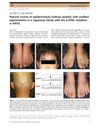
January 2019 in “Journal of Dermatology” The p.P25L mutation in the KRT5 gene causes a rare skin condition that worsens over time and may lead to hair loss starting in young adulthood.
53 citations
,
May 1988 in “Journal of Molecular Evolution”  March 2025 in “FEBS Journal”
 Epiprofin suppresses parathyroid hormone gene activity, helping regulate calcium levels and could be a treatment target for hyperparathyroidism.
1 citations
,
May 2022 in “International journal of molecular sciences” Faulty LEF1 activation causes faster skin cell differentiation in premature aging syndrome.