March 2026 in “World Rabbit Science” DKK4 can be used to improve wool quality in Zhexi Angora rabbits.
 November 1999 in “Hair transplant forum international”
 The document could not be understood or processed.
 January 2026 in “Drug Delivery and Translational Research”
 Multicomponent crystals in microneedles improve drug delivery for hair loss treatment.
 January 2023 in “Skin appendage disorders”
 Two Hispanic women developed Plica neuropathica, a condition causing tangled hair, possibly due to hair damage and various risk factors.
 February 2026 in “International Journal of Molecular Sciences”
 Silencing SFRP1 alone promotes hair growth, but adding DKK1 does not help.
 11 citations
,
September 2012 in “The journal of investigative dermatology/Journal of investigative dermatology”
11 citations
,
September 2012 in “The journal of investigative dermatology/Journal of investigative dermatology” A mutation in the KRT71 gene causes a hair disorder by disrupting hair follicle structure and texture.
 30 citations
,
April 2017 in “European Journal of Cell Biology”
30 citations
,
April 2017 in “European Journal of Cell Biology” CIP/KIP proteins help stop cell division and support hair growth.
 1 citations
,
March 2023 in “Tidsskrift for Den norske lægeforening”
1 citations
,
March 2023 in “Tidsskrift for Den norske lægeforening” Keratosis pilaris is a common skin condition causing a bumpy texture, sometimes linked to other diseases, with various treatments available.
A KRT32 gene variant causes loose anagen hair syndrome.
Neurokinin B levels are higher in the placentas of women with PCOS who have female babies.
 November 2024 in “Experimental Dermatology”
 SKO-derived SKP-like cells may help with hair regeneration and skin restoration.
8 citations
,
June 2004 in “Journal of Investigative Dermatology” Certain peptides can prevent hair loss in young rats caused by a cancer drug.
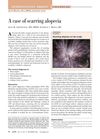 December 2005 in “Journal of the American Academy of Physician Assistants”
 The woman was diagnosed with lichen planopilaris and can be treated with corticosteroids.
December 2020 in “Faculty Opinions – Post-Publication Peer Review of the Biomedical Literature” The KDM1 gene helps Venus flytraps close by managing potassium ions.
2 citations
,
October 2023 in “JURNAL ILMU KEFARMASIAN INDONESIA” Kenikir leaf extract nanosuspension may help inhibit breast cancer cell growth.
3 citations
,
April 2024 in “JAAD Case Reports” DPCP may be safe for treating alopecia during pregnancy, but more research is needed.
52 citations
,
April 2012 in “Journal of Investigative Dermatology” KRTAP2 genes are crucial for hair structure and may impact hair disorders and treatments.
 April 2025 in “Jurnal Multidisiplin Dehasen (MUDE)”
 The hair tonic with fragrant pandan leaf extract and VCO was mostly stable, except for the F3 formulation.
 18 citations
,
June 1999 in “Statistical Methods in Medical Research”
18 citations
,
June 1999 in “Statistical Methods in Medical Research” The document concludes that PK/PD modeling is important for determining the safe and effective dosages of drugs.
76 citations
,
February 2007 in “Cancer Research” Protein Kinase Cε increases skin sensitivity to UV damage and skin cancer risk.
 24 citations
,
March 2017 in “Archives of Gynecology and Obstetrics”
24 citations
,
March 2017 in “Archives of Gynecology and Obstetrics” The study found that women with hyperandrogenic PCOS have higher levels of AKT1 and AKT2 proteins in their cells, which may lead to cell dysfunction.
 11 citations
,
July 2016 in “Endocrinology”
11 citations
,
July 2016 in “Endocrinology” Higher Lnk protein levels in ovaries may lead to insulin resistance in women with PCOS.
 3 citations
,
March 2014 in “Journal of Industrial Microbiology & Biotechnology”
3 citations
,
March 2014 in “Journal of Industrial Microbiology & Biotechnology” Scientists found a new gene in a bacterium that can modify an immunosuppressant drug, potentially helping to treat hair loss.
December 2025 in “Biomolecules” Compound 7p shows strong potential as an anticancer agent.
 July 2022 in “Journal of Investigative Dermatology”
 Dkk4 is necessary for the initial development and arrangement of hair follicles.
 17 citations
,
September 2010 in “Pediatric dermatology”
17 citations
,
September 2010 in “Pediatric dermatology” A 15-year-old with KID syndrome developed a rare skin condition called PEHFN.
11 citations
,
May 2013 in “Journal of Investigative Dermatology” KRTAP10 proteins help form the hair shaft's tough outer layer by interacting with specific hair keratins.
 19 citations
,
December 2015 in “Journal of Investigative Dermatology”
19 citations
,
December 2015 in “Journal of Investigative Dermatology” The protein p53 directly reduces the production of Keratin 17, a skin and hair protein, in rats with radiation dermatitis.