40 citations
,
July 2019 in “Journal of Investigative Dermatology” Lack of a key enzyme causes severe skin issues and death in mice.
 April 2016 in “Journal of Investigative Dermatology”
 Blocking Prostaglandin D₂ (PGD₂) could help treat hair loss.
1 citations
,
January 2010 in “Acta Chirurgica Latviensis” Inflammation in psoriasis may trigger antimicrobial peptides and cell death.
February 1999 in “The anatomical record” Two mouse mutants have defective hair cuticle cross-linking.
1 citations
,
July 2017 in “Cancer Research” Overexpressing NSD3 in mice causes breast cancer-like tumors and gland abnormalities.
 7 citations
,
March 2020 in “PloS one”
7 citations
,
March 2020 in “PloS one” α-parvin is necessary for skin and hair growth and for the correct orientation of skin cells.
January 2007 in “日本看護学会抄録集 成人看護1” Certain amino acids in 5AR1 and 5AR2 are crucial for binding and resistance to Finasteride.
 56 citations
,
February 2006 in “American journal of physiology. Cell physiology”
56 citations
,
February 2006 in “American journal of physiology. Cell physiology” Steroid sex hormones activate matriptase in prostate cancer cells but not in breast cancer cells.
 13 citations
,
January 2021 in “Regenerative Medicine”
13 citations
,
January 2021 in “Regenerative Medicine” Platelet lysate could be a valuable treatment for many diseases in regenerative medicine.
November 2024 in “Journal of Investigative Dermatology” Adrenomedullin 2 stops cell growth and causes cell death in human hair follicles.
December 2024 in “Naunyn-Schmiedeberg s Archives of Pharmacology”  January 2025 in “Turkish Journal of Cerebrovascular Diseases”
 CARASIL can cause different symptoms even with the same genetic mutation.
5 citations
,
September 2021 in “Journal of Molecular Histology” LHX2, with other markers, can identify hair placodes in rats.
 19 citations
,
March 2017 in “Scientific Reports”
19 citations
,
March 2017 in “Scientific Reports” HAT-L4 is crucial for preventing body fluid loss by maintaining skin barrier integrity.
March 2026 in “Experimental Dermatology” The new model helps understand and develop treatments for genetic skin disorders like AEC.
 4 citations
,
October 2021 in “Scientific Reports”
4 citations
,
October 2021 in “Scientific Reports” NKIRAS2 can suppress certain skin tumors but its effect on cancer varies with context and expression level.
 July 2016 in “Experimental Dermatology”
 New treatments for hair growth and psoriasis may be possible, and gene differences could affect baldness and the severity of skin conditions.
 April 2016 in “Journal of Investigative Dermatology”
 Full thickness wounds on Lanyu pigs' skin resulted in abnormal skin structure and function due to changes in molecular expression patterns.
 4 citations
,
September 2020 in “PeerJ”
4 citations
,
September 2020 in “PeerJ” Platelet factor 4 slows down hair growth and could make hair loss treatments more effective if removed.
 29 citations
,
October 2016 in “Cell death and differentiation”
29 citations
,
October 2016 in “Cell death and differentiation” ΔNp63α stops TAp73β from working in skin cancer by blocking its access to specific genes, not by directly interacting with it.
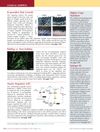 July 2016 in “Journal of Investigative Dermatology”
 R-spondin2 may help treat hair loss, gene differences could explain baldness, a peptide's regulation is linked to psoriasis, B-defensin gene copies may affect a skin condition's risk and severity, and potential markers and targets for alopecia areata were identified.
 September 2023 in “HAL (Le Centre pour la Communication Scientifique Directe)”
 Peptide nanoparticles can effectively deliver CRISPR-Cas9 to target KRAS mutations in cancer.
 32 citations
,
November 2016 in “Journal of Dental Research”
32 citations
,
November 2016 in “Journal of Dental Research” Pannexin 3 is important for bone formation and the development of bone cells.
79 citations
,
January 2002 in “Nucleic Acids Research” BMP-2 activates the Dlx3 gene in mouse skin cells, important for hair and skin development.
3 citations
,
October 2021 in “Turkish Journal Of Neurology” Genetic analysis is crucial for diagnosing and managing cerebral arteriopathy.
1 citations
,
April 2016 in “Journal of lipid research” Lipin-1 is important for skin cell differentiation and skin barrier function.
 January 2018 in “bioRxiv (Cold Spring Harbor Laboratory)”
 Auxin helps root hairs grow in high phosphate by affecting ROS and involving RSL2 and RSL4.
 April 2016 in “Journal of Investigative Dermatology”
 Lymphoid-specific helicase (Lsh) is crucial for skin growth, change, and healing after injury.
4 citations
,
January 2023 in “Journal of Clinical Investigation” Specific mutations in a receptor cause facial abnormalities and hair loss.
 14 citations
,
January 2017 in “Elsevier eBooks”
14 citations
,
January 2017 in “Elsevier eBooks” CBG may help with various medical conditions but needs more human research to confirm safety and effectiveness.