1 citations
,
May 2022 in “Journal of Drugs in Dermatology” Low-dose naltrexone and platelet-rich plasma can regrow hair in lichen planopilaris.
 May 2017 in “Journal of The American Academy of Dermatology”
 PLAU and SerpinB2 affect cell death differently in various forms of leprosy and could be targets for new treatments.
 2 citations
,
June 2024 in “Frontiers in Plant Science”
2 citations
,
June 2024 in “Frontiers in Plant Science” LLPS is crucial for RALF signaling, aiding plant growth and stress resilience.
6 citations
,
December 2021 in “Journal of Clinical Medicine” LiPADI is a useful tool for monitoring the severity and treatment of lichen planus.
 16 citations
,
December 2017 in “Journal of The American Academy of Dermatology”
16 citations
,
December 2017 in “Journal of The American Academy of Dermatology” Low-level laser therapy may reduce symptoms and increase hair thickness in lichen planopilaris patients.
January 2026 in “JPRAS Open” PDLLA scalp injections improved hair regrowth in most patients with non-scarring alopecia.
5 citations
,
September 2021 in “Clinical case reports” GLPLS is a rare skin condition with specific hair loss and skin symptoms.
Hair transplants can cause hair loss if done while lichen planopilaris is active; wait until it's inactive for two years and check with a scalp biopsy first.
 October 2021 in “The Egyptian Journal of Hospital Medicine”
 Platelet-rich plasma is a safe and effective treatment for oral lichen planus.
 12 citations
,
June 2020 in “Journal of The American Academy of Dermatology”
12 citations
,
June 2020 in “Journal of The American Academy of Dermatology” Platelet-rich plasma is tolerable for lichen planopilaris and doesn't worsen the condition, but its effectiveness is unclear.
 105 citations
,
December 2009 in “Archives of dermatology”
105 citations
,
December 2009 in “Archives of dermatology” A specific drug can help treat Lichen Planopilaris, a condition causing permanent hair loss.
January 2025 in “Indian Journal of Dermatopathology and Diagnostic Dermatology” Dermoscopy helps diagnose rare GLPLS in males.
2 citations
,
June 2016 in “Oral Surgery Oral Medicine Oral Pathology and Oral Radiology” Oral lichen planus can appear before lichen planopilaris.
 April 2019 in “Journal of Investigative Dermatology”
 Lichen planopilaris involves disrupted fat metabolism, increased scarring, and mast cell activity.
65 citations
,
February 2018 in “The Plant Journal” PLDζ2 and NPC4 have different roles in lipid changes and root hair growth in Arabidopsis under low phosphate, with PLDζ2 reducing root hair growth and NPC4 promoting it.
11 citations
,
January 2018 in “Jaypee's international journal of clinical pediatric dentistry” Papillon-Lefèvre Syndrome causes early tooth loss and skin issues, needing early dental diagnosis.
 12 citations
,
June 2020 in “Frontiers in Cell and Developmental Biology”
12 citations
,
June 2020 in “Frontiers in Cell and Developmental Biology” The PP2A-B55α protein is essential for brain and skin development in embryos.
 1 citations
,
September 2013 in “The Journal of Dermatology”
1 citations
,
September 2013 in “The Journal of Dermatology” An 8-year-old girl developed a rare skin condition in a linear pattern on one side of her body after a lung infection, which improved with treatment.
 16 citations
,
June 2015 in “Pediatric dermatology”
16 citations
,
June 2015 in “Pediatric dermatology” Lichen Planopilaris in teens is rare, often misdiagnosed, and responds well to steroids.
 3 citations
,
June 2022 in “Dermatology and therapy”
3 citations
,
June 2022 in “Dermatology and therapy” A new botanical treatment improved hair growth and symptoms in lichen planopilaris patients.
 11 citations
,
February 2020 in “Dermatology and therapy”
11 citations
,
February 2020 in “Dermatology and therapy” Low-Level Light Therapy significantly reduced inflammation and promoted hair regrowth in patients with Lichen planopilaris.
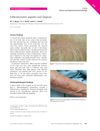 May 2014 in “Clinical and Experimental Dermatology”
 A 70-year-old woman with a rare skin condition improved after treatment with topical steroids and acitretin.
151 citations
,
August 2011 in “The EMBO Journal” The enzyme PA-PLA1α is important for proper hair follicle development.
A rare case of a woman having both lichen planus pigmentosus and classic lichen planopilaris at the same time.
June 2025 in “British Journal of Dermatology” Lichen planopilaris may have a genetic link.
 June 2025 in “International Journal of Nephrology and Renovascular Disease”
 PLA2R1 overexpression harms kidney cells by stopping their growth cycle.
March 2025 in “International Journal of Molecular Sciences” PLIN2 affects hair growth in cashmere goats, potentially improving cashmere quality.
13 citations
,
April 2013 in “Immunotherapy” Inhibiting PLA2 enzymes may help treat inflammatory skin diseases like psoriasis and dermatitis.
 90 citations
,
July 2008 in “Dermatologic therapy”
90 citations
,
July 2008 in “Dermatologic therapy” Lichen planopilaris is a chronic, scarring hair loss condition with no definitive cure, requiring accurate diagnosis and treatment to manage symptoms.
 160 citations
,
March 2009 in “Seminars in Cutaneous Medicine and Surgery”
160 citations
,
March 2009 in “Seminars in Cutaneous Medicine and Surgery” New insights show Lichen Planopilaris is a rare, scarring hair loss condition, hard to treat, mainly affecting middle-aged women, and significantly impacts mental health.