 21 citations
,
January 2010 in “International Journal of Trichology”
21 citations
,
January 2010 in “International Journal of Trichology” TrichoScan often makes mistakes and needs improvement for correct hair growth analysis.
January 2026 in “JAAD International” Trichoscopy is a valuable tool for diagnosing hair loss accurately and non-invasively.
11 citations
,
March 1959 in “Journal of Histochemistry & Cytochemistry” Sulphur, phosphorus, and metals are distributed differently in animal skin follicles, with variations in detection speed and location.
 178 citations
,
December 2011 in “Journal of Dermatological Case Reports”
178 citations
,
December 2011 in “Journal of Dermatological Case Reports” Trichoscopy is a useful tool for diagnosing different hair and scalp diseases by their unique visual features.
 18 citations
,
January 2011 in “International journal of trichology”
18 citations
,
January 2011 in “International journal of trichology” Hair casts, also called pseudonits, are often mistaken for other conditions.
 9 citations
,
January 1974 in “Leprosy Review”
9 citations
,
January 1974 in “Leprosy Review” Punch grafting is useful for restoring hair to the inner eyebrow area after certain surgeries.
 38 citations
,
December 2012 in “Journal of Cutaneous Pathology”
38 citations
,
December 2012 in “Journal of Cutaneous Pathology” EVG staining is a valuable, simple, and cost-effective method for diagnosing various skin conditions in dermatopathology.
November 2025 in “OPAL (Open@LaTrobe) (La Trobe University)” A new method helps find proteins in hair to identify fetal growth issues.
13 citations
,
January 2012 in “Dermatologic surgery” The trichometer is a quick and reliable tool for measuring hair quantity.
 16 citations
,
June 2017 in “PLoS ONE”
16 citations
,
June 2017 in “PLoS ONE” A 6-group hair classification is more reliable for drug testing than an 8-group system.
 5 citations
,
September 2014 in “Journal of Pharmaceutical Sciences” 42 citations
,
January 2005 in “Applied spectroscopy”
5 citations
,
September 2014 in “Journal of Pharmaceutical Sciences” 42 citations
,
January 2005 in “Applied spectroscopy” Hair from breast cancer patients shows changes in structure and composition, and a test using these changes detected cancer but also falsely identified some healthy samples as cancerous.
August 2024 in “Clinical & experimental pathology” Forensic DNA phenotyping can now predict more physical traits and ancestry from DNA, but further improvements are needed.
January 2026 in “Animal Genetics” A genetic variant in the GJB6 gene likely caused the Labrador's paw pad condition.
June 2014 in “Toxicologie analytique et clinique/Annales de toxicologie analytique” Older age increases positive hair alcohol test results, and chest hair is a good alternative for testing; season affects results, with higher levels in winter.
 March 2018 in “Benha Journal of Applied Sciences”
 Finger length ratio is not linked to hirsutism or hormone levels.
 7 citations
,
November 2017 in “Cureus”
7 citations
,
November 2017 in “Cureus” Ear creases might indicate heart disease risk, needing more research.
 32 citations
,
January 2014 in “Dermatology Research and Practice”
32 citations
,
January 2014 in “Dermatology Research and Practice” Trichoscopy can effectively tell apart tinea capitis and alopecia areata in children by looking for specific hair shapes.
 10 citations
,
June 2018 in “Journal of visualized experiments”
10 citations
,
June 2018 in “Journal of visualized experiments” The document concludes that the technique allows for the detection of LDH activity in various tissues, showing where cells are actively metabolizing glucose.
11 citations
,
January 2016 in “Mycoses” Human black hair is best for distinguishing between T. mentagrophytes and T. verrucosum.
 September 2024 in “Archiv Euromedica”
 Trichoscopy is a quick, accurate, and non-invasive method to diagnose and treat non-scarring hair loss.
 5 citations
,
May 2008 in “Nature Precedings”
5 citations
,
May 2008 in “Nature Precedings” Trichoscopy is a useful non-invasive method to diagnose female hair loss with high accuracy.
Cross-section trichometry is an accurate method to measure hair loss and growth.
January 2026 in “Figshare” January 2026 in “Figshare” January 2024 in “Indian Journal of Psychiatry” The screening method effectively predicts psychosis, valproate use is linked to hair loss, and IDEAS is valid for assessing mental disorder disability.
 March 2025 in “Institutional Repositories DataBase (IRDB)”
 The testes significantly contribute to vitamin D metabolism and may affect male reproductive health and conditions like hair loss.
 September 2024 in “Genes”
 CRABP1 boosts hair cell growth in Hu sheep by affecting key genes.
 7 citations
,
June 1967 in “Journal of Investigative Dermatology”
7 citations
,
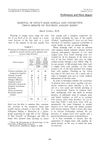
June 1967 in “Journal of Investigative Dermatology” Plucking hairs in a certain way can result in intact hair roots, not related to baldness.