 16 citations
,
January 2019 in “Skin appendage disorders”
16 citations
,
January 2019 in “Skin appendage disorders” Intralesional corticosteroids work best for mild alopecia areata, and DPCP works best for moderate to severe cases.
 64 citations
,
July 1997 in “Journal of The American Academy of Dermatology”
64 citations
,
July 1997 in “Journal of The American Academy of Dermatology” Finding eosinophils near hair bulbs helps diagnose alopecia areata.
February 2023 in “Zenodo (CERN European Organization for Nuclear Research)” Trichoscopy is a useful and affordable tool for diagnosing Alopecia areata.
 April 2021 in “Sohag Medical Journal”
 Alopecia areata is an autoimmune condition causing hair loss, linked to genetic factors and immune system issues, with no cure yet.
July 2025 in “Journal of Investigative Dermatology” Scarring alopecia involves increased immune cells and specific gene changes near damaged hair follicles.
1 citations
,
July 2025 in “Stem Cell Research & Therapy” Stem cell technology may improve hair loss treatments by providing more effective and personalized options.
71 citations
,
December 2013 in “The journal of investigative dermatology. Symposium proceedings/The Journal of investigative dermatology symposium proceedings” There are no FDA-approved treatments for Alopecia Areata, and current options have varying success and relapse rates.
 January 2018 in “Elsevier eBooks”
 The document concludes that alopecia has various forms, each with specific treatments, but no definitive cure for certain types like CCCA has been proven.
January 2023 in “Zenodo (CERN European Organization for Nuclear Research)” Refractory alopecia areata can be managed with medical treatments, psychological support, and aesthetic options.
5 citations
,
January 2020 in “Acta dermatovenerologica Alpina, Pannonica et Adriatica (Tiskana izd.)” Injecting platelet-rich plasma or applying it with a laser or microneedling can treat hair loss effectively. The laser and microneedling methods cause less pain.
 49 citations
,
April 2000 in “Journal of The American Academy of Dermatology”
49 citations
,
April 2000 in “Journal of The American Academy of Dermatology” Despite progress in treatment, the exact cause of Alopecia areata is still unknown.
 February 2010 in “Journal of The American Academy of Dermatology”
 Alopecia areata has different forms and can significantly affect quality of life, especially in more severe cases.
 41 citations
,
January 2014 in “Annals of Dermatology”
41 citations
,
January 2014 in “Annals of Dermatology” Dermoscopic examination helps diagnose different types of hair loss conditions by showing specific patterns.
April 2018 in “Journal of Investigative Dermatology” Melanogenesis-related proteins may trigger immune responses in alopecia areata patients.
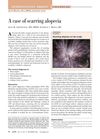 December 2005 in “Journal of the American Academy of Physician Assistants”
 The woman was diagnosed with lichen planopilaris and can be treated with corticosteroids.
 15 citations
,
August 2019 in “Dermatologic Therapy”
15 citations
,
August 2019 in “Dermatologic Therapy” Platelet-rich plasma (PRP) may help treat hair loss in patients with frontal fibrosing alopecia who don't respond to other treatments.
25 citations
,
October 1975 in “Journal of Cutaneous Pathology” Hair growth in alopecia areata is hindered due to impaired cell activity in the surrounding tissue.
 12 citations
,
September 2020 in “Journal of cosmetic dermatology”
12 citations
,
September 2020 in “Journal of cosmetic dermatology” Trichoscopy is useful for diagnosing and monitoring alopecia areata treatment.
 7 citations
,
October 2022 in “Expert opinion on emerging drugs”
7 citations
,
October 2022 in “Expert opinion on emerging drugs” New drugs for alopecia areata show promise but aren't universally effective, and hair loss often returns after stopping treatment.
 May 2018 in “Journal of dermatology and dermatitis”
 PRP is a promising treatment for autoimmune hair loss but its exact workings are not fully understood.
 April 1969 in “Postgraduate medicine”
 Use corticosteroid cream and triamcinolone injections for treating alopecia areata, and consider wigs and tranquilizers for support.
 March 2024 in “Case Reports in Dermatology”
 A woman's hair loss was misdiagnosed as alopecia areata but was actually lichen planopilaris, needing immediate and ongoing treatment.
 2 citations
,
January 2021 in “Our Dermatology Online”
2 citations
,
January 2021 in “Our Dermatology Online” Alopecia areata is more common in young Black African males, with rare other health issues.
1 citations
,
September 2024 in “Life” Combining fractionated CO2 laser with tacrolimus may help treat chronic alopecia areata.
 November 2023 in “The journal of investigative dermatology/Journal of investigative dermatology”
 Early treatment and multidisciplinary care are key to managing Frontal Fibrosing Alopecia and preventing further hair loss.
 January 2023 in “Dermatologic Therapy”
 Platelet-rich plasma therapy is a safe and effective treatment for alopecia areata.
 2 citations
,
January 2023 in “Journal of Clinical Medicine”
2 citations
,
January 2023 in “Journal of Clinical Medicine” People with hair loss conditions may also have thyroid disorders, but more research is needed to understand the connection.
Accurate diagnosis of hair loss types is crucial for effective treatment.
July 2026 in “Quality in Sport” Alopecia areata requires early, personalized treatment for hair loss and mental health, with promising new therapies needing more research.