4 citations
,
June 2025 in “Cell Reports” Clonally expanded CD8+ T cells cause alopecia areata.
 1 citations
,
July 2014 in “Our Dermatology Online”
1 citations
,
July 2014 in “Our Dermatology Online” The patient with both scarring and non-scarring hair loss showed complex immune reactions and improved with steroid treatment.
 19 citations
,
March 1997 in “Journal of Cutaneous Pathology”
19 citations
,
March 1997 in “Journal of Cutaneous Pathology” Alopecia areata involves specific T-cells, unlike androgenetic alopecia.
1 citations
,
January 2021 PRP is effective for treating patchy alopecia areata.
1 citations
,
March 2025 in “Pediatric Dermatology” Alopecia areata causes round patches of hair loss, especially in children.
40 citations
,
October 2012 in “Dermatologic clinics” More research is needed to understand the genetic causes of Alopecia areata to develop better treatments.
 1 citations
,
June 2020 in “IP Indian journal of clinical and experimental dermatology”
1 citations
,
June 2020 in “IP Indian journal of clinical and experimental dermatology” Yellow dots were the most common sign of alopecia areata found using trichoscopy.
 10 citations
,
May 1983 in “International Journal of Dermatology”
10 citations
,
May 1983 in “International Journal of Dermatology” Some people with severe hair loss saw hair regrowth after a specific light and drug treatment.
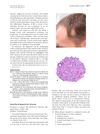
The man has Temporal Triangular Alopecia, a stable, non-scarring hair loss condition best treated with hair transplantation.
717 citations
,
June 2010 in “Nature” Alopecia areata involves both innate and adaptive immunity, with specific genes linked to the disease.
 July 2018 in “International Journal of Research in Medical Sciences”
 Platelet rich plasma was slightly more effective than no treatment for hair loss in alopecia areata patients.
9 citations
,
May 2016 in “Clinics in dermatology” Phototherapy can help treat hair loss in alopecia areata.
November 2023 in “Journal of Investigative Dermatology” Different types of hair loss have unique cellular changes, suggesting new treatment targets.
 15 citations
,
May 2016 in “Archives of Dermatological Research”
15 citations
,
May 2016 in “Archives of Dermatological Research” ULBP3 could be a marker for diagnosing alopecia areata incognita and may be linked to its cause and development.
Alopecia areata causes hair loss and needs personalized care to manage its emotional and social effects.
 71 citations
,
March 2009 in “Seminars in cutaneous medicine and surgery”
71 citations
,
March 2009 in “Seminars in cutaneous medicine and surgery” Alopecia areata can cause unpredictable hair loss, and treatments like corticosteroids and minoxidil may help but have varying side effects.
July 2024 in “Journal of Investigative Dermatology” CD8+ T cells expand significantly in alopecia areata, suggesting new treatment targets.
 1 citations
,
April 2023 in “International Journal of Homoeopathic Sciences”
1 citations
,
April 2023 in “International Journal of Homoeopathic Sciences” Phosphorus may help treat alopecia areata.
 1 citations
,
June 2022 in “PubMed”
1 citations
,
June 2022 in “PubMed” Alopecia causes hair loss and should be treated early, especially scarring types where hair cannot regrow.
 1 citations
,
September 2021 in “CRC Press eBooks”
1 citations
,
September 2021 in “CRC Press eBooks” Frontal Fibrosing Alopecia is a hair loss condition mainly affecting postmenopausal women, with unclear causes and various clinical patterns.
32 citations
,
August 2016 in “Journal of the American Academy of Dermatology” Temporal triangular alopecia is a non-scarring hair loss in children, often linked to other health conditions.
 January 2012 in “Yearbook of Dermatology and Dermatologic Surgery”
 The study concluded that a 'Swiss cheese' pattern in hair follicles is a useful sign for diagnosing alopecia areata.
 5 citations
,
January 2018 in “Acta Dermatovenerologica Alpina Pannonica et Adriatica”
5 citations
,
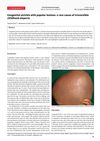
January 2018 in “Acta Dermatovenerologica Alpina Pannonica et Adriatica” Congenital atrichia with papular lesions causes permanent hair loss in children.
 June 2025 in “Italian Journal of Dermatology and Venereology”
 Thorough scalp examination is crucial for diagnosing alopecia areata incognita in men with diffuse hair loss.
 2 citations
,
October 2017 in “Journal of The American Academy of Dermatology”
2 citations
,
October 2017 in “Journal of The American Academy of Dermatology” Focal atrichia helps diagnose female pattern hair loss.
July 2024 in “Journal of Investigative Dermatology” Tailored treatments for alopecia areata show promising results, with pulse steroids effective for mild cases and Ritlecitinib, Dupilumab, or methotrexate and prednisone effective for severe cases.
 3 citations
,
June 2020 in “Cureus”
3 citations
,
June 2020 in “Cureus” A woman's hair loss led to discovering she had lupus.
About half of people with mild alopecia areata see hair regrowth in a year, but relapses are common.
 13 citations
,
July 2004 in “Skinmed”
13 citations
,
July 2004 in “Skinmed” Common types of non-scarring hair loss have various causes and treatments, but more effective solutions are needed.
9 citations
,
November 2004 in “SKINmed Dermatology for the Clinician” A man with hair loss developed a condition causing scarring and inflammation in both bald and non-bald areas of his scalp.