 2 citations
,
February 2016 in “British Journal of Dermatology”
2 citations
,
February 2016 in “British Journal of Dermatology” Bimatoprost solution 0.03% is effective for treating sparse eyelashes.
20 citations
,
September 1998 in “PubMed” Gorillas in Gabon improved after protein supplements were added to their diet.
 6 citations
,
April 2010 in “Cellular Reprogramming”
6 citations
,
April 2010 in “Cellular Reprogramming” Pig skin cells can turn into mesodermal cells but lose their ability to become neural cells.
1 citations
,
September 2019 in “Pomeranian Journal of Life Sciences” Demodex mites were more common in older personnel than students, especially in eyelashes.
43 citations
,
March 2017 in “Drug Design Development and Therapy” The new nanoparticles could improve melanoma treatment by working better than current options.
49 citations
,
January 2006 in “Developmental Dynamics” Noggin gene inactivation causes skeletal defects in mice, varying by genetic background.
 136 citations
,
April 2013 in “Clinical Cancer Research”
136 citations
,
April 2013 in “Clinical Cancer Research” The drug IPI-926 is safe at 160 mg daily and may help treat certain tumors, especially basal cell carcinoma.
 7 citations
,
February 2015 in “Journal of comparative pathology”
7 citations
,
February 2015 in “Journal of comparative pathology” CD8+ T cells play a key role in graft-versus-host disease in certain mice models.
PPARβ/δ helps yaks adapt to high altitudes by regulating lipid metabolism in their coats.
 7 citations
,
December 2008 in “Journal of Dermatological Science”
7 citations
,
December 2008 in “Journal of Dermatological Science” Progranulin overexpression leads to shorter, thinner hair and increased cell death in mouse hair follicles.
 September 2016 in “Journal of Dermatological Science”
 A gene mutation worsens skin irritation in mice due to a lack of certain fats.
 65 citations
,
November 2004 in “Journal of the American Academy of Dermatology”
65 citations
,
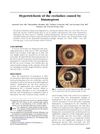
November 2004 in “Journal of the American Academy of Dermatology” Bimatoprost can cause excessive eyelash growth.
 6 citations
,
December 2020 in “Biological & Pharmaceutical Bulletin”
6 citations
,
December 2020 in “Biological & Pharmaceutical Bulletin” Compounds from Eclipta prostrata L. plant have diabetes and obesity-fighting properties and reduce inflammation.
 34 citations
,
February 2016 in “Fertility and Sterility”
34 citations
,
February 2016 in “Fertility and Sterility” More PDCD4 is linked to obesity, insulin problems, and cell death in ovaries for those with polycystic ovary syndrome.
July 2024 in “Journal of Investigative Dermatology” PP405 may help hair growth by activating hair follicle stem cells.
July 2021 in “Authorea (Authorea)” Graham-Little Piccardi Lassueur Syndrome is a rare skin condition with specific hair loss and skin symptoms.
7 citations
,
May 1995 in “The journal of investigative dermatology/Journal of investigative dermatology” 6 citations
,
January 2004 in “DNA Research” A mutation in the Sgkl gene causes defective hair growth in mice.
February 2026 in “Advanced Science” Targeting the p300/AR axis may help treat polycystic ovary syndrome.
Deleting the MAD2L1 gene in mice led to rapid tumor growth despite chromosomal instability.
 260 citations
,
July 2010 in “Cell”
260 citations
,
July 2010 in “Cell” Mutations in the SRD5A3 gene cause a new type of glycosylation disorder by blocking the production of a molecule necessary for protein glycosylation.
 November 2020 in “Journal of The American Academy of Dermatology”
 The conclusion is that many small genetic variations influence claw disorders in cows, and using genomic selection could help reduce these disorders.
 38 citations
,
January 2016 in “Cell Death and Disease”
38 citations
,
January 2016 in “Cell Death and Disease” The TCL1 transgenic mouse model is useful for understanding human B-cell leukemia and testing new treatments.
1 citations
,
October 2023 in “BMC Genomics” miRNAs in the Dlk1-Gtl2 region may improve lamb fur quality.
333 citations
,
March 2000 in “Proceedings of the National Academy of Sciences” Overexpressing GLI-1 in mice skin can cause tumors like human basal cell carcinomas.
1 citations
,
July 2024 in “Journal of Investigative Dermatology” Plaquenil can cause a severe skin reaction called AGEP, requiring prompt diagnosis and treatment.
47 citations
,
April 2000 in “Experimental Dermatology” A new gene mutation causes a rare type of hair loss.
 13 citations
,
February 2004 in “Clinical and Experimental Ophthalmology”
13 citations
,
February 2004 in “Clinical and Experimental Ophthalmology” A baby boy with 13q deletion syndrome had eye cancer, a woman's vision improved after stopping a breast cancer drug, a man developed cataracts from using Propecia, and a rare skin disorder called Lipoid Proteinosis was discussed. Also, a tool called OCT is useful for diagnosing macular diseases.
 1 citations
,
January 2023 in “European Journal of Research in Dentistry”
1 citations
,
January 2023 in “European Journal of Research in Dentistry” Tideglusib with a bacterial cellulose hydrogel improves wound healing in rats.
March 2026 in “Bioconjugate Chemistry” Peptide-based PROTACs show promise in targeting hard-to-treat proteins, especially for cancer therapy.