 8 citations
,
February 2005 in “British Journal of Haematology”
8 citations
,
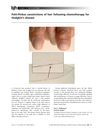
February 2005 in “British Journal of Haematology” Chemotherapy caused the patient's hair to have alternating thick and thin segments.
 89 citations
,
March 2018 in “The Journal of Dermatology”
89 citations
,
March 2018 in “The Journal of Dermatology” Trichoscopy helps diagnose and monitor alopecia areata by looking at a combination of specific hair and scalp features.
 45 citations
,
October 2009 in “Dermatology”
45 citations
,
October 2009 in “Dermatology” Half of the patients treated with a specific drug for skin cancer experienced hair loss not related to the drug's dosage.
 23 citations
,
July 2018 in “Journal of Cosmetic Dermatology”
23 citations
,
July 2018 in “Journal of Cosmetic Dermatology” Chemotherapy caused hair loss with specific patterns, but most patients had hair regrowth after treatment, while some had lasting hair loss.
 February 2026 in “Clinical Cosmetic and Investigational Dermatology”
 A 7-year-old girl experienced temporary hair loss due to radiation, with signs of possible hair regrowth.
 January 2025 in “Journal of Rawalpindi Medical College”
 Alopecia Areata affects both genders almost equally, mostly on the scalp, with common signs like yellow dots and exclamation mark hairs, especially in young people.
 December 2023 in “Clinical, cosmetic and investigational dermatology”
 The study found that white hair in vitiligo has specific patterns and structures, which vary with the stage of the disease and may be similar to another hair condition.
January 2020 in “Revista Dermatológica Centro Uraga” Recognizing trichoscopic features is crucial for diagnosing various hair loss conditions.
 53 citations
,
January 2007 in “Dermatology”
53 citations
,
January 2007 in “Dermatology” Chemotherapy often causes patterned hair loss, with some scalp areas more resistant to hair loss than others.
 40 citations
,
August 2006 in “Current Drug Safety”
40 citations
,
August 2006 in “Current Drug Safety” Some drugs can cause hair loss, excessive growth, or color changes, often reversible but sometimes permanent.
 24 citations
,
January 2011 in “International Journal of Trichology”
24 citations
,
January 2011 in “International Journal of Trichology” Light microscopy is useful for diagnosing different hair disorders.
 19 citations
,
March 1988 in “International Journal of Dermatology”
19 citations
,
March 1988 in “International Journal of Dermatology” Hair shaft dysplasias are abnormal hair conditions that can be inherited or acquired and may signal other health issues, with limited treatment options available.
 16 citations
,
October 2012 in “British Journal of Dermatology”
16 citations
,
October 2012 in “British Journal of Dermatology” Chemotherapy can cause significant hair thinning and changes in hair texture, while tamoxifen has a smaller effect.
 7 citations
,
March 2025 in “Archives of Dermatological Research”
7 citations
,
March 2025 in “Archives of Dermatological Research” Trichoscopy helps better understand and manage alopecia areata, improving patient outcomes.
 4 citations
,
January 2016 in “Postepy Dermatologii I Alergologii”
4 citations
,
January 2016 in “Postepy Dermatologii I Alergologii” Many hair diseases, including those caused by medications and psychological issues, can lead to hair loss and require proper treatment and specialist care.
 2 citations
,
January 2019 in “Dermatology Review”
2 citations
,
January 2019 in “Dermatology Review” Pigmented vellus and upright regrowing hairs predict hair regrowth in severe alopecia.
 February 2026 in “Frontiers in Medicine”
 Trichoscopy can help diagnose early congenital syphilis in newborns.
 September 2025 in “Cureus”
 Plica neuropathica can occur with diffuse alopecia and should be considered in diagnosis.
 January 2023 in “Asian Journal of Pediatric Research”
 Trichoscopy is crucial for diagnosing and assessing alopecia areata in children.
 July 2021 in “Australasian Journal of Dermatology”
 The trichoscopy-assisted hair pull test is useful for diagnosing different types of hair loss.
More research is needed to understand chemotherapy-induced hair loss and its phases.

Scalp cooling is recommended to prevent chemotherapy-induced hair loss, but no effective drugs are available.
 126 citations
,
January 1987 in “Journal of The American Academy of Dermatology”
126 citations
,
January 1987 in “Journal of The American Academy of Dermatology” The document concludes that understanding hair structure is key to diagnosing hair abnormalities and recommends gentle hair care for management.
 86 citations
,
October 2013 in “Dermatologic Clinics”
86 citations
,
October 2013 in “Dermatologic Clinics” Trichoscopy is a useful non-invasive method for diagnosing different hair loss conditions.
 83 citations
,
May 1999 in “International Journal of Dermatology”
83 citations
,
May 1999 in “International Journal of Dermatology” Hair loss that spreads out can often fix itself or be treated by finding and handling the cause.
 70 citations
,
January 2015 in “Journal of Clinical and Diagnostic Research”
70 citations
,
January 2015 in “Journal of Clinical and Diagnostic Research” Hair loss from Telogen Effluvium usually gets better within 6 months after addressing the cause.
 69 citations
,
August 2014 in “Journal of The American Academy of Dermatology”
69 citations
,
August 2014 in “Journal of The American Academy of Dermatology” Trichoscopy is a quick, cost-effective tool for diagnosing different hair loss conditions.
 63 citations
,
March 1995 in “International Journal of Dermatology”
63 citations
,
March 1995 in “International Journal of Dermatology” Some drugs can cause hair loss, and stopping these drugs often leads to hair regrowth.
 62 citations
,
February 2011 in “Expert review of dermatology”
62 citations
,
February 2011 in “Expert review of dermatology” Scalp cooling can reduce chemotherapy-induced hair loss and should be available in all hospitals.
 53 citations
,
April 2018 in “Journal of The American Academy of Dermatology”
53 citations
,
April 2018 in “Journal of The American Academy of Dermatology” Cancer treatments often cause hair disorders, significantly affecting patients' quality of life, and better management methods are needed.