 26 citations
,
March 2013 in “Journal of Biomedical Materials Research Part A”
26 citations
,
March 2013 in “Journal of Biomedical Materials Research Part A” Researchers created a 3D hydrogel that mimics human hair follicles, which may help with hair loss treatments.
 February 2013 in “Journal of the American Academy of Dermatology”
 Certain gene variations may increase the risk of alopecia, and platelet-rich plasma treatment can improve hair density in those with hair loss; a rare case of facial Becker's nevus was linked to uneven beard growth.
 July 2012 in “Faculty Opinions – Post-Publication Peer Review of the Biomedical Literature”
 New treatment with Wnt proteins and growth factors safely increases hair thickness.
April 2019 in “The journal of investigative dermatology/Journal of investigative dermatology” A specific mutation in the TRPV3 gene causes hair follicle cells to develop improperly, leading to hair loss.
 June 2022 in “Scientific Reports”
 Prevelex, a polyampholyte, can create a cell-repellent coating on microdevices, which can be useful in biomedical applications like hair follicle regeneration.
2 citations
,
January 2006 in “中国农业科学:英文版”  May 2026 in “International Journal of Drug Delivery Technology”
 Using a 45-degree angle for hair transplants improves efficiency and results.
 13 citations
,
January 2012 in “International journal of trichology”
13 citations
,
January 2012 in “International journal of trichology” The study found that hair fragility in Pili annulati may be caused by cavities and damage within the hair shafts.

The bar-cartridge type implanter is the best for implanting dermal papilla cells efficiently and at controlled depths.
 34 citations
,
December 2000 in “The journal of investigative dermatology/Journal of investigative dermatology”
34 citations
,
December 2000 in “The journal of investigative dermatology/Journal of investigative dermatology” Rat vibrissa follicles are useful for studying hair growth cycles, especially the transition from pro-anagen to anagen.
 3 citations
,
April 2012 in “Bioinformation”
3 citations
,
April 2012 in “Bioinformation” Two specific SNPs in the TRPS1 gene cause excessive hair growth by altering the protein's structure.
July 2026 in “Journal of Investigative Dermatology” 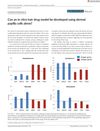 3 citations
,
February 2021 in “Experimental dermatology”
3 citations
,
February 2021 in “Experimental dermatology” Dermal papilla microtissues could be useful for initial hair growth drug testing.
 September 2017 in “Journal of Investigative Dermatology”
 Hair follicle cells change their DNA packaging during growth cycles and when grown in the lab.
 December 2025 in “Lasers in Medical Science”
 Combining red laser therapy with minoxidil improves hair growth more effectively than minoxidil alone in women with hair loss.
72 citations
,
January 1983 in “The Anatomical Record” Epidermal growth factor delays skin and hair development in mice.
13 citations
,
January 2002 in “Biochemical and biophysical research communications” Interferon β from hair cells stops the growth of other hair cells.
 3 citations
,
January 1994 in “Journal of Society of Cosmetic Chemists of Japan”
3 citations
,
January 1994 in “Journal of Society of Cosmetic Chemists of Japan” Hair grows slower and thinner with age, but a test tonic improved growth in alopecia subjects.
72 citations
,
January 2012 in “Annals of Dermatology” IGF-I promotes hair growth by keeping hair follicles in the growth phase longer.
 2 citations
,
April 2021 in “International Journal of Molecular Sciences”
2 citations
,
April 2021 in “International Journal of Molecular Sciences” The study concluded that changing the culture conditions can cause sika deer skin cells to switch from a flat to a 3D pattern, which is important for creating hair follicles.
 January 2013 in “Sen'i Gakkaishi”
 Microfibrils are key for permanent waves, and hydrolyzed keratin improves wave formation and hair condition.
85 citations
,
January 2018 in “Cell stem cell” Different signals work together to change gene activity and guide hair follicle stem cells to become specific cell types.
 February 2023 in “Scientific Reports”
 Cold Atmospheric Microwave Plasma (CAMP) helps hair cells grow and could potentially treat hair loss.
Boosting certain cell signals can prevent hair loss from chemotherapy and radiation.
7 citations
,
May 1979 in “Medical & biological engineering & computing” The trichometer accurately measures hair growth and is easy to use.
 23 citations
,
September 2011 in “Journal of Dermatological Science”
23 citations
,
September 2011 in “Journal of Dermatological Science” Red LED light helps mouse hair grow by increasing growth factors from skin cells.
Prunus Tomentosa extract is effective in promoting hair growth, similar to minoxidil.
 34 citations
,
August 1966 in “Experimental cell research”
34 citations
,
August 1966 in “Experimental cell research” Keratin fibrils in hair form and stop growing at specific points in the follicle.
 23 citations
,
December 2001 in “Lasers in Surgery and Medicine”
23 citations
,
December 2001 in “Lasers in Surgery and Medicine” Permanent hair removal is hard, but using longer laser pulses at lower power might improve results.