42 citations
,
September 2002 in “The Journal of Comparative Neurology” Glycine likely affects dendrites connected to hair follicle terminals in rats.
39 citations
,
February 1990 in “The journal of cell biology/The Journal of cell biology” Trichohyalin, a hair follicle protein, has a part with repeating patterns of 23 amino acids.
39 citations
,
August 1998 in “FEBS Letters” Two new enzymes, PAD-R11 and PAD-R4, were cloned and showed activity, with PAD-R11 resembling epidermal enzymes.
Iron influences root hair growth during phosphate starvation by affecting auxin distribution and vesicle trafficking.
6 citations
,
September 2024 in “Plant Cell & Environment” Chitosan affects root hair growth and callose deposition based on its concentration.
8 citations
,
May 2008 in “Applied surface science” Mummy hair from the Taklamakan desert has calcium and phosphorus inside.
100 citations
,
April 2007 in “Neuroscience” Reducing neurosteroid levels worsens brain injury in fetal sheep.
 114 citations
,
December 1951 in “Archives of Dermatology”
114 citations
,
December 1951 in “Archives of Dermatology” Aminopterin strongly suppresses epithelial tissues and can treat certain skin conditions but has significant side effects.
16 citations
,
June 1983 in “Journal of Neurochemistry” Copper therapy improved health and enzyme activity in mice with copper deficiency.
 26 citations
,
January 2016 in “Annals of Dermatology”
26 citations
,
January 2016 in “Annals of Dermatology” Ecklonia cava polyphenols help increase human hair growth and reduce hair loss.
July 2021 in “Belarusian State Pedagogical University repository (Belarusian State Pedagogical University)” PMC shows promise as a treatment for hair loss.
March 2022 in “Research Square (Research Square)” Mushroom compounds may help treat hair loss better than Finasteride.
6 citations
,
January 2020 in “Elsevier eBooks” Nanoparticles could make hair dyes safer by reducing harmful effects.
35 citations
,
September 2009 in “Psychoneuroendocrinology” Early-life neurosteroid changes affect adolescent exploration and adult behavior.
28 citations
,
January 2016 in “RSC Advances” A non-toxic formula using polycarboxylic acids strengthens and improves hair.
122 citations
,
January 2006 in “Molecular & Cellular Proteomics” Human hair contains many proteins, with some being highly abundant and modified.
 August 2018 in “Journal of Investigative Dermatology”
 Polyunsaturated fatty acids, like arachidonic acid and eicosapentaenoic acid, can promote hair growth and may help treat hair loss.
 13 citations
,
January 2012 in “International journal of trichology”
13 citations
,
January 2012 in “International journal of trichology” The study found that hair fragility in Pili annulati may be caused by cavities and damage within the hair shafts.
 6 citations
,
February 2020 in “Journal of Natural Products”
6 citations
,
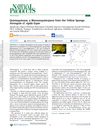
February 2020 in “Journal of Natural Products” A new compound from a sponge strongly inhibits an enzyme linked to male-pattern hair loss without being toxic at low levels.
 9 citations
,
December 2024 in “Nano Research”
9 citations
,
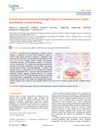
December 2024 in “Nano Research” A protein-based hydrogel helps heal diabetic wounds and repair nerves.
280 citations
,
January 2004 in “The EMBO Journal” AGC2-1 protein is essential for root hair growth in Arabidopsis.
3 citations
,
June 2025 in “Gyemyeong uidae haksulji” PDRN is effective and safe for healing wounds and skin issues.
 25 citations
,
January 2017 in “Steroids”
25 citations
,
January 2017 in “Steroids” Allopregnanolone increases growth and changes gene activity in human brain cancer cells.
9 citations
,
July 2022 in “Journal of Cosmetic Dermatology” The ammonia-free hair dye is safe and improves hair shine, color, moisture, porosity, and combability.
7 citations
,
January 1973 in “Calcified Tissue International” Hair follicle tissue can induce mineral formation, likely due to a potent nucleator.
January 2005 in “Jukuri (Natural Resources Institute Finland (Luke))” A low-protein diet with methionine is cost-effective and supports normal growth and high-quality pelts in blue foxes.
April 2026 in “Chinese Chemical Letters” 7 citations
,
March 1990 in “Pigment Cell Research” Certain chemicals cause hair graying in black mice but not yellow mice.
July 2007 in “International Journal of Cosmetic Science” The new polymer improves dyed hair's color, moisture, shine, and smoothness.