 January 2023 in “Brazilian Journals Editora eBooks”
 Surgery to fix a broken upper arm bone can sometimes lead to nerve damage.
 213 citations
,
December 2020 in “Annals of internal medicine”
213 citations
,
December 2020 in “Annals of internal medicine” Many COVID-19 patients still have symptoms like fatigue and loss of taste or smell a month after diagnosis.
 2 citations
,
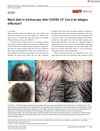
July 2021 in “Dermatologic Therapy”
2 citations
,
July 2021 in “Dermatologic Therapy” A woman's hair loss after COVID-19 was likely due to a mix of pressure-induced alopecia and acute telogen effluvium.
 June 2022 in “Journal of the turkish academy of dermatology”
 The COVID-19 quarantine in Turkey disrupted dermatological care, increased stress-related skin issues, and showed the need for psychological support and teledermatology.
 139 citations
,
December 2020 in “Cell Stem Cell”
139 citations
,
December 2020 in “Cell Stem Cell” Male hormones affect COVID-19 severity and certain drugs targeting these hormones could help reduce the risk.
 16 citations
,
November 2020 in “Research Square (Research Square)”
16 citations
,
November 2020 in “Research Square (Research Square)” Early treatment with azithromycin and other drugs reduced COVID-19 symptoms and complications.
 11 citations
,
November 2020 in “bioRxiv (Cold Spring Harbor Laboratory)”
11 citations
,
November 2020 in “bioRxiv (Cold Spring Harbor Laboratory)” Early treatment with azithromycin and other drugs reduced COVID-19 symptoms and complications.
 737 citations
,
August 2020 in “Journal of Infection”
737 citations
,
August 2020 in “Journal of Infection” Many COVID-19 survivors experience long-term symptoms but still report satisfactory quality of life and return to work.
 32 citations
,
July 2021 in “Journal of The American Academy of Dermatology”
32 citations
,
July 2021 in “Journal of The American Academy of Dermatology” Hair loss from COVID-19 usually starts around 45 days after infection and lasts about 47.5 days.
 1 citations
,
August 2022 in “Selcuk Dental Journal”
1 citations
,
August 2022 in “Selcuk Dental Journal” Covid-19 can cause skin and oral symptoms, like taste changes, which help in detection and management.
 November 2025 in “Journal of Disease and Public Health”
 Post-COVID-19 syndrome is complex, affects 5%-10% of people, and requires better research and global collaboration for treatment.
 58 citations
,
November 2020 in “International Journal of Dermatology”
58 citations
,
November 2020 in “International Journal of Dermatology” COVID-19 may cause a temporary hair loss condition called telogen effluvium in some patients after recovery.
 4 citations
,
December 2023 in “Research Review”
4 citations
,
December 2023 in “Research Review” 77% of recovered COVID-19 patients in Nepal experienced long-term symptoms like fatigue, hair loss, and breathing issues.
 44 citations
,
January 2021 in “Dermatologic Therapy”
44 citations
,
January 2021 in “Dermatologic Therapy” COVID-19 may cause hair loss due to infection stress or treatments.
 April 2022 in “Archives of Medical Case Reports and Case Study”
 COVID-19 pneumonia requires more intensive care, including monitoring liver functions and DVT, due to higher D-dimer and procalcitonin levels.
 176 citations
,
May 2020 in “Dermatologic Therapy”
176 citations
,
May 2020 in “Dermatologic Therapy” COVID-19 can cause different skin symptoms that may help with early diagnosis and show how severe the disease is.
 228 citations
,
January 2021 in “Journal of Neuroimmune Pharmacology”
228 citations
,
January 2021 in “Journal of Neuroimmune Pharmacology” Men have more severe COVID-19 outcomes than women.
 78 citations
,
June 2022 in “Infection”
78 citations
,
June 2022 in “Infection” Many COVID-19 survivors experience long-term symptoms like fatigue and sleep issues, needing ongoing medical support.
 39 citations
,
June 2020 in “Dermatologic Therapy”
39 citations
,
June 2020 in “Dermatologic Therapy” The COVID-19 pandemic led to an increase in untreated hair diseases and showed the importance of teledermatology.
 21 citations
,
May 2021 in “Prostate Cancer and Prostatic Diseases”
21 citations
,
May 2021 in “Prostate Cancer and Prostatic Diseases” COVID-19 might worsen symptoms and progression of benign prostatic hyperplasia, possibly due to inflammation and metabolic disturbances in the prostate gland. More research is needed to confirm this.
 June 2025 in “Basrah Researches Sciences”
 Medicinal plants might help with post-COVID-19 issues, but more research is needed.
 July 2024 in “Dermatology Practical & Conceptual”
 COVID-19-related hair loss may have unique features compared to hair loss from other causes.
 October 2023 in “Dermatology practical & conceptual”
 Many patients experienced hair loss after COVID-19, with women affected more, starting on average 49 days post-infection.
 June 2020 in “Journal of Dermatological Treatment”
 Use telemedicine and strict hygiene for safe hair and scalp treatments during COVID-19.
 1 citations
,
May 2023 in “Revista Eletrônica Acervo Saúde”
1 citations
,
May 2023 in “Revista Eletrônica Acervo Saúde” Alopecia after COVID-19 negatively impacts quality of life, especially vitality.
 27 citations
,
November 2020 in “International Journal of Dermatology”
27 citations
,
November 2020 in “International Journal of Dermatology” COVID-19 can cause skin issues like chilblains and rashes, which may help in early detection, especially in patients without other symptoms.
 58 citations
,
December 2020 in “Mayo Clinic Proceedings”
58 citations
,
December 2020 in “Mayo Clinic Proceedings” The conclusion is that individual differences in COVID-19 severity are influenced by factors like age, sex, race, and genetics, which are important for personalized medicine.
 6 citations
,
April 2022 in “JMIR Dermatology”
6 citations
,
April 2022 in “JMIR Dermatology” Public interest in COVID-19-related hair loss increased during COVID-19 surges, especially with the omicron variant.
 1 citations
,
January 2024 in “American journal of clinical and experimental immunology.”
1 citations
,
January 2024 in “American journal of clinical and experimental immunology.” Skin symptoms like rashes and sores can indicate COVID-19 severity, especially in older people.

Interest in COVID-19 hair loss increased during COVID-19 surges, especially in higher-income countries.