July 2024 in “Vestnik dermatologii i venerologii” Post-COVID-19 hair loss is different from androgenetic alopecia and can be identified by lower copper and higher selenium levels.

COVID-19 can trigger a relapsing form of hair loss, requiring long-term treatment strategies.
 January 2026 in “Journal of Contemporary Medicine”
 Vitamin D may help prevent or reduce hair loss after COVID-19.
April 2023 in “Media Dermato Venereologica Indonesiana” COVID-19 reinfection may trigger alopecia areata.

COVID-19 infection and vaccination are linked to hair loss, especially in women and those with nutritional deficiencies.
 1 citations
,
May 2023 in “Revista Eletrônica Acervo Saúde”
1 citations
,
May 2023 in “Revista Eletrônica Acervo Saúde” Alopecia after COVID-19 negatively impacts quality of life, especially vitality.
 October 2025 in “Dermatology Practical & Conceptual”
 Severe COVID-19 often leads to hair loss in India.
 November 2025 in “Health Promotion Evidence”
 Post-COVID-19 hair loss can be treated effectively with therapies like light therapy, microneedling, and scalp massage.
 February 2024 in “Recima21”
 Covid-19 can cause hair loss due to immune and psychological factors.
 December 2023 in “Aesthetic Cosmetology and Medicine”
 COVID-19 can cause hair loss, but specialists can help treat it.
 4 citations
,
May 2021 in “medRxiv (Cold Spring Harbor Laboratory)”
4 citations
,
May 2021 in “medRxiv (Cold Spring Harbor Laboratory)” Long-lasting COVID-19 symptoms like fatigue and breathing difficulties can persist for over 60 days, requiring ongoing care.
1 citations
,
October 2025 in “Journal of the American Society of Nephrology” COVID-19 vaccination may cause kidney inflammation, treatable with steroids and Cellcept.
 September 2023 in “Irish Journal of Medical Science (1971 -)”
 About 61% of women who had COVID-19 experienced hair loss afterward.
 October 2023 in “Dermatology practical & conceptual”
 Many patients experienced hair loss after COVID-19, with women affected more, starting on average 49 days post-infection.
 June 2023 in “Seven Editora eBooks”
 Microneedling therapy is effective and safe for treating hair disorders worsened by COVID-19.
 September 2022 in “Research, Society and Development”
 Long-lasting symptoms like fatigue and breathlessness can persist after COVID-19, requiring ongoing medical follow-up.
3 citations
,
November 2022 in “Clinical Cosmetic and Investigational Dermatology” The pandemic changed the types of skin conditions seen, not the number of visits.
 2 citations
,
July 2021 in “Dermatologic Therapy”
2 citations
,
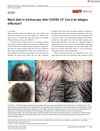
July 2021 in “Dermatologic Therapy” A woman's hair loss after COVID-19 was likely due to a mix of pressure-induced alopecia and acute telogen effluvium.
 21 citations
,
June 2020 in “Dermatologic Therapy”
21 citations
,
June 2020 in “Dermatologic Therapy” The COVID-19 pandemic led to fewer dermatology visits and changed the types of skin conditions patients experienced.
 April 2024 in “REVISTA INTERDISCIPLINAR CIÊNCIAS MÉDICAS”
 COVID-19 increased hair loss, especially in women, linked to Azithromycin use and symptoms like fatigue and skin irritation.
 January 2023 in “Book of Abstracts”
 COVID-19 can cause different types of hair loss, with telogen effluvium being the most common.
 January 2021 in “Journal of Pakistan Association of Dermatology”
 COVID-19 recovery can lead to temporary hair loss called telogen effluvium.
 1 citations
,
August 2022 in “JAAD Case Reports”
1 citations
,
August 2022 in “JAAD Case Reports” A woman's complete hair loss condition improved after recovering from COVID-19.
 27 citations
,
December 2020 in “Experimental Dermatology”
27 citations
,
December 2020 in “Experimental Dermatology” Grey hair and baldness may be linked to COVID-19 severity, but more analysis is needed; post-infectious hair loss is related to the severity of the disease and usually recovers within 3-6 months.
 8 citations
,
February 2022 in “Journal of Clinical Medicine”
8 citations
,
February 2022 in “Journal of Clinical Medicine” Many COVID-19 patients experience temporary hair loss after infection, not linked to infection severity or treatment.
 May 2022 in “Rossijskij žurnal kožnyh i veneričeskih boleznej”
 Alopecia areata is complex, often recurring, and needs personalized treatment, especially with other health issues.
 July 2024 in “Influenza and Other Respiratory Viruses”
 Analyzing both TE and AA together is crucial for understanding post-COVID-19 hair loss.
 January 2023 in “International journal of sciences”
 Platelet-Rich Plasma therapy helped significantly in hair recovery for a hair loss condition after infection.
6 citations
,
September 2022 in “Vaccines” Some people developed alopecia areata after COVID-19 vaccination, but it's not caused by the vaccine and most improved with treatment.
 24 citations
,
February 2021 in “Dermatology and Therapy”
24 citations
,
February 2021 in “Dermatology and Therapy” COVID-19 increased alopecia areata relapses due to inflammation and stress.