January 2006 in “Casopís lékar̆ů c̆eských” Female hair loss is influenced by genetics and hormones, often starting in middle age or after hormonal changes.
 1 citations
,
May 2025 in “Maturitas”
1 citations
,
May 2025 in “Maturitas” Menopause can cause hair loss in women due to hormonal changes, affecting their well-being and quality of life.
7 citations
,
January 2019 in “Journal of clinical medicine research” Menopause causes significant changes in the vaginal introitus, but less so in the labia majora, which may lead to symptoms of vaginal atrophy.
 44 citations
,
October 2011 in “Gynecological Endocrinology”
44 citations
,
October 2011 in “Gynecological Endocrinology” Menopause significantly reduces skin collagen, leading to thinner, less elastic skin, and hormone replacement may help but requires careful consideration.
 31 citations
,
May 2012 in “European Journal of Dermatology”
31 citations
,
May 2012 in “European Journal of Dermatology” Menopause affects hair and skin; more research needed for treatment.
 5 citations
,
January 2017 in “Acta Endocrinologica”
5 citations
,
January 2017 in “Acta Endocrinologica” High androgen levels in postmenopausal women may suggest an ovarian tumor, and removing it can improve heart and metabolic health.
October 2019 in “DOAJ (DOAJ: Directory of Open Access Journals)” Menopausal acne is mainly caused by hormonal changes and can be managed with topical treatments, lifestyle changes, and sometimes medication.
 November 2022 in “Journal of the Endocrine Society”
 Removing the ovarian tumor improved the woman's hormonal symptoms.
 January 2011 in “Journal für Kardiologie (Krause & Pachernegg GmbH)”
 Postmenopausal women often experience hair loss on the scalp and increased facial hair, but iron supplements may not help.
 166 citations
,
April 2012 in “Journal of The American Academy of Dermatology”
166 citations
,
April 2012 in “Journal of The American Academy of Dermatology” Mostly postmenopausal Caucasian women get Frontal Fibrosing Alopecia, which often includes eyebrow loss and has limited treatment success.
 January 2013 in “Revista Clínica Española”
 A postmenopausal woman's increased male hormone levels were successfully treated with surgery.
 October 2007 in “Postgraduate obstetrics & gynecology”
 Testosterone therapy can help postmenopausal women with low sexual desire but needs more safety research and should be used with estrogen therapy.
 155 citations
,
September 2008 in “British journal of dermatology/British journal of dermatology, Supplement”
155 citations
,
September 2008 in “British journal of dermatology/British journal of dermatology, Supplement” FFA is more common in postmenopausal women, can affect younger women, and may stabilize over time.
 99 citations
,
June 1999 in “The Journal of Clinical Endocrinology and Metabolism”
99 citations
,
June 1999 in “The Journal of Clinical Endocrinology and Metabolism” Testosterone replacement may help some postmenopausal women with symptoms like fatigue and low libido, but more research is needed to fully understand its effects.
84 citations
,
September 2014 in “European journal of endocrinology” Doctors should check for serious tumor causes of high androgen levels in postmenopausal women and more research is needed on this condition.
53 citations
,
June 2019 in “JEADV. Journal of the European Academy of Dermatology and Venereology/Journal of the European Academy of Dermatology and Venereology” Frontal fibrosing alopecia mainly affects postmenopausal women and may be linked to thyroid hormones.
12 citations
,
July 2020 in “Actas Dermo-Sifiliográficas” Frontal fibrosing alopecia mostly affects postmenopausal women, often involves eyebrows, and is linked to conditions like lichen planus and rosacea.
 May 2025 in “International Journal of Reproduction Contraception Obstetrics and Gynecology”
 Ovarian tumors should be considered when postmenopausal women show signs of virilization.
Frontal Fibrosing Alopecia mainly affects postmenopausal women and is linked to thyroid disease, hyperlipidemia, and anemia.
 7 citations
,
April 2012 in “Clinical investigation”
7 citations
,
April 2012 in “Clinical investigation” Transdermal testosterone can improve sexual desire in postmenopausal women but lacks long-term safety data and is not FDA-approved for this use.
October 2025 in “Journal of the Endocrine Society” Hormone Replacement Therapy improves skin health in postmenopausal women by boosting collagen and hydration.
November 2024 in “International Journal of Women’s Dermatology” Frontal fibrosing alopecia in Bogotá mainly affects postmenopausal women, with possible links to hormonal changes and sunscreen use.
58 citations
,
February 2018 in “Journal of cosmetic dermatology” Estrogen helps keep skin healthy and may make women look younger and more attractive.
 February 2025 in “PLoS ONE”
 Androgenetic alopecia starts earlier in males than females, with different treatments, and is linked to income, education, alcohol use, and mental health.
 February 2024 in “Endocrinology and Disorders”
 Balanced hormones are crucial for women's health, and can be managed with lifestyle changes or hormone therapy if needed.
16 citations
,
October 1996 in “PubMed” Hormone replacement therapy can improve skin aging in postmenopausal women.
 11 citations
,
September 2012 in “Journal of obstetrics and gynaecology Canada”
11 citations
,
September 2012 in “Journal of obstetrics and gynaecology Canada” Testosterone therapy seems safe for short-term use in postmenopausal women with low sexual desire, but more research on long-term effects is needed.
 5 citations
,
March 2015 in “Clinical and Experimental Dermatology”
5 citations
,
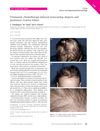
March 2015 in “Clinical and Experimental Dermatology” Chemotherapy caused a woman's permanent hair loss and early menopause.
 4 citations
,
June 2018 in “PLOS ONE”
4 citations
,
June 2018 in “PLOS ONE” Iron levels are linked to insulin resistance in men and postmenopausal women, but not in premenopausal women.
 August 2015 in “Dermatología Argentina”
 Frontal fibrosing alopecia causes hairline recession and eyebrow loss in postmenopausal women.