April 2026 in “Canadian Medical Association Journal” Female pattern hair loss is common and increases with age.
 3 citations
,
April 2021 in “Berkala ilmu kedokteran/Journal of the medical sciences”
3 citations
,
April 2021 in “Berkala ilmu kedokteran/Journal of the medical sciences” A fungus called Epidermophyton floccosum can cause scalp infections.
40 citations
,
May 1999 in “International Journal of Dermatology” Early diagnosis and treatment are crucial to prevent permanent hair loss from scalp trauma.
 November 2025 in “International Society of Hair Restoration Surgery”
 Immediate post-operative folliculitis is a reaction to surgery, not an infection.

The woman has a scalp condition causing hair loss.
 1 citations
,
November 2024 in “Archives of Dermatological Research”
1 citations
,
November 2024 in “Archives of Dermatological Research” Early and accurate diagnosis of posterior scalp hair loss is crucial for effective treatment and better outcomes.
 August 1994 in “Drugs & Therapy Perspectives”
 Some drugs can cause hair loss or growth, but hair usually returns to normal after stopping the drug.
January 2024 in “Updates in clinical dermatology” Frontal fibrosing alopecia is a scarring hair loss condition mainly affecting postmenopausal women, with unclear causes.
July 1996 in “Hair transplant forum international”  64 citations
,
November 2008 in “Journal of The American Academy of Dermatology”
64 citations
,
November 2008 in “Journal of The American Academy of Dermatology” A new type of rapid hair loss called ADTA usually gets better on its own within 6 months.
 July 2024 in “Influenza and Other Respiratory Viruses”
 Analyzing both TE and AA together is crucial for understanding post-COVID-19 hair loss.
Patient history is key in diagnosing hair loss types.
 36 citations
,
December 2017 in “Journal of the American Academy of Dermatology”
36 citations
,
December 2017 in “Journal of the American Academy of Dermatology” Most patients with frontal fibrosing alopecia stabilized with treatment, especially younger ones, using intralesional corticosteroids and tacrolimus.
December 2024 in “Medical alphabet” The combination of "Time to Grow" and "Thick and Strong Hair" effectively reduces hair loss and improves hair quality.
 April 2016 in “Journal of The American Academy of Dermatology”
 The study found that Temporal Triangular Alopecia often starts in early childhood, while Folliculitis Decalvans is characterized by tufted hairs and redness around hair follicles.
 2 citations
,
January 2023 in “Journal of Dermatology”
2 citations
,
January 2023 in “Journal of Dermatology” Some types of hair loss can continue for a long time after recovering from a severe drug reaction known as DRESS.
 3 citations
,
March 2022 in “Annals of Medicine”
3 citations
,
March 2022 in “Annals of Medicine” Hair shedding after COVID-19 is more linked to the disease's severity and inflammation rather than hormones, with women at higher risk.
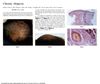 June 1995 in “Archives of Dermatology”
 A woman's hair loss was due to trichotillomania, which is often misdiagnosed and can require different treatments based on age and underlying conditions.
January 1976 in “Revista de Estudios Agrosociales” Frontal fibrosing alopecia and vitiligo might be linked by similar immune issues.
 35 citations
,
January 1996 in “Dermatologic clinics”
35 citations
,
January 1996 in “Dermatologic clinics” Tinea capitis is a common scalp infection causing hair loss, mostly in young children.
 April 2017 in “Journal of dermatology & cosmetology”
 The marine protein complex, Viviscal®, was found to effectively reduce hair loss and improve hair, skin, and nails quality in women.
 29 citations
,
October 2012 in “Anais Brasileiros De Dermatologia”
29 citations
,
October 2012 in “Anais Brasileiros De Dermatologia” Diagnosing hair loss disorders needs clinical, dermoscopic, and histological differences, and checking menstrual cycle, weight changes, drug therapy, and nail changes.
 26 citations
,
August 2016 in “Actas Dermo-Sifiliográficas”
26 citations
,
August 2016 in “Actas Dermo-Sifiliográficas” Frontal Fibrosing Alopecia in men is often missed and can come with symptoms like facial bumps and hair loss on eyebrows and limbs.
 20 citations
,
January 2013 in “Annals of Dermatology”
20 citations
,
January 2013 in “Annals of Dermatology” Topical minoxidil successfully treated temporal triangular alopecia.
January 2025 in “International Journal of Trichology” Increased hair growth after a cast is temporary and harmless.
 58 citations
,
September 2012 in “Dermatologic Clinics”
58 citations
,
September 2012 in “Dermatologic Clinics” Male pattern hair loss caused by follicular miniaturization; early diagnosis and treatment can reduce psychological burden.
October 2020 in “Der Hautarzt” Tofacitinib helped regrow hair in a woman with alopecia areata.
9 citations
,
September 2018 in “JAAD Case Reports” Lichen planopilaris can be triggered by prolonged scalp traction and can be treated with corticosteroids.
 April 2023 in “Voprosy kurortologii fizioterapii i lechebnoĭ fizicheskoĭ kultury”
 COVID-19 may cause hair loss, often after recovery, with androgenetic alopecia being the most common type.
 3 citations
,
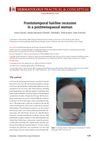
April 2015 in “Dermatology practical & conceptual”
3 citations
,
April 2015 in “Dermatology practical & conceptual” Postmenopausal women can experience hairline recession, affecting their quality of life, and more research is needed for treatments.