 1 citations
,
May 2025 in “Maturitas”
1 citations
,
May 2025 in “Maturitas” Menopause can cause hair loss in women due to hormonal changes, affecting their well-being and quality of life.
 5 citations
,
June 2004 in “The Journal of The British Menopause Society”
5 citations
,
June 2004 in “The Journal of The British Menopause Society” Testosterone therapy can improve sexual satisfaction and mood in surgically menopausal women when used with estrogen, but its long-term safety and effects on naturally menopausal and premenopausal women are unclear.
 May 2019 in “Australasian Journal of Dermatology”
 The conclusion is that managing hair loss conditions like FFA and melanoma requires individualized approaches, considering new findings and balancing treatment benefits with potential risks.
 May 2017 in “DOAJ (DOAJ: Directory of Open Access Journals)”
 Using GnRHa agonists helps diagnose and treat ovarian hyperthecosis when surgery isn't possible.
 May 2011 in “Expert Review of Endocrinology & Metabolism”
 Breast cancer survivors may have a higher risk of falls, tamoxifen could prevent breast cancer and deaths, new guidelines urge caution with prostate cancer therapy, and early balding in men may indicate a higher prostate cancer risk.
3 citations
,
December 1968 in “PubMed” Androgenetic alopecia is not caused by low iron levels.
 April 2020 in “Journal of the Endocrine Society”
 A woman's severe hirsutism was caused by Leydig cell tumors in her ovaries, which improved after surgery.
 15 citations
,
July 1999 in “Dermatologic Clinics”
15 citations
,
July 1999 in “Dermatologic Clinics” The document concludes that immune system abnormalities cause alopecia areata, but the exact process is still not completely understood.
 May 2022 in “Journal of the Egyptian Women's Dermatologic Society (Print)”
 Women's hair loss can be due to hormonal changes and various conditions, with treatments focusing on stopping progression and managing symptoms.
 370 citations
,
September 1999 in “The New England Journal of Medicine”
370 citations
,
September 1999 in “The New England Journal of Medicine” Finasteride and minoxidil are effective for hair loss, but continued research is needed for better treatments.
 26 citations
,
February 2009 in “Drug Development Research”
26 citations
,
February 2009 in “Drug Development Research” 17α-estradiol is a safe estrogen that might protect the brain and doesn't cause feminization, needing more research for treating brain diseases.
 20 citations
,
April 2006 in “Dermatologic Clinics”
20 citations
,
April 2006 in “Dermatologic Clinics” Antiandrogen therapies are beneficial for treating skin and hair conditions related to androgen levels.
 10 citations
,
January 2019 in “Archives of Endocrinology and Metabolism”
10 citations
,
January 2019 in “Archives of Endocrinology and Metabolism” Testosterone therapy may slightly increase sexual desire in women with HSDD but lacks broad recommendation due to safety concerns and limited approval.
 5 citations
,
July 2000 in “Southern Medical Journal”
5 citations
,
July 2000 in “Southern Medical Journal” Male pattern baldness is often genetic and linked to a hormone, with treatments like finasteride and minoxidil being effective for some men.
 3 citations
,
January 2001 in “Cambridge University Press eBooks”
3 citations
,
January 2001 in “Cambridge University Press eBooks” Finasteride effectively treats hair loss and enlarged prostate in men, with mild side effects.
 1 citations
,
May 2017 in “Maturitas”
1 citations
,
May 2017 in “Maturitas” The document concludes that managing health issues like menopause, cardiovascular risk, and hair loss is crucial for promoting longevity in aging women.
 June 2024 in “Infection and Drug Resistance”
 An adult woman with scalp infection recovered after antifungal treatment, with no return of symptoms.
 October 2020 in “Medicine - Programa De Formación Médica Continuada Acreditado”
 Female hyperandrogenism is a condition caused by too much male hormones, leading to skin issues and ovulation problems, often due to Polycystic Ovary Syndrome, and is treated based on individual symptoms.
Effective treatment for midlife women's hair loss is limited, with 5% minoxidil foam being the only proven option for the most common type.
January 2013 in “Refubium (Universitätsbibliothek der Freien Universität Berlin)” Lichen planopilaris is more common in older women and may be linked to hormone therapy and autoimmune diseases.
 May 2009 in “Medical and surgical dermatology/Medical & surgical dermatology”
 Hair and nail conditions can stabilize or improve over time, and new treatments show promise.
 June 2003 in “Obstetrical & Gynecological Survey”
 After chemotherapy for a gestational trophoblastic tumor, normal pregnancy rates are possible, but there's a slightly higher risk of the tumor reoccurring in future pregnancies.
 4 citations
,
January 2015 in “Endocrinology & metabolic syndrome”
4 citations
,
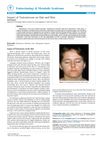
January 2015 in “Endocrinology & metabolic syndrome” Testosterone can cause acne and male-pattern baldness, affects hair growth in men and women, and makes male skin more sensitive.
 1 citations
,
March 2019 in “Lasers in Surgery and Medicine”
1 citations
,
March 2019 in “Lasers in Surgery and Medicine” The conference reported improvements in muscle volume, skin cancer diagnosis, facial and vaginal rejuvenation, and hair growth using various laser treatments.
June 2026 in “British Journal of Dermatology” Menopause often causes hair changes, and many women need better support and information.
 31 citations
,
May 2012 in “European Journal of Dermatology”
31 citations
,
May 2012 in “European Journal of Dermatology” Menopause affects hair and skin; more research needed for treatment.
 21 citations
,
May 1988 in “Journal of The American Academy of Dermatology”
21 citations
,
May 1988 in “Journal of The American Academy of Dermatology” The first in-prison dermatology clinic in the U.S. faced challenges and found certain skin conditions common among inmates, with rare cases of serious skin cancer.

The authors suggest that 5-α-reductase inhibitors, like dutasteride, are effective in treating frontal fibrosing alopecia and should be the first-line treatment, with other options for severe cases. They also recommend further research on Janus kinase inhibitors.
86 citations
,
November 2020 in “Annals of Oncology” Early intervention and tailored management can reduce skin side effects from cancer treatments.
 1 citations
,
January 2017 in “Current Dermatology Reports”
1 citations
,
January 2017 in “Current Dermatology Reports” Early baldness in men may indicate risks for obesity, metabolic syndrome, insulin resistance, and heart disease, similar to women with PCOS. Alopecia areata is often linked with autoimmune diseases and mental health issues. Certain hair disorders are due to genetic issues, and chemotherapy can cause hair loss through specific biological pathways. Iron deficiency's link to hair loss is still disputed.