 2 citations
,
May 2018 in “Diagnosis”
2 citations
,
May 2018 in “Diagnosis” A 68-year-old woman developed male traits due to a tumor in her ovary, which was removed, returning her hormone levels to normal.
June 2020 in “ACTA MEDICA IRANICA” A rare benign ovarian tumor caused virilization in a postmenopausal woman, treated successfully with surgery.
 May 2021 in “Journal of the Endocrine Society”
 A woman with a rare ovarian tumor and hyperparathyroidism improved after surgery, highlighting the need for reporting unusual cases to understand and manage rare diseases.
April 2019 in “Journal of the Endocrine Society” A woman's severe insulin resistance improved with treatment, but she still had high testosterone levels due to ovarian issues.
April 2019 in “Journal of the Endocrine Society” Bilateral ovarian hyperthecosis is a rare but treatable cause of increased facial hair in postmenopausal women.
 3 citations
,
June 2016 in “Gynecological Endocrinology”
3 citations
,
June 2016 in “Gynecological Endocrinology” Doctors used a special blood sampling technique to diagnose a woman's rare ovarian tumor that was producing male hormones.
 2 citations
,
October 2015 in “The New England Journal of Medicine”
2 citations
,
October 2015 in “The New England Journal of Medicine” The woman's surgery lowered her testosterone and improved scalp hair loss but did not change her excessive body hair.
 1 citations
,
September 2023 in “JCEM case reports”
1 citations
,
September 2023 in “JCEM case reports” GnRH analogues are effective for diagnosing and treating female androgen excess, offering a non-surgical option.

The document concludes that hair loss in women can be treated with topical treatments or hormone therapy depending on the cause.
 2 citations
,
August 2011 in “Revista Medica De Chile”
2 citations
,
August 2011 in “Revista Medica De Chile” A postmenopausal woman's high testosterone levels and symptoms improved after removing a tumor from her ovary.
 January 2013 in “Revista Clínica Española”
 A postmenopausal woman's increased male hormone levels were successfully treated with surgery.
84 citations
,
September 2014 in “European journal of endocrinology” Doctors should check for serious tumor causes of high androgen levels in postmenopausal women and more research is needed on this condition.
January 2026 in “Brazilian Journal of Development” Early diagnosis and surgery can improve symptoms of ovarian hyperthecosis in postmenopausal women.
October 2025 in “Journal of the Endocrine Society” Leydig cell tumors in the ovary can cause high testosterone and male traits in postmenopausal women but are treatable with surgery.
 2 citations
,
October 2015 in “Obstetrics and gynaecology cases - reviews”
2 citations
,
October 2015 in “Obstetrics and gynaecology cases - reviews” Removing both ovaries may better treat increased male hormone levels and related symptoms in postmenopausal women when hormone therapy doesn't work.
 5 citations
,
January 2017 in “Acta Endocrinologica”
5 citations
,
January 2017 in “Acta Endocrinologica” High androgen levels in postmenopausal women may suggest an ovarian tumor, and removing it can improve heart and metabolic health.
April 2026 in “BMJ Case Reports” Leydig cell tumors can cause high testosterone in women and are treated by removing the ovaries.
 April 2019 in “Journal of the Endocrine Society”
 The study found that imaging might miss small ovarian tumors causing high testosterone, and suggested using certain testosterone levels and treatment responses to identify these tumors.
13 citations
,
August 2018 in “Clinical Chemistry” Total testosterone levels can help diagnose androgen-producing tumors and hyperandrogenism in women.
October 2025 in “Journal of the Endocrine Society” Anastrozole can cause increased testosterone, leading to symptoms like hair growth and thinning.
 June 1995 in “International Journal of Gynecology & Obstetrics”
 Higher doses of oestradiol implants improve bone density in postmenopausal women.
 October 2020 in “Medicine - Programa De Formación Médica Continuada Acreditado”
 Female hyperandrogenism is a condition caused by too much male hormones, leading to skin issues and ovulation problems, often due to Polycystic Ovary Syndrome, and is treated based on individual symptoms.
A woman's excess male hormone symptoms were caused by a rare benign tumor in her ovary.
 April 2020 in “Journal of the Endocrine Society”
 A woman's high testosterone and related symptoms were caused by overactive cells in her ovaries.
7 citations
,
January 2022 in “Case Reports in Endocrinology” Ovarian hyperthecosis can cause symptoms even with normal testosterone levels, and surgery can improve these symptoms.
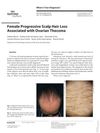 January 2019 in “Skin appendage disorders”
 A woman's hair loss was linked to a rare hormone-secreting ovarian tumor, treated with surgery and hair loss medication.
 April 2020 in “Journal of the Endocrine Society”
 A woman's severe hirsutism was caused by Leydig cell tumors in her ovaries, which improved after surgery.
 May 2017 in “DOAJ (DOAJ: Directory of Open Access Journals)”
 Using GnRHa agonists helps diagnose and treat ovarian hyperthecosis when surgery isn't possible.
 35 citations
,
January 2014 in “BioMed Research International”
35 citations
,
January 2014 in “BioMed Research International” Female pattern hair loss involves hormonal factors, genetics, and may be linked to low ferritin levels.
12 citations
,
December 2016 in “PubMed” Hirsutism involves excessive hair growth due to hormonal issues and can be treated with medication or surgery.