 May 2026 in “Frontiers in Endocrinology”
 Exposure to particulate matter worsens postpartum hair loss by affecting inflammation and cell death pathways.
 45 citations
,
March 2003 in “Pediatrics”
45 citations
,
March 2003 in “Pediatrics” Baby's toe injury linked to mom's hair loss; check baby's toes and be careful with fruit gel snacks.
6 citations
,
January 2015 in “Il Giornale di Chirurgia” Hair tourniquet syndrome can cause serious harm if not treated quickly, especially in infants.
July 2025 in “Journal of Advanced Nursing” Older first-time mothers experience more postpartum symptoms and distress than younger ones.
 7 citations
,
August 2016 in “Nursing for Women's Health”
7 citations
,
August 2016 in “Nursing for Women's Health” To prevent and treat Hair-thread tourniquet syndrome in infants, keep a close eye on their limbs, manage maternal hair loss, and educate parents and healthcare providers.
3 citations
,
May 2012 in “BMC Endocrine Disorders” Early diagnosis and hormone therapy can significantly improve outcomes for post-partum pituitary insufficiency in resource-limited settings.
 4 citations
,
July 2013 in “Journal of Dermatological Science”
4 citations
,
July 2013 in “Journal of Dermatological Science” Pregnancy right after giving birth in mice lacking IL-10 causes milk that leads to liver issues and hair loss in their babies.
 15 citations
,
January 2011 in “Annals of Dermatology”
15 citations
,
January 2011 in “Annals of Dermatology” The study concluded that neonatal occipital alopecia is common, not caused by physical friction, and usually resolves on its own without treatment.
 November 2013 in “International Journal of Medical and Health Sciences”
 Doctors often miss Hair Tourniquet Syndrome, which can lead to serious damage if not treated quickly.
 February 2010 in “Journal of The American Academy of Dermatology”
 Babies born after 38 weeks to mothers under 36 years old and not delivered by C-section have a higher risk of neonatal occipital alopecia.
 January 2009 in “Springer eBooks”
 The document concludes that managing skin conditions during pregnancy is important and requires specialized care.
 7 citations
,
October 2015 in “American Journal of Primatology”
7 citations
,
October 2015 in “American Journal of Primatology” Monkeys with hair loss during pregnancy showed higher stress hormone levels and invested differently in their offspring.
3 citations
,
October 2024 in “Journal of obstetrics and gynaecology research” Postpartum hair loss can increase anxiety in new mothers.
 39 citations
,
October 1967 in “British Journal of Dermatology”
39 citations
,
October 1967 in “British Journal of Dermatology” Hair loss in women often doesn't follow a pattern, isn't linked to age, may be genetic, and can be related to thyroid issues or other health factors.
Inflammation and metabolic changes are linked to postpartum hair loss after a first C-section.
 10 citations
,
January 2010 in “Veterinary pathology”
10 citations
,
January 2010 in “Veterinary pathology” A new mutation in the hairless gene causes hair loss and skin wrinkling in mice.
 21 citations
,
July 2005 in “European Journal of Emergency Medicine”
21 citations
,
July 2005 in “European Journal of Emergency Medicine” Hair-tourniquet syndrome can cause serious toe injuries in infants but can be treated if found early.
 January 2017 in “Archives of Aesthetic Plastic Surgery”
 Hair care products with placental growth factor can improve hair thickness and density in postpartum hair loss.
 63 citations
,
October 1972 in “British Journal of Dermatology”
63 citations
,
October 1972 in “British Journal of Dermatology” Women with thinning hair have thinner hair strands than women without hair loss.
 4 citations
,
January 2015 in “Case reports in urology”
4 citations
,
January 2015 in “Case reports in urology” An 8-year-old boy recovered from a rare case of penile tourniquet syndrome after hair removal surgery.
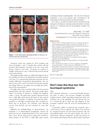 4 citations
,
February 2014 in “Journal of the European Academy of Dermatology and Venereology”
4 citations
,
February 2014 in “Journal of the European Academy of Dermatology and Venereology” Early diagnosis of hair tourniquet syndrome saved a baby's toe from being lost.
 November 2024 in “Applied Sciences”
 Placenta products might help with hair loss, but more research is needed.
February 2024 in “Animals” Hair loss peaks in spring and regrowth in late summer, with pregnant females losing the most hair.
 35 citations
,
December 2014 in “Clinical Obstetrics and Gynecology”
35 citations
,
December 2014 in “Clinical Obstetrics and Gynecology” Most skin changes during pregnancy go away after giving birth.
 2 citations
,
May 2017 in “Springer eBooks”
2 citations
,
May 2017 in “Springer eBooks” Pregnancy can cause skin changes and affect existing skin conditions, with limited treatment options due to the need for fetal safety.
15 citations
,
August 2010 in “Annals of saudi medicine/Annals of Saudi medicine” Hair tourniquet syndrome is a rare condition where hair wraps around an infant's body part, needing quick removal to prevent damage.
 October 1961 in “Archives of Dermatology”
 Reassurance is important for postpartum hair shedding as it likely won't cause complete baldness.
 5 citations
,
September 2016 in “Journal of Cosmetic Dermatology”
5 citations
,
September 2016 in “Journal of Cosmetic Dermatology” Nourkrin® with Marilex® may increase hair count by 35.7% in postpartum hair loss.
 January 2026 in “Ankara Medical Journal”
 Pregnancy-related stress may cause hair loss in women in their third trimester.
 January 2021 in “Dermatology Research and Practice”
 The study aims to understand the skin and hair characteristics of mothers and their babies, and how these may affect newborns' skin health and mothers' postpartum hair loss.