 June 2017 in “Acta Scientiae Veterinariae”
 A cat with a rare pancreatic tumor and diabetes died despite treatment, showing similar symptoms to a human condition.
 January 2017 in “IMC Journal of Medical Science”
 A rare endocrine disorder, APS 1, was diagnosed in a 26-year-old man in Bangladesh.
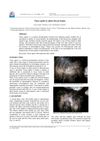
An adult Libyan woman was successfully treated for a rare scalp infection usually seen in children.

The document concludes that hair loss in women is complex, often linked to aging, health conditions, and nutritional deficiencies, and emotional impacts should not be underestimated.
The document concludes that current hair loss treatments have limitations and suggests researching new treatments targeting different factors of hair loss.
 January 2015 in “Dermatology online journal”
 A man with total hair loss also developed a rare nail condition, likely due to autoimmune issues.
 February 2014 in “Revista Argentina de Cardiología”
 Androgens may increase arrhythmias in Brugada Syndrome, while Finasteride could reduce them.

Human scalp hair follicles have PGE2 and its receptors, which might affect hair growth.
 July 2013 in “British Journal of Dermatology”
 The document reviews key historical figures and discoveries in dermatology.
 April 2012 in “KSBB Journal”
 Minoxidil analogs can be improved for hair growth inhibition by modifying specific parts of their structure.
 July 2011 in “Springer eBooks”
 The document concluded that FDA-approved treatments like minoxidil and finasteride are effective for hair loss, while the effectiveness of natural remedies and other non-approved treatments is not well-supported by evidence.
 June 2010 in “Journal of Medicine and Life Science”
 Orostachys iwarenge Hara extract may help promote hair growth.
 March 2007 in “Journal of hypertension”
 Minoxidil effectively lowers blood pressure in patients with resistant hypertension.

Isotretinoin and tazarotene help treat acne, while minoxidil and finasteride promote hair growth.

The patient with total hair loss did not regrow hair despite treatment, indicating a poor outlook for this type of hair loss.
 October 2001 in “WORLD SCIENTIFIC eBooks”
 Many substances, including chemicals and metals, can cause skin reactions; careful handling and identification of allergens are crucial to prevent dermatitis.
 March 1998 in “Journal of dermatological science”
 Protease Nexin-1 is found in human hair growth cells and is affected by male hormones.
 August 1994 in “Drugs & Therapy Perspectives”
 Some drugs can cause hair loss or growth, but hair usually returns to normal after stopping the drug.
 September 1983 in “Journal of The American Academy of Dermatology”
 Experts discussed hair care, genetic hair defects, hair loss treatments, nail surgery, lupus treatments, skin infections, and cosmetic allergies.
 June 1937 in “Science news-letter/Science news letter”
 Vitamin B can prevent hair from turning gray in rats.

Caffeine can potentially treat common hair loss by counteracting hair follicle shrinkage caused by hormones.
 October 2020 in “Journal of Pakistan Association of Dermatology”
 Platelet-rich plasma therapy is more effective than minoxidil lotion for increasing hair count in men with hair loss, with mild side effects and high satisfaction.
 November 2019 in “Actas Dermo-Sifiliográficas”
 Oral minoxidil helps treat hair loss and has reversible side effects.
 October 1990 in “Archives of Dermatology”
 Hair loss and growth can be accurately measured using computer-assisted counting.
 2 citations
,
May 2021 in “bioRxiv (Cold Spring Harbor Laboratory)”
2 citations
,
May 2021 in “bioRxiv (Cold Spring Harbor Laboratory)” A special foam called EG7 PTK-UR helps heal skin wounds better than other similar materials, working as well as a top-rated product and better than a polyester foam.
February 2026 in “ACS Omega” The hydrogel effectively treats oral mucositis by reducing oxidative damage and bacterial infection.
 May 2025 in “Plastic & Reconstructive Surgery Global Open”
 Photothermal biomodulated PRP extends hair graft viability by 2 hours compared to standard solutions.
 6 citations
,
April 2013 in “Journal of Investigative Dermatology”
6 citations
,
April 2013 in “Journal of Investigative Dermatology” Spironolactone might lower the chance of getting rosacea.
 February 2024 in “BioMetals”
 Heavy metals like arsenic, cadmium, and lead can increase cancer risk and worsen outcomes.
 October 2023 in “JOJ dermatology & cosmetics”
 Thiocyanate helps hair growth and can be supplemented in diet or applied topically.